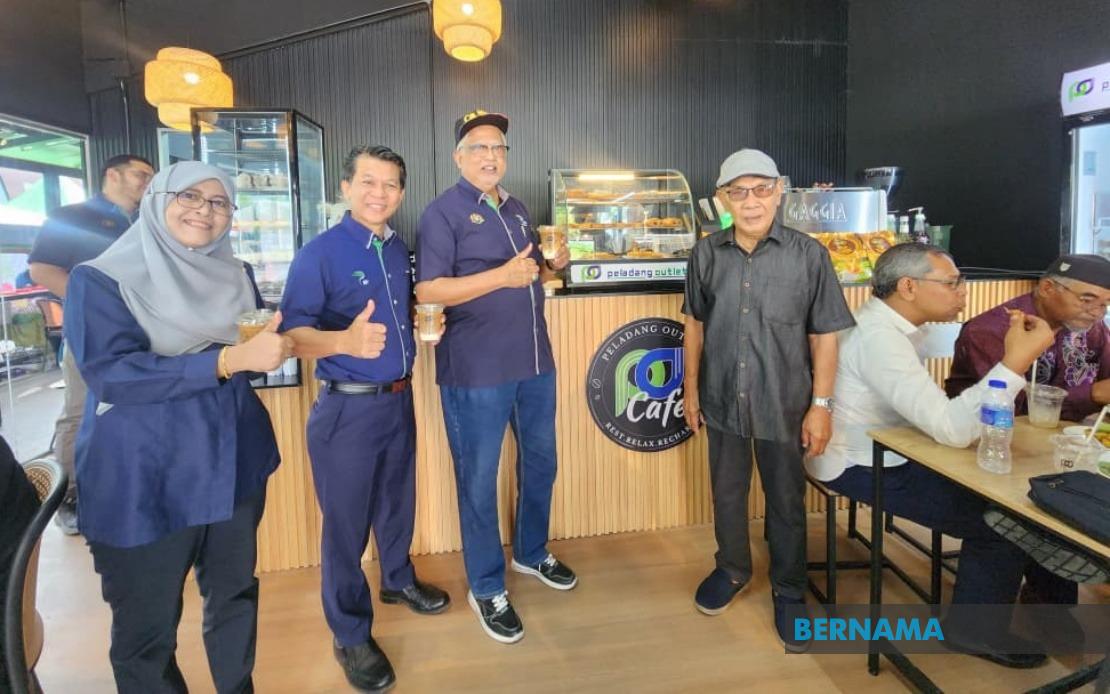
Authorities are moving forward with an ambitious initiative to modernise Malaysia's network of agricultural farmers' outlets, recognising the need to position locally-sourced farm products on equal footing with established food and beverage chains and major retail operators. The Farmers' Organisation Authority announced the expansion drive at the 51st Farmers, Breeders, and Fishermen's Day celebration held at Padang Siding in Perlis, where the modernisation efforts are already bearing visible results in the community.
The initiative encompasses 90 farmers' outlets operated under the Agricultural Farmers' Organisation framework across the country. Rather than overhauling all locations simultaneously, authorities have adopted a phased approach, with 30 outlets already undergoing comprehensive transformation. The modernisation encompasses far more than aesthetic improvements—outlets are being rebranded with refreshed logos, enhanced imagery, and strategic promotional campaigns designed to appeal to contemporary consumers accustomed to polished retail experiences.
According to Marlina Mohd, director of the Farmers' Organisation Authority's Economic Development Division, the upgrades also include systematic changes to product cataloguing and stock management practices. The adoption of Stock Keeping Unit systems represents a particularly significant shift, bringing the outlets in line with inventory management standards used by professional retailers. This technical upgrade should streamline operations and enable better tracking of consumer demand across different product categories.
The trajectory outlined by authorities suggests another 30 outlets will receive similar treatment over the coming period, effectively bringing two-thirds of the network into the modern retail environment by the time this phase concludes. The staggered rollout appears designed to ensure quality implementation rather than rushed deployment that might compromise the overall vision. This deliberate pace also allows the authority to learn from early successes and refine the modernisation template.
The underlying strategy reflects recognition that Malaysian farmers and agricultural producers possess quality products competitive with commercial alternatives, but have historically struggled with visibility and presentation in mainstream retail. By creating purpose-built, professionally managed outlets bearing consistent branding, the authority aims to communicate legitimacy and reliability to consumers who might otherwise default to established supermarket brands. The outlets essentially serve as physical manifestations of the quality-at-reasonable-prices proposition.
Padang Siding's outlet serves as a pilot case study demonstrating genuine market appetite for this concept. Since commencing operations in April, the facility has attracted over 20,000 visitors, a volume that suggests substantial community interest transcending mere curiosity. This visitor traffic, drawn to a single-location aggregation of local agricultural products at transparent pricing, validates the fundamental business premise underlying the nationwide expansion strategy.
The success at Padang Siding becomes particularly meaningful when considered against broader Malaysian consumer trends. Rural communities, traditionally the primary customer base for farmers' direct sales channels, increasingly expect retail experiences comparable to urban shopping centres. Simultaneously, urban and suburban consumers have grown more conscious of product provenance and sustainability, making direct-from-farmer outlets attractive if presented professionally. The modernisation programme essentially bridges both expectations.
Beyond immediate commercial objectives, the initiative carries significant implications for agricultural sector development across Malaysia. By creating modern retail infrastructure, authorities signal long-term commitment to farmer livelihoods and encourage younger generations to perceive agriculture as a viable career path rather than declining livelihood. The enhanced outlets also provide stable sales channels, reducing farmer vulnerability to volatile wholesale markets and middleman exploitation.
The competitive framing against established F&B and retail industries reveals official recognition that farmers' outlets cannot succeed through nostalgia or sentiment alone. Modern Malaysian consumers, particularly in urban areas, demand consistent quality, reliable availability, convenient location, and shopping experience standards. By explicitly positioning the 90 outlets to meet these criteria, authorities acknowledge that sustaining local agriculture requires more than production efficiency—it requires retail competence.
Future expansion plans mentioned by Marlina suggest the authority envisions this network ultimately extending beyond the current 90 outlets, though no specific timelines or targets were disclosed. Such organic growth would build upon experience accumulated during the current modernisation phase, allowing refinement of the outlet model based on operational performance data and consumer feedback. The authority's confidence in scaling the concept appears justified by preliminary Padang Siding results.
For Malaysian consumers, particularly those concerned about food security and local economic resilience, the modernisation programme offers practical channels through which to support domestic agriculture while accessing quality products at competitive pricing. The outlets effectively eliminate middleman margins that typically inflate farmer-produced goods when sold through conventional retail chains. This price transparency becomes increasingly valuable as consumer consciousness about agricultural economics grows.
The initiative also positions Malaysian agricultural products more competitively against imported alternatives, particularly relevant as governments across Southeast Asia prioritise regional agricultural self-sufficiency. By demonstrating that local producers can deliver retail-ready products in professionally managed environments, Malaysia strengthens arguments for domestic agricultural investment and policy support. The modernised outlet network becomes infrastructure supporting broader agricultural competitiveness objectives.

