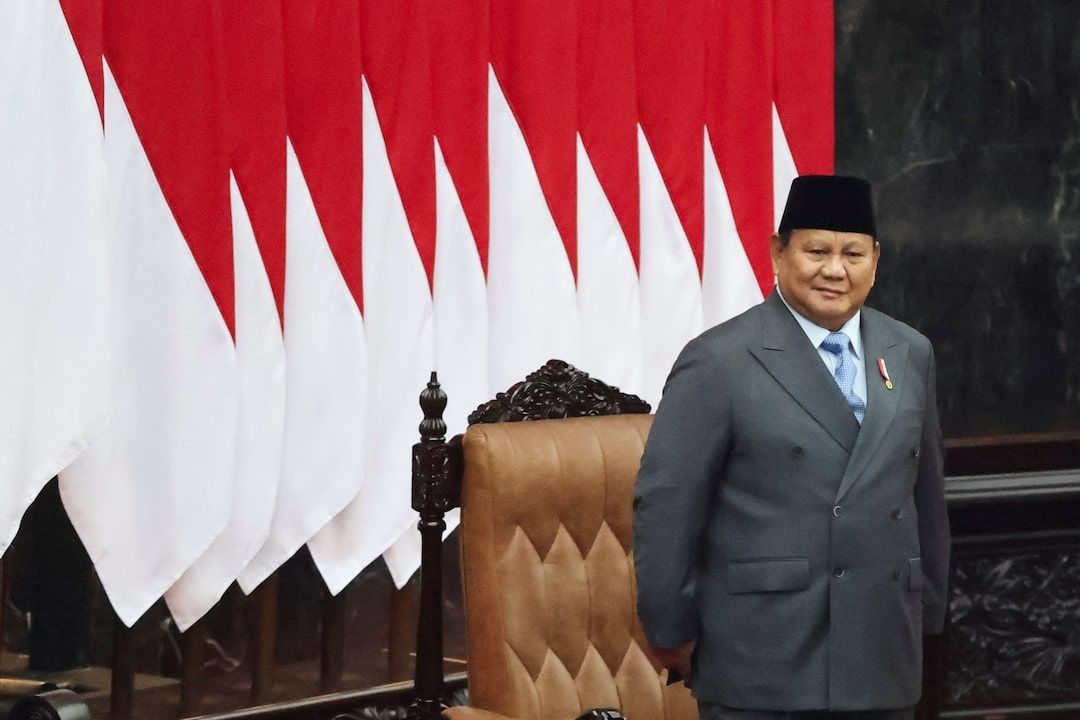
President Prabowo Subianto of Indonesia faces one of his most consequential moments yet as he prepares to unveil the 2027 budget framework on Friday, August 14, at a time when public confidence in his administration has substantially eroded and international investors have grown increasingly wary of his policy direction. The presentation arrives against a backdrop of mounting economic headwinds and controversial proposals that have repeatedly caught global markets off guard, forcing analysts and traders to recalibrate their outlook for Southeast Asia's largest economy.
When Prabowo took the helm in October 2024 following a decisive electoral mandate, he carried with him ambitious blueprints that captivated many Indonesians. His campaign narrative centered on three pillars: dismantling corruption networks that had plagued governance, accelerating economic growth from the then-prevailing 5% to a target of 8% annually, and implementing a sweeping free meals initiative for millions of schoolchildren. These promises resonated strongly with voters seeking tangible improvements in living standards and institutional integrity. Yet the intervening months have witnessed a marked divergence between electoral hope and governing reality.
The administration's economic record has proven troubling. The Indonesian rupiah has undergone consistent depreciation against major currencies, eroding both household purchasing power and confidence in macroeconomic management. The stock market has simultaneously underperformed, reflecting investor anxiety rather than the dynamism one might expect from a newly empowered government. Concurrent with these financial headwinds, accusations of fiscal mismanagement have surfaced, particularly regarding the flagship free meals programme, which has suffered both budget reductions and allegations of administrative dysfunction. Questions have also emerged about the degree of autonomy granted to Bank Indonesia, the central bank, fuelling concerns that monetary policy independence might be compromised.
The deterioration in public sentiment has been dramatic and measurable. Recent polling data shows Prabowo's approval rating has plummeted by 30 percentage points over the course of just eight months, settling at 51%. This sharp decline reflects not merely abstract dissatisfaction but concrete grievances: Indonesians perceive economic conditions as deteriorating and express frustration with the state of law enforcement under his administration. For a president who entered office with overwhelming popular backing, this represents a significant political vulnerability.
International observers and market participants view the impending budget announcement with heightened scrutiny precisely because it represents a critical juncture for demonstrating governmental competence and policy coherence. Irman Faiz, an economist at Bank Danamon, characterised the 2027 budget as "one of the most important credibility checkpoints for global investors in recent years," particularly given the successive policy surprises that have unsettled markets throughout 2024 and 2025. The Indonesian fiscal deficit currently stands at approximately 2.8% of GDP in 2025 and is projected to approach the constitutionally mandated ceiling of 3%, constraining the government's fiscal flexibility precisely when economic stimulus might be needed most.
A pivotal source of investor concern stems from Prabowo's May parliamentary address, when he announced plans to concentrate all exports of critical natural resources under a newly created state-owned entity, Danantara Sumberdaya Indonesia. This announcement sent ripples through commodity markets globally, prompting immediate reassessment of Indonesia's commodity export trajectory. The proposal raised fundamental questions about state control over critical economic sectors and the efficiency of centralised resource management. Subsequent clarifications from administration officials have suggested the entity would assume a supervisory rather than operational role, yet considerable ambiguity persists regarding its actual powers and responsibilities.
This uncertainty carries profound implications for Malaysia and other regional economies deeply integrated into Southeast Asian commodity supply chains. Palm oil traders, in particular, await further clarification on Danantara Sumberdaya Indonesia's prospective involvement in export controls. Malaysia, as a significant competitor in palm oil production and export, would face substantial shifts in regional market dynamics should Indonesia implement restrictive export policies. More broadly, any state apparatus controlling natural resource flows could reshape regional trade patterns and investment decisions across Southeast Asia.
Yose Rizal Damuri, executive director of the Center for Strategic and International Studies, emphasises that investors harbour hopes the president will inject meaningful clarity into the commodity export framework during Friday's presentation. The vagueness surrounding this policy has created decision-making paralysis among international traders and investors seeking to calibrate their exposure to Indonesian natural resources. A coherent articulation of the state entity's mandate and operational parameters could restore market confidence; further ambiguity would likely deepen scepticism.
Beyond the commodity question, the budget announcement occurs within a broader context of elevated economic vulnerability. Prabowo's administration must simultaneously address investor doubts regarding economic stewardship while marshalling sufficient political capital to defend its signature programmes against mounting criticism. Arya Fernandes, head of politics and social change at CSIS, candidly acknowledged that navigating these competing imperatives represents "certainly no easy task" under prevailing circumstances. The administration must articulate a fiscally credible pathway to achieving its 8% growth target whilst maintaining essential social programmes and demonstrating effective governance.
The Independence Day ceremonial context adds symbolic weight to Friday's proceedings. The morning will feature Prabowo's broader policy address marking Indonesia's independence anniversary, whilst the afternoon presentation will focus specifically on fiscal frameworks. This sequencing offers an opportunity to situate economic policy within a nationalist narrative emphasising long-term development and sovereignty. However, such framing will ring hollow absent concrete measures demonstrating fiscal discipline and policy coherence.
The convergence of slipping approval ratings, thinning investor tolerance for policy surprises, and pressing questions about commodities management has created genuine stakes for Prabowo's budget presentation. A coherent, confidence-inspiring announcement could begin reversing the erosion of governmental credibility. Conversely, further obfuscation or surprise policy announcements would likely accelerate the decline in both domestic support and international investor confidence, potentially triggering capital outflows and currency pressure that would undermine the administration's growth objectives. For Indonesia, its regional neighbours, and global investors, Friday's presentation carries consequences extending well beyond routine budgetary procedure.

