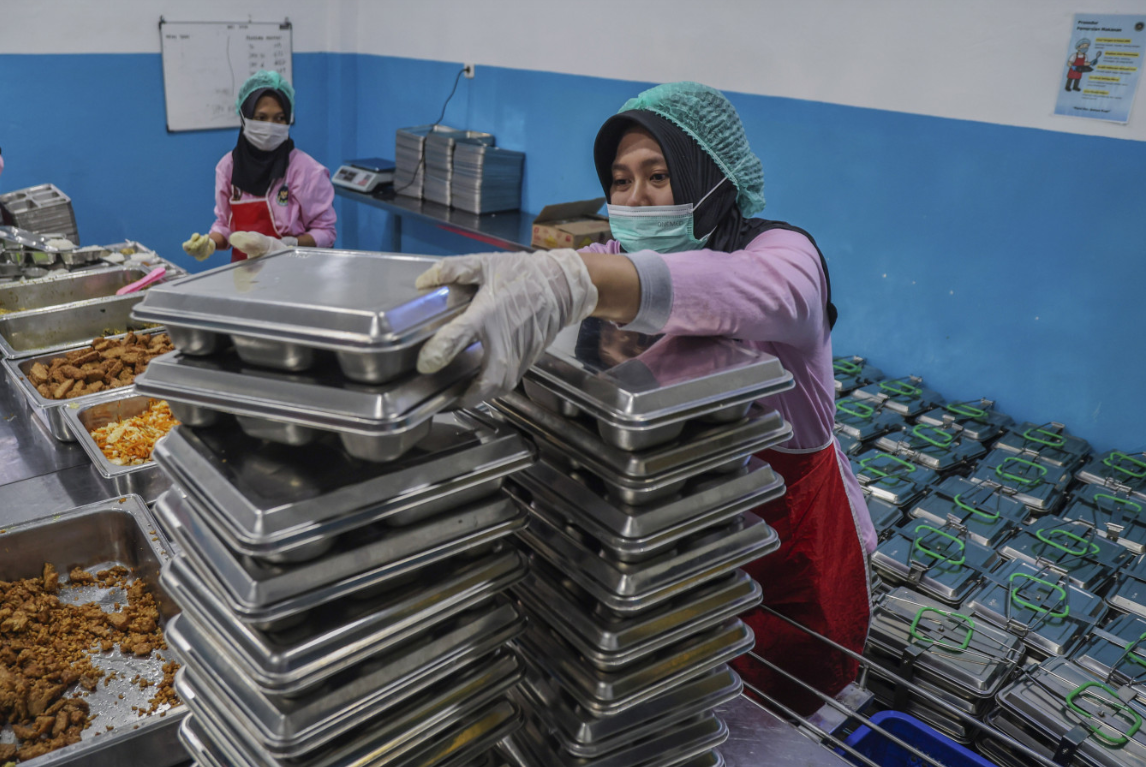
President Prabowo Subianto is ordering a comprehensive reassessment of two centrepiece initiatives from his administration—the free nutritious meal programme and the Red and White cooperative scheme—following sustained public pressure and mounting concerns about their implementation and costs. The decision to review these flagship projects marks a significant recalibration by the Indonesian leader, whose administration has faced criticism not only from civil society but also from growing segments of the public questioning the expenditure and execution of these ambitious social programmes.
The shift came into focus during a four-hour closed-door meeting at the Palace on Wednesday, July 15, where the President engaged with multiple cabinet members responsible for overseeing both initiatives. The gathering underscored the seriousness with which the administration is treating the mounting controversies, bringing together officials including representatives from the National Nutrition Agency (BGN), which manages the free meals distribution. The fact that such a high-level review was convened signals that the administration recognises the need for course correction to maintain public confidence in these centrepiece policies.
According to BGN deputy chief Agustina Arumsari, who briefed the media following the meeting, the President has tasked her agency with conducting a detailed and methodical examination of how the free meals programme functions within schools across the country. The administration has set a one-month timeline for completing this assessment, indicating urgency without rushing the process. Arumsari's comments reflected the President's stated desire for thoroughness, emphasising that any modifications must be carefully considered rather than hastily implemented, acknowledging that policy shifts of this magnitude require deliberate planning.
A central focus of the review will be the eligibility framework that determines which beneficiaries receive meals. The government is seriously considering narrowing the programme's scope by excluding higher-income households, a shift that would mark a departure from the current universal approach. However, this targeting strategy presents a complex challenge in the Indonesian school system, where students from varying economic backgrounds often study in the same classrooms. The administration is grappling with the practical and emotional dimensions of such differentiation, recognising that providing meals to some students while withholding them from classmates could create stigma and psychological distress among children.
Arumsari stressed that the President specifically instructed officials to weigh the psychological implications of any eligibility changes before implementation. The concern reflects awareness that means-testing in schools could inadvertently harm the dignity and social integration of students from more affluent families who would be excluded, fundamentally altering the egalitarian character that the free meal programme was designed to embody. This nuanced approach suggests the administration is moving beyond purely budgetary considerations toward understanding the human dimension of large-scale social programmes.
Beyond eligibility restructuring, the government is exploring alternative delivery mechanisms to reduce reliance on dedicated meal kitchens. One option under consideration involves leveraging existing school canteen infrastructure to distribute meals, potentially lowering operational costs and simplifying logistics. This potential shift towards decentralised delivery through school canteens rather than centralised kitchen facilities reflects a broader recalibration toward what the administration views as more sustainable and locally adaptive models. Such changes would represent a significant architectural redesign of how the programme functions on the ground.
The free meal initiative, budgeted at approximately Rp 268 trillion (US$19.5 billion) for 2026 alone, is intended to reach roughly 83 million beneficiaries encompassing schoolchildren, pregnant women, and other vulnerable groups. The programme's stated objective is combating malnutrition and reducing childhood stunting rates, which remain significant public health challenges across Indonesia's diverse regions. However, this ambitious social investment has become a credibility test for the Prabowo administration, with its successful implementation now intrinsically linked to public perception of the government's competence and integrity.
Recent months have brought mounting pressures that prompted the presidential review. Street protests erupted last month demanding the programme's suspension, reflecting public anxiety about both its astronomical cost and reported operational failures. Multiple food poisoning incidents have tarnished the programme's reputation, raising food safety concerns among parents and educators. More damaging still, a corruption investigation involving senior officials from both the National Police and the Indonesian Military (TNI) has cast a shadow over the initiative's management, undermining public trust in how resources are being utilised.
Simultaneously, the administration is recalibrating its approach to the Red and White cooperative programme, which targets rural economic development. Coordinating Food Minister Zulhas Hasan announced that the government intends to expand the cooperatives' mandate significantly, positioning them as official distribution channels for various government assistance schemes including social welfare payments and subsidised commodities. Additionally, these cooperatives will intervene in agricultural markets by purchasing rice, corn, and other produce when market prices fall below government-established price floors, thereby protecting farmer incomes during periods of market oversupply.
The cooperative programme itself has faced serious implementation challenges that prompted scrutiny. Military-style mandatory training sessions for cooperative managers resulted in at least four deaths, generating public outrage and accusations that the government had mishandled the programme's rollout. These fatalities transformed what was conceived as a rural development initiative into a symbol of implementation excess and poor oversight, creating additional pressure on the administration to demonstrate learning and course correction across its social programmes.
These parallel reviews reveal a government attempting to salvage the reputation and effectiveness of its major social initiatives while responding to accumulated grievances from multiple constituencies. For Malaysian observers and policymakers, the Indonesian experience offers instructive lessons about the operational complexities of implementing universal or near-universal social programmes at massive scale, the political risks of food safety failures in flagship welfare schemes, and the governance challenges inherent in coordinating military and civilian institutions in civilian social programme delivery. The outcomes of these reviews will likely shape how other Southeast Asian nations approach ambitious poverty-reduction and nutrition programmes in coming years, particularly regarding the balance between universal coverage and targeted assistance, and between centralised coordination and local implementation autonomy.

