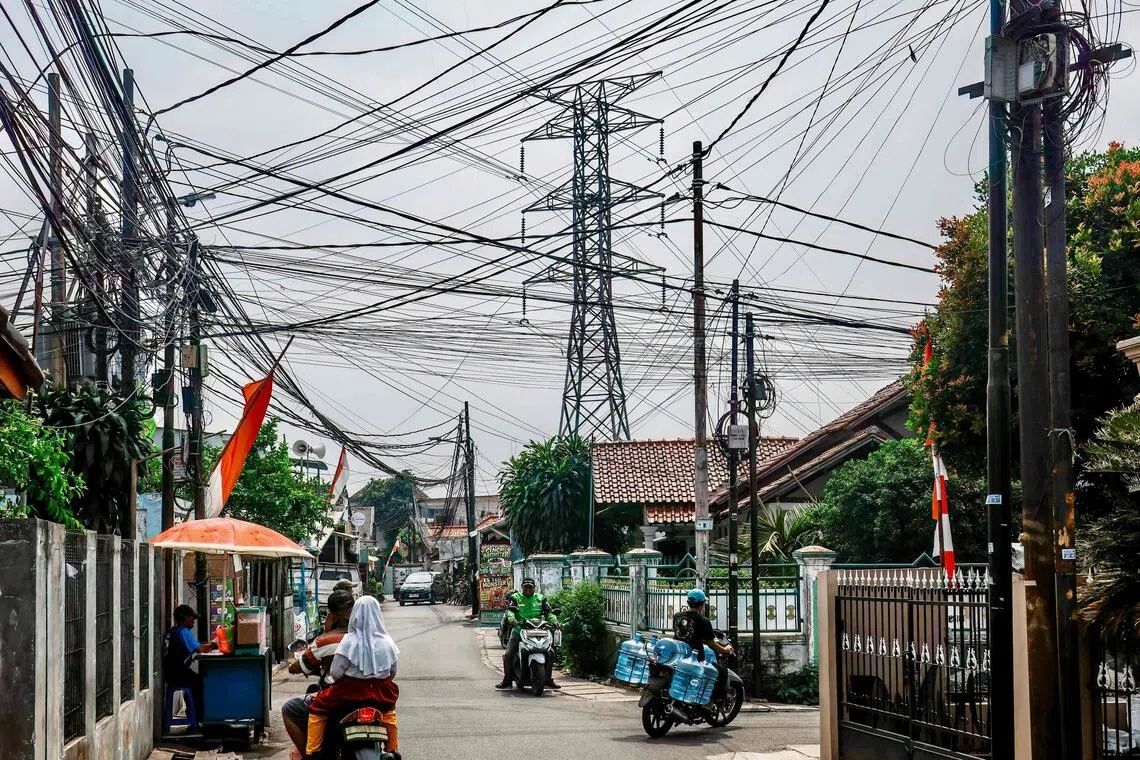
Indonesia's newly installed president, Prabowo Subianto, has announced an ambitious overhaul of the country's sprawling state enterprise system, vowing to shutter more than 750 underperforming firms before the year closes. The initiative, unveiled during consecutive parliamentary addresses on budget and national matters, represents one of the most aggressive culls of state assets in Southeast Asia's largest economy and reflects mounting pressure to root out endemic corruption that continues to undermine public confidence despite decades of reform efforts.
The scale of the proposed purge is striking. Out of 1,074 state-owned enterprises currently registered, Prabowo disclosed that 290 have already been deactivated, with his administration aiming to reduce the remaining portfolio to roughly 300 operational entities by December 31. This would represent a dramatic restructuring of Indonesia's public economic footprint, eliminating approximately 73 percent of all state firms from the active roster. The president's language on the matter was characteristically blunt, criticising SOEs for operating "as they please, with no sense of responsibility to the nation" whilst simultaneously reporting phantom profits that mask deeper systemic dysfunction.
Central to Prabowo's critique is the allegation that state enterprises routinely file falsified financial statements, a practice that has eroded public trust and obscured the true cost of inefficient management. He contended that many SOEs claim profitability whilst simultaneously draining state coffers, a paradox that points to either deliberate deception or grossly inadequate oversight mechanisms within existing governance structures. The president's frustration appears genuine, reflecting broader concerns among reformist policymakers that state assets have been captured by entrenched bureaucratic and political interests rather than deployed for genuine public benefit.
To address this culture of unaccountability, Prabowo has proposed establishing a specialised ad hoc court with retrospective investigative powers extending back three decades—a controversial measure that would potentially expose decades of managerial misconduct and allow prosecution of officials who may have long since retired from public life. However, he simultaneously dangled the prospect of amnesty for those willing to confess and reform their practices, suggesting an appetite for transitional compromise alongside accountability. This dual approach reflects the political calculation required to dismantle entrenched networks without triggering institutional paralysis or provoking powerful interests invested in maintaining the status quo.
The SOE restructuring effort sits within a broader economic agenda articulated by Prabowo around Indonesia's underutilisation of its natural resource endowments. The nation ranks among the world's largest exporters of palm oil, nickel, tin, and coal, yet Prabowo argues that commodity prices remain externally determined through foreign exchanges rather than reflecting Indonesia's own valuation. He has called upon parliament to establish a dedicated mineral and commodities exchange that would theoretically allow Indonesia to exercise greater price-setting authority, breaking what he characterises as structural dependence on overseas trading platforms.
This commodities vision carries particular resonance for Malaysian and broader Southeast Asian readers. Both Indonesia and Malaysia compete vigorously across palm oil and mineral exports, and any successful Indonesian initiative to consolidate price-setting power could reshape regional commodity dynamics. The creation of a competing exchange, if executed effectively, might fragment global trading liquidity and complicate price discovery for all regional producers, including Malaysian enterprises. Conversely, if Indonesia's exchange fails to achieve sufficient trading volume, it risks becoming a symbolic gesture rather than an economically meaningful intervention.
Prabowo has already begun implementing efficiency measures through the Danantara sovereign wealth fund, created last year to consolidate state asset management. According to his parliamentary statement, these initial reforms have already generated approximately 50 trillion rupiah (over USD 2.8 billion) in annual overhead savings, achieved through reductions in executive compensation, elimination of redundant real estate leases, and streamlining of business travel budgets. More strikingly, he reported that aggregate SOE profits surged more than 75 percent in 2024 alone, reaching 326 trillion rupiah, suggesting that even preliminary restructuring efforts are yielding measurable fiscal returns.
However, Indonesia's anti-corruption credentials remain fragile despite Prabowo's ambitious rhetoric. The nation scored only 34 out of 100 on Transparency International's 2025 Corruption Perceptions Index, placing it in the lower ranks globally and trailing most of its Southeast Asian peers. This persistent weakness reflects deeper institutional and cultural challenges that no single president can simply decree away through structural reorganisation alone. Corruption has become sufficiently embedded within bureaucratic practice that closing firms and reshuffling management often simply displaces rather than eliminates corrupt networks.
This institutional vulnerability is evident in several high-profile failures that continue to shadow public administration. The government's flagship free school meals programme, one of Prabowo's signature policy commitments, has been tainted by mass poisoning incidents and significant corruption allegations, including the arrest of the programme's former oversight head. Despite these humiliating setbacks, Prabowo pledged Friday to maintain the multibillion-dollar initiative whilst introducing "improvements and efficiency"—language that suggests rhetorical commitment to reform without necessarily confronting the underlying governance deficits that enabled initial failures.
For Malaysian observers, the Indonesian situation underscores how resource abundance and large institutional bureaucracies can become vehicles for wealth extraction rather than economic development when governance standards fail. Both nations possess comparable natural resource endowments and similar governance challenges rooted in patronage networks and weak accountability mechanisms. Indonesia's current push toward SOE rationalisation and commodities market reform merits careful observation, as successful implementation could offer lessons for Malaysian policymakers grappling with their own state enterprise efficiency challenges. Conversely, continued implementation failures would reinforce scepticism about whether structural reforms alone can overcome embedded corruption absent deeper institutional and cultural transformation.
Prabowo's initiatives reflect genuine recognition that Indonesia's vast natural wealth remains poorly mobilised for broad-based development. Whether these ambitious pledges translate into sustainable institutional change or devolve into familiar patterns of elite repositioning remains the defining question for his administration. The stakes extend beyond Indonesia itself, influencing regional economic competition, commodity pricing dynamics, and investor confidence across Southeast Asia.

