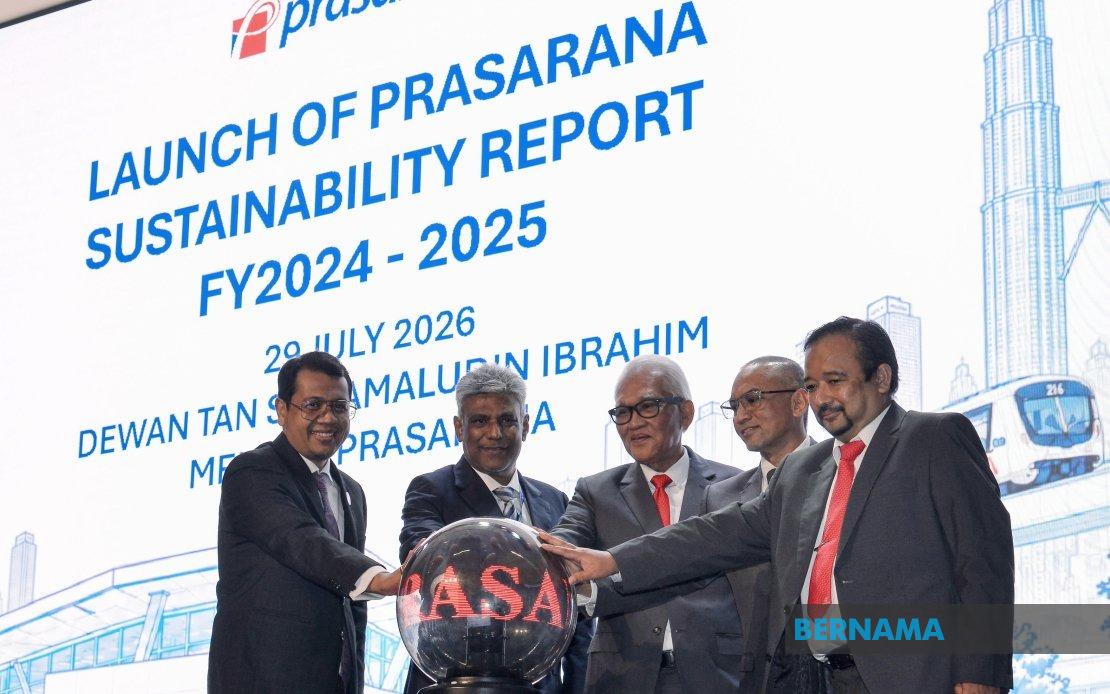
Prasarana Malaysia Berhad is accelerating efforts to bring eight affordable housing developments to fruition, with projects strategically positioned along two of Kuala Lumpur's busiest light rail corridors. The announcement came from Prasarana president and Group chief executive officer Amir Hamdan, who disclosed that the transit-oriented development schemes are in advanced negotiation stages and represent a significant response to government directives for utilising transport-adjacent land more productively.
The eight identified initiatives are distributed across the Ampang Line and Kelana Jaya Line corridors, two major arteries serving commuters across the Klang Valley. Some developments have already progressed into active construction phases, particularly the Ara Damansara and Rivera projects, while the remainder are navigating final contractual arrangements before formal green-lights are issued. This phased approach suggests that Prasarana has adopted a carefully sequenced implementation strategy to manage resources and regulatory approvals systematically.
The undertaking reflects a broader architectural shift in how Malaysia's transport operator is deploying its real estate assets. By focusing on transit-oriented development, Prasarana aligns with international best practices that maximise land utility and create vibrant, walkable neighbourhoods centred on public transport nodes. This model theoretically reduces car dependency, eases congestion pressures, and creates mixed-use environments where residential, commercial, and recreational activities coexist within accessible distances.
Multiple government and quasi-government entities are engaged in the planning framework. Prasarana is coordinating with the Railway Assets Corporation and Malaysia Rapid Transit Corporation to structure these projects, reflecting the complexity of negotiating land rights, development responsibilities, and revenue-sharing arrangements across Singapore's transport ecosystem partners. These institutional layering requirements explain why seemingly straightforward housing initiatives require extended negotiation periods and careful refinement of contractual terms.
The alignment with Prime Minister Datuk Seri Anwar Ibrahim's June 28 directive carries political weight. The Prime Minister explicitly urged Prasarana to leverage its strategic landholdings near transport stations specifically for people's housing, acknowledging that public transport corridors represent underutilised opportunities for affordable residential supply. His emphasis on incorporating adequate parking and commercial spaces for small and medium-sized enterprises demonstrates governmental intent to create economically diverse, self-contained communities rather than purely residential dormitories.
Parking provision remains contentious in Malaysian urban planning discourse. Suburban commuters traditionally expect vehicle access, and undersupplying parking risks project viability and market acceptance. However, integrating parking efficiently within TOD projects demands sophisticated architectural and commercial planning, ultimately influencing development costs and housing affordability calculations. Prasarana must balance these competing pressures while maintaining the affordability imperative central to the people's housing agenda.
The inclusion of entrepreneur-focused commercial spaces responds to Malaysia's broader economic diversification agenda. Small and medium enterprises form the backbone of the nation's employment landscape, yet securing accessible, affordable commercial premises remains persistently challenging in high-value urban corridors. Embedding such spaces within transit-oriented housing projects creates captive customer bases and reduces operational isolation that often constrains SME growth in peripheral locations.
Conversations with the Ministry of Finance and Ministry of Transport signal that approvals processes are navigating bureaucratic channels systematically. These discussions likely address fiscal implications, including whether government will subsidise affordability gaps, what development rights Prasarana retains, and how revenue streams distribute across agencies. Transport ministry input presumably concerns integration with broader transit network planning and service delivery compatibility.
The Prasarana Sustainability Report 2024/2025 launch context suggests these housing initiatives are being positioned within a corporate sustainability narrative. This framing emphasises social responsibility dimensions—providing affordable housing addresses affordability crises affecting lower and middle-income Malaysians—alongside environmental benefits inherent in transit-oriented development that theoretically reduces transportation-related emissions and urban sprawl.
For Malaysian property markets, Prasarana's TOD initiatives represent a countervailing force against speculative developer practices that frequently prioritise luxury segments over affordability. By positioning significant land resources toward people's housing, Prasarana exercises market influence that commercial developers alone cannot generate. This intervention addresses acknowledged gaps where market-driven housing supply systematically undershoots affordable dwelling requirements.
The Klang Valley's transport infrastructure has expanded substantially with recent MRT completions, creating complementary investment landscapes where TOD projects gain enhanced viability. Properties situated near functioning transport nodes command stronger value propositions and higher occupancy rates than those lacking convenient mobility access, improving project financial sustainability and demonstrating that affordable housing economics need not perpetually depend on continuous subsidisation.
Successful execution of these eight projects could establish replicable templates for other transport-owning entities considering similar strategies. Should Prasarana demonstrate that TOD housing projects deliver acceptable financial returns while advancing affordability objectives, comparable approaches might extend to KTM stations, intercity hubs, and emerging transport corridors throughout Malaysia, creating systemic shifts in how public assets contribute to housing solutions.
The acceleration timeline Amir Hamdan emphasised indicates that government expects discernible progress within defined timeframes. While final contractual details remain under refinement, the institutional commitment and political backing suggest these eight projects constitute genuine development pipelines rather than perpetually deferred aspirations. Market observers and housing advocates should monitor subsequent announcements for concrete milestones indicating whether aspirational directives translate into tangible residential supply.

