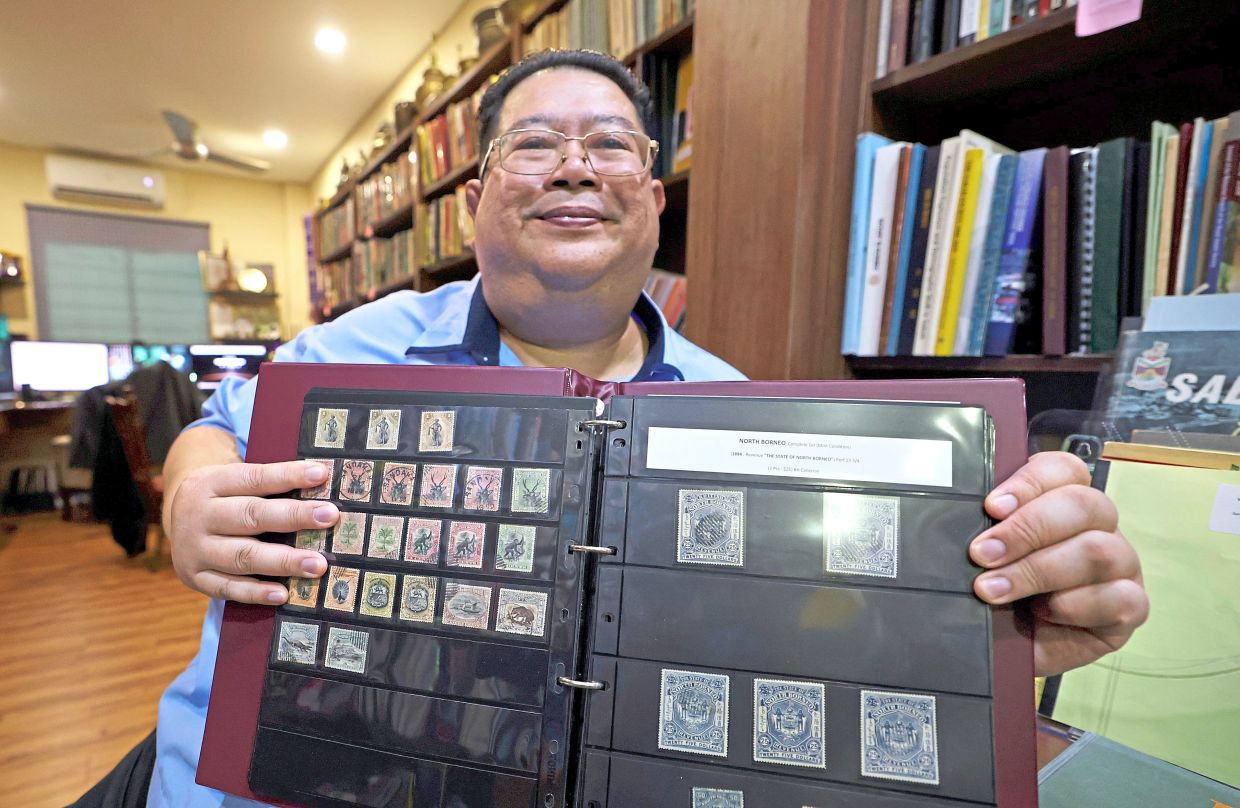
The postage stamps of North Borneo, issued over the course of eighty years from 1883 to 1963, represent far more than mundane evidence of postal payment. These small but intricate pieces of coloured paper constitute what historians describe as a "living archive" of Sabah's colonial and early independence eras, capturing the territory's transformation across nearly a century of profound change. Yet as these stamps grow rarer and harder to locate, their preservation has become a matter of genuine urgency for those who understand their significance to regional heritage.
Dr Shari Jeffri, the 56-year-old founder and president of the Borneo History Association, has devoted decades to understanding and safeguarding this philatelic legacy. His conviction that these stamps embody irreplaceable historical narratives stems from personal experience and scholarly research alike. In conversations about the future of stamp collecting, Jeffri has expressed concern about demographic shifts within the hobby itself. The contemporary generation, he observes, lacks the exposure to philately that characterised earlier decades, with only a modest contingent of dedicated enthusiasts remaining active in the field. This attrition of interest coincides dangerously with the physical scarcity of specimens, creating a precarious situation for preservation efforts.
Recent surveys of antique dealers operating throughout Kota Kinabalu have documented the increasingly elusive nature of North Borneo stamps in the local market. Their scarcity has naturally driven prices upward, with valuations determined by age, condition and rarity. Among notable examples uncovered were stamps from the 1954 to 1961 period, including a six-cent denomination featuring Queen Elizabeth II alongside a Dusun woman, and a ten-cent issue illustrating logging operations that were transformative to the region's economy. These designs carry particular relevance for Malaysians, as they document a transitional moment when Sabah was preparing for federation and reshaping its identity within a new political framework.
Jeffri's personal engagement with stamp collecting originated through inheritance rather than formal instruction. His late grandfather, who served at the Recreation Club Jesselton in Kota Kinabalu during the 1920s, accumulated a collection after witnessing British colonial officers pursuing the hobby with enthusiasm. That grandfather harboured hopes of transmitting his passion to subsequent generations, recognising that such collections could serve educational functions beyond the aesthetic pleasure of ownership. Though Jeffri encountered stamps at age seven, he did not become a serious collector until his secondary school years, when he began the meticulous work of cataloguing and protecting the family inheritance. This process sparked intellectual curiosity about the historical narratives encoded within each design and denomination.
Among Jeffri's most treasured holdings are two two-cent stamps from the inaugural 1883 issue, both bearing brown sailing boat imagery and complete postmarks indicating their journey through the colonial postal system. For specialists in the field, possessing examples from this foundational issue constitutes a fundamental requirement for any comprehensive collection. Each stamp transcends its practical function as proof of postage, instead functioning as a physical embodiment of a distinct historical moment and the prevailing aesthetic and political sensibilities of its era. The oldest denominations and designs communicate aspects of territorial identity that written records sometimes obscure or simplify.
Jeffri's four decades of engagement with philately have provided him with detailed knowledge of how North Borneo's postal system and stamp designs evolved following their introduction by the British North Borneo Chartered Company. The initial fifty-two-year circulation period encompassed dramatic shifts in the territory's economic orientation and administrative structure. Early designs emphasised symbols of imperial authority and exotic wonder—lions, boats and tigers—accompanied by the Latin motto Pergo et Perago, meaning "I undertake and I achieve." These selections reflected deliberate efforts to introduce the territory to an external audience, projecting images of opportunity and stability that would attract merchants and settlers to this distant frontier.
The 1935 series represented a watershed moment in the visual narrative of North Borneo stamps. Rather than abstract imperial symbols, these designs foregrounded the territory's distinctive natural environment, becoming more explicitly reflective of Sabah's identity through representations of native flora, fauna and wildlife. Denominations expanded to encompass a broader range, from two cents to one dollar, accommodating diverse postal needs across the growing colonial administration and expanding mercantile networks. From 1894 onward, botanical and zoological imagery gradually displaced heraldic motifs, documenting a shift in how the territory conceived of itself and wished to be perceived internationally.
Modern preservation techniques have become essential as these stamps deteriorate with age. The primary technical challenge involves preventing acid damage and colour fading, which Jeffri addresses through the use of acid-free albums specifically designed for stamp storage. The physical condition of each specimen directly correlates with its historical and monetary value. Stamps bearing complete postal cancellations—bearing legible markings indicating the date, post office location, time and place of origin—command particular esteem among collectors because they provide verifiable postal records that illuminate communication patterns and administrative operations within the territory. The paper composition and adhesive formulations also serve as technical indicators of authenticity, with variations marking different printing periods and production facilities.
To deepen his expertise, Jeffri undertook training under accomplished Singaporean philatelic specialists Voon Kyam Foh and Tan Chun Lim, recognising that mastery of the field required guidance from acknowledged authorities. He supplemented this mentorship through consultation of authoritative reference materials, particularly the Commonwealth & British Empire Stamps catalogue, which provides standardised classification systems for collectors across the region. This combination of apprenticeship and scholarly consultation represents the methodical approach necessary for serious preservation work, distinguishing it from casual collecting.
The transition from letter-writing to digital communication has fundamentally altered the social context within which stamp collecting operates. Yet despite this technological displacement, North Borneo's antique stamps retain their capacity to illuminate Sabah's past through visual and material evidence that transcends linguistic or textual documentation. For Malaysian historians and heritage advocates, these stamps merit continued active preservation, representing a tangible connection to the territory's pre-independence experience and the complex processes through which modern Sabah emerged. Their survival depends upon cultivating new generations of informed stewards capable of recognising their significance and dedicating resources to their long-term care.

