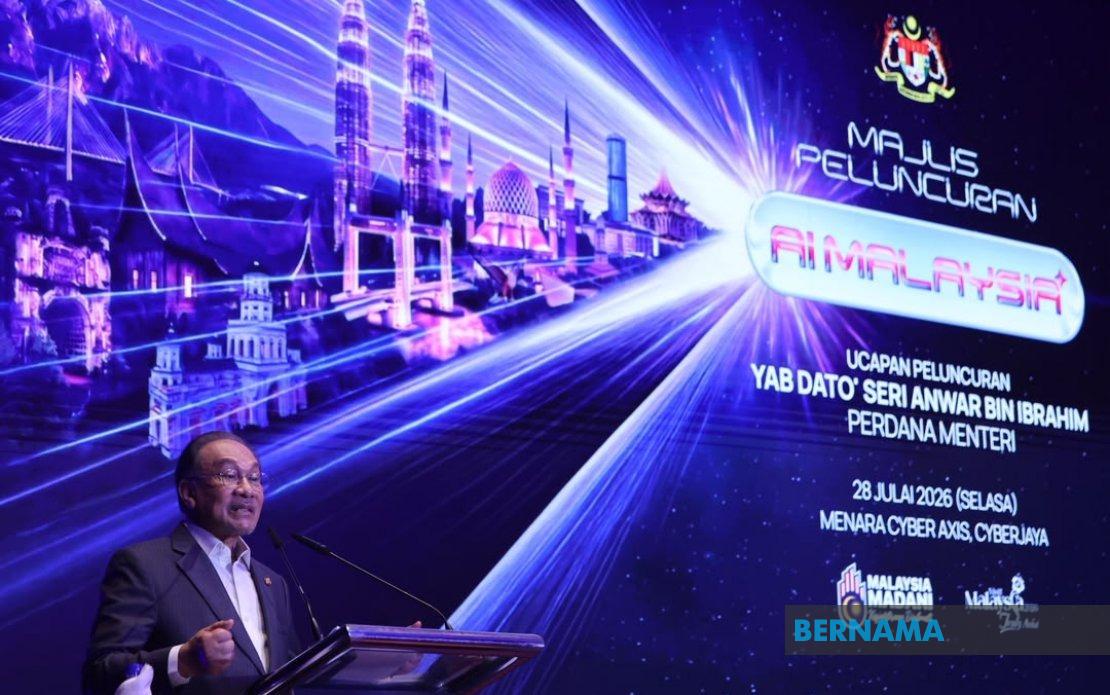
Prime Minister Datuk Seri Anwar Ibrahim revealed that PMX AI, an artificial intelligence-powered avatar initiative launched through his WhatsApp platform, is currently being enhanced and refined following its debut and rapid withdrawal. Speaking briefly after the opening of AI Malaysia in Cyberjaya on July 28, Anwar indicated that the project remains actively under development, with his team continuing to work through technical and functional refinements before the service returns to public availability.
The PMX AI initiative, which first appeared to the public on July 18, represented an ambitious attempt to leverage artificial intelligence technology for direct citizen engagement at the highest level of government. The avatar was conceived as a digital representation of the Prime Minister himself, functioning as what officials described as his virtual twin. The concept aimed to democratise access to the Prime Minister's office by allowing citizens to voice their views, concerns, and aspirations through an automated interface rather than traditional bureaucratic channels.
The rapid removal of the service just days after its public unveiling prompted considerable discussion about the readiness of the platform and the technical challenges involved in deploying such sophisticated AI systems at scale. Rather than representing a fundamental failure of the concept, Anwar's acknowledgement suggests the government is taking a measured approach to refinement, ensuring that the avatar meets acceptable standards for accuracy, reliability, and user experience before permanent deployment. This cautious strategy reflects broader lessons learned in the public sector regarding technology rollouts, where premature launches without adequate testing can damage public confidence.
The decision to develop such a service aligns with Malaysia's stated ambitions to position itself as a regional technology hub and leader in artificial intelligence innovation. The AI Malaysia launch event itself provided the context for Anwar's update, highlighting the government's commitment to integrating advanced technologies across various sectors. By publicly acknowledging the ongoing work on PMX AI, the Prime Minister demonstrated transparency about both the initiative's potential and the practical complexities of implementation.
From a governance perspective, the PMX AI concept addresses a genuine challenge in modern democracies: bridging the gap between citizens and their elected leaders whilst managing the practical constraints on time and resources. Traditional channels for citizen feedback, whether through parliamentary sessions, ministerial meetings, or even social media responses, are inherently limited in capacity. An AI-powered avatar could theoretically handle vastly larger volumes of public input, categorise concerns by theme, and identify emerging issues requiring policy attention. This efficiency gain could significantly enhance responsive governance if properly calibrated.
However, the technical hurdles involved in creating a convincing and reliable digital twin are substantial. Natural language processing must accurately interpret citizen concerns in multiple languages and dialects spoken across Malaysia. The AI must generate contextually appropriate responses that reflect government policy positions without making unauthorised commitments or misrepresenting official positions. Moreover, the system requires robust safeguards against misuse, misinformation, and automated exploitation. These challenges explain why the initial launch required swift correction rather than proceeding with a flawed product.
The PMX AI initiative also carries implications for how Malaysian citizens interact with government in an increasingly digital world. Younger demographics, already accustomed to communicating through WhatsApp and other messaging platforms, may find this interface more accessible than traditional government communication methods. The avatar could potentially increase democratic participation by lowering barriers to entry, though this depends entirely on the quality and responsiveness of the underlying artificial intelligence system.
Regional observers may view Malaysia's experimentation with such technology as indicative of broader Southeast Asian efforts to modernise governance through digital innovation. Neighbouring countries including Singapore and Thailand have similarly explored AI applications in public administration. The success or failure of PMX AI could influence adoption of comparable systems throughout the region, making the refinement phase particularly significant from a geopolitical technology perspective.
The technical team working on improvements reportedly focuses on enhancing the avatar's conversational abilities, expanding its knowledge base to cover a broader range of policy areas, and developing better systems for escalating complex issues to appropriate government departments. These refinements typically require substantial testing with diverse user groups to ensure the system functions equitably across different demographics and usage patterns. The extended development timeline, though potentially frustrating for those eager to test the system, ultimately serves the public interest by ensuring a more robust final product.
Looking forward, the eventual relaunch of PMX AI will provide valuable insights into citizen preferences regarding digital government services in Malaysia. The data generated by the system could inform broader digital transformation initiatives across the public sector, demonstrating which communication styles, response formats, and service structures resonate most effectively with Malaysian citizens. Success with this flagship initiative could accelerate adoption of artificial intelligence tools throughout government agencies, improving service delivery across numerous sectors from healthcare to taxation to licensing.
Anwar's commitment to completing the refinements indicates that the government views PMX AI as a worthwhile long-term initiative rather than an experiment to be abandoned following initial setbacks. The Prime Minister's willingness to publicly acknowledge the improvements underway also suggests a pragmatic approach to technology deployment, where transparency about challenges and ongoing work builds public trust more effectively than silence would. As Malaysia continues developing its digital infrastructure and governance frameworks, the PMX AI refinement process represents a valuable learning opportunity for the entire public sector regarding technology implementation and citizen engagement.

