Pritam Singh has consolidated his grip on Singapore's Workers' Party after securing an overwhelming mandate in internal elections on June 28, defeating an attempt by a faction of dissident cadres to force his removal from the party's top post. Operating unopposed, Singh received roughly 80 per cent support from the party's inner circle—a group comprising slightly more than 100 members—in a secret ballot that many observers expected would determine his political future. The decisive outcome marks a turning point for the opposition leader, whose tenure has been shadowed by legal difficulties and party divisions stemming from a high-profile parliamentary deception scandal.
The reinstatement occurred after a special cadres conference earlier that day proved unsuccessful in compelling Singh's resignation. Twenty-five unhappy party members had formally petitioned for a leadership challenge, citing concerns about Singh's legal troubles and his handling of the fallout from former Sengkang GRC MP Raeesah Khan's false testimony to Parliament in 2021. Rather than step aside, Singh chose to face the democratic process within the party, a gamble that has paid off decisively. The vote represented a crucial test of his standing among senior party figures at a moment when his political authority faced genuine scrutiny.
Analysts regard the election result as essential to stabilizing the Workers' Party after years of turbulence. The party had absorbed substantial reputational damage following revelations that Singh had assisted Khan in perpetuating her parliamentary lie for several months, a failure that triggered multiple official investigations and legal consequences for the party chief. The High Court upheld his conviction for misleading Parliament's Committee of Privileges in December 2025, and Parliament subsequently deemed him unsuitable to continue as Leader of the Opposition. Prime Minister Lawrence Wong removed him from that ceremonial role in January 2026. These setbacks had raised genuine questions about whether the party's membership would stand by him or seek fresh leadership.
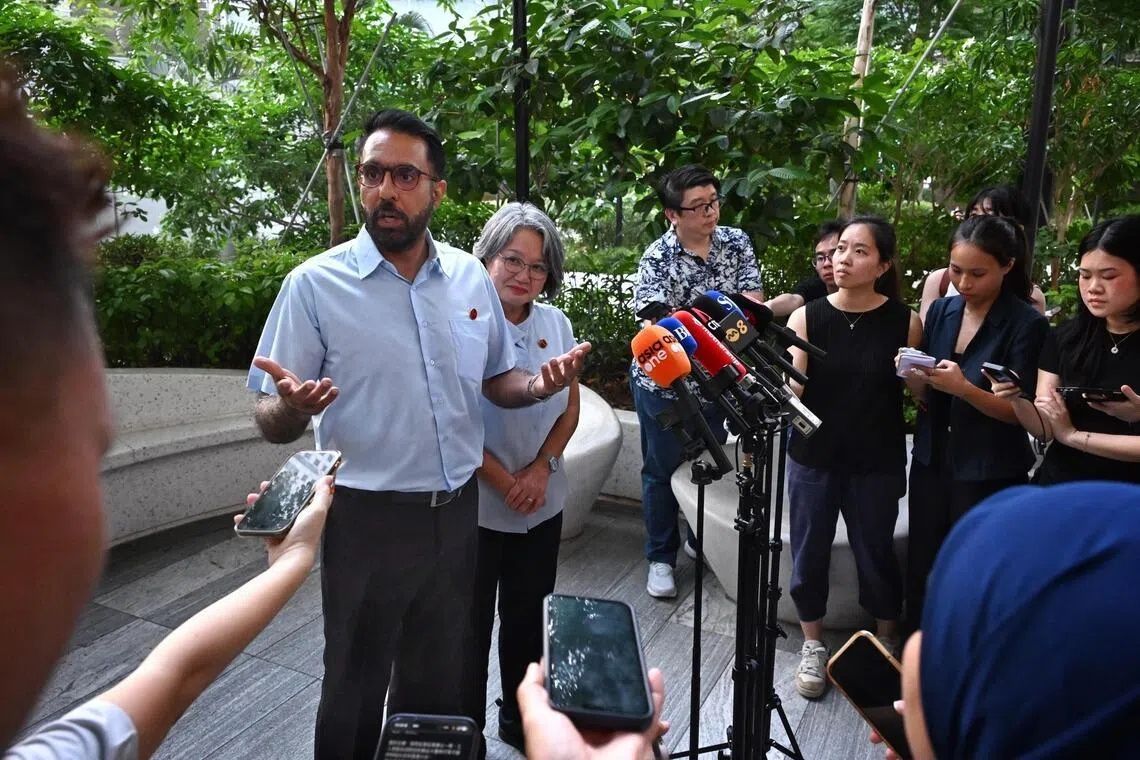
Speaking to journalists after the result, Singh emphasized the necessity for the party to maintain cohesion and fulfill its core mission of representing Singaporeans with integrity and responsibility. He framed the outcome as a demonstration of party unity while declining to release exact voting figures, though Gerald Giam, the Aljunied GRC MP who chaired the meeting, publicly stated that Singh had secured "well in excess of a supermajority" backing. The secret ballot mechanism itself proved significant, allowing party insiders to express their true preferences without social pressure or public scrutiny, yet producing a decisive endorsement that left little room for ongoing leadership ambiguity.
The challenge to Singh's leadership had been organized by cadres expressing frustration about both his legal predicament and broader governance concerns. The June 28 cadres conference included three formal agenda items: requiring Singh to account for his conduct before his conviction, demanding his resignation, and mandating a leadership ballot if he declined to step down voluntarily. Rather than capitulate, Singh chose to present his case directly to party members, delivered remarks addressing their concerns, and answered questions in what observers described as a civil but substantive debate. Giam characterized the discussion as "robust" yet respectful, with members granted genuine space to voice their grievances and demand accountability.
Critically, the outcome was not foreordained. In the weeks preceding the vote, dissident cadres had actively sought an alternative candidate to challenge Singh for the party leadership, creating uncertainty about whether he retained sufficient backing to survive the ballot. The situation was further complicated by ambiguity regarding the position of Low Thia Khiang, Singh's predecessor as party chief, whose stance would likely influence wavering members. However, Low definitively settled the matter on the morning of June 28 by publicly reaffirming his support for Singh as he arrived at the meeting venue. This endorsement from a deeply respected figure within party circles appears to have significantly influenced the final outcome and demonstrated that the party's senior hierarchy remained fundamentally aligned.
Following the successful leadership ballot, the Workers' Party proceeded with its scheduled biennial internal elections later that afternoon, selecting members of its central executive committee, the party's principal decision-making body. Sylvia Lim retained her position as party chair, a role she has held continuously since 2003, signaling continuity in the party's top two positions. The committee elections returned most incumbent members, suggesting broad acceptance of the existing leadership structure across the party hierarchy. Four of the twelve elected committee members do not currently serve in Parliament: former Aljunied GRC MP Faisal Manap, long-serving member Tan Kong Soon, and Low Thia Khiang himself, along with senior counsel Harpreet Singh, who recently contested parliamentary elections as part of the party's Punggol GRC team in May 2025.
The inclusion of Harpreet Singh as a new committee member is notable, as he represents the party's effort to refresh its leadership pipeline while maintaining institutional stability. Singh, speaking on LinkedIn after the elections, characterized the party cadres' decision to re-elect Pritam as a product of careful deliberation rather than reflexive loyalty. He argued that members had evaluated Pritam's track record comprehensively, considering his service record, composure under sustained political pressure, and the party's historical parliamentary achievements. Critically, Harpreet Singh acknowledged that the High Court's judgment upholding Pritam's conviction must be respected and cannot be dismissed, yet suggested that assessing a person's fitness to lead requires weighing their full history and conduct rather than focusing narrowly on a single legal determination.
The committee elections completed, the party retains the authority to co-opt an additional seven members to the central executive committee, a process typically conducted approximately one month after elections. This mechanism provides flexibility for the party to add voices or expertise to the decision-making body based on evolving circumstances or newly identified needs. The party had previously imposed internal discipline on Pritam through a formal letter of reprimand issued by the central executive committee two months prior to these elections. That reprimand responded to findings by a disciplinary panel comprising Sengkang GRC MPs Jamus Lim and He Ting Ru, along with former Hougang MP Png Eng Huat, who determined that Pritam had violated two articles of the party's Constitution through his actions surrounding Khan's parliamentary deception.
The broader political context remains significant for Malaysian and Southeast Asian observers. Singapore's opposition politics exist within a highly constrained environment where parliamentary representation remains concentrated among a dominant ruling party, making the Workers' Party's role as the largest opposition force particularly consequential. The party's internal challenges have unfolded under intense public and media scrutiny, with the Khan scandal having generated substantial international attention regarding parliamentary integrity and opposition accountability. Singh's successful re-election suggests that despite real internal doubts and legitimate concerns about his leadership, the party membership determined that removing him would prove more damaging to the organization's long-term interests than retaining him and imposing internal consequences for his conduct.
Pritam's continued leadership also maintains the Workers' Party's position as a parliamentary force capable of mounting substantive opposition to government policies and scrutinizing executive decisions. By contrast, had Singh been forced from his position, the party would have faced significant organizational disruption precisely when it needs to consolidate its parliamentary presence and rebuild public confidence following the Khan scandal. The decisive re-election vote now provides Singh with a mandate to rebuild the party's reputation and refocus on its core parliamentary functions, though questions about his long-term viability as a national opposition figure remain subject to ongoing political and public assessment.

