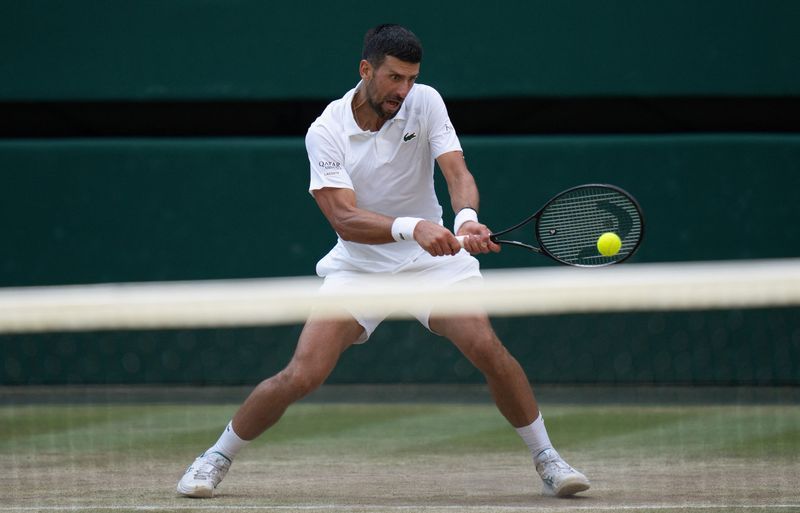
The Professional Tennis Players Association has intensified its campaign against the sport's gruelling schedule, pointing to multiple elite withdrawals from the Canadian Open as evidence that professional tennis has reached an unsustainable crisis point. The advocacy group contends that the combination of an already punishing calendar and the recent expansion of top-tier tournaments has created a perfect storm of physical breakdown, with injuries occurring with greater frequency and severity than ever before.
The Montreal instalment of the Canadian Open lost several marquee names to injury complications, including world number one Jannik Sinner and 24-times Grand Slam champion Novak Djokovic, both of whom cited health concerns. Carlos Alcaraz's wrist injury also forced him to withdraw, while Canadian hopes suffered a setback when local favourite Felix Auger-Aliassime pulled out with a back problem. The women's draw was similarly affected, with defending champion Victoria Mboko, Wimbledon finalist Karolina Muchova, Emma Raducanu and Jasmine Paolini all absent due to injuries. Tournament organisers themselves had previously flagged the recurring problem of late withdrawals from Masters 1000 events as a systemic challenge threatening the sport's credibility.
The PTPA's concerns rest on substantial empirical foundation. Over the past three years, the association working alongside its medical director Dr. Robby Sikka has compiled and scrutinised injury data spanning more than 30,000 professional matches conducted across all competitive levels. The findings paint an alarming picture: upper-body injuries surged 42 percent in the first quarter of 2026 compared to the corresponding 2025 period, while arm injuries specifically jumped 112 percent when measured against the 2025 annual average. These statistics suggest that players' bodies are deteriorating at an accelerating pace rather than stabilising, indicating that current conditions have passed any reasonable threshold of acceptability.
The temporal proximity of these injury spikes to structural changes in the professional calendar is unlikely coincidental. The Association of Tennis Professionals has substantially restructured its Masters 1000 series under its OneVision strategic initiative, expanding seven of its nine flagship tournaments from their traditional format into 12-day events. The 2025 season marked the inaugural year in which this extended format was implemented uniformly across these venues. While tournament organisers may have envisioned such expansion as beneficial for broader audiences and enhanced commercial viability, the unintended consequence has been a severe compression of the window available for player recovery, training progression and logistical preparation between successive competitions.
For Malaysian and Southeast Asian readers, this international dispute holds particular relevance. The region has increasingly invested in hosting and developing tennis talent, from Malaysia's own competitive players to the broader aspiration of establishing world-class tournaments. The systemic strain now visible in the global professional circuit threatens to undermine talent development pathways everywhere, as junior players modelling their careers on elite precedents may inherit scheduling patterns that damage their long-term prospects before their talent fully matures. Additionally, the commercial pressures driving schedule expansion internationally often flow through to regional tournaments, potentially creating cascading effects throughout the sport's pyramid.
The PTPA's position reflects a broader philosophical tension embedded within professional sports governance. The players' association argues forcefully that short-term commercial interests cannot justify compromising athlete welfare, particularly when the evidence base demonstrates measurable deterioration in physical health outcomes. This framing explicitly challenges the notion that player availability and schedule density automatically correlate with sporting viability or financial success. Rather, the association suggests that protecting athlete longevity and competitive integrity should take precedence, since sustainable player participation ultimately protects the sport's commercial future far more effectively than extracting maximum near-term value from diminishing human resources.
The ATP has previously maintained that players retain meaningful autonomy over their scheduling decisions and that the governing body actively works to create incentive structures encouraging participation levels that remain physiologically sustainable. However, the PTPA's counter-argument holds considerable weight: when top-ranked competitors face competitive pressures to participate in expanded tournaments despite inadequate recovery periods, the notion of genuine choice becomes somewhat theoretical. Professional athletes operating at elite levels face institutional and financial pressures that constrain their practical freedom to prioritise health over maintaining ranking positions and competitive visibility.
Looking forward, the PTPA has outlined concrete recommendations for structural reform. The association calls for the sport to adopt a player-health-centred, data-informed methodology when redesigning the competitive calendar. It specifically advocates for meaningful player representation in scheduling decisions, arguing that those bearing the physical consequences should have substantive input into conditions affecting their bodies and careers. The group has also recommended reducing mandatory tournament commitments to create genuine recovery opportunities and has directly urged the ATP to reconsider and reverse the 12-day Masters 1000 format that triggered the current crisis.
These proposals challenge fundamental aspects of how professional tennis currently operates. Tournament expansion reflects decades of accumulated commercial incentives, broadcasting partnerships and stakeholder expectations. Reversing such changes would require coordinated decision-making among multiple governing bodies, tournament operators and broadcasters, all of whom benefit from extended competitive schedules. Nevertheless, the mounting injury data and the accumulating withdrawals of sport's biggest names suggest that maintaining current trajectories risks gradually degrading the very product these entities seek to commercialise.
The Canadian Open withdrawals therefore represent more than isolated incidents affecting a single tournament. They constitute visible symptoms of a systemic imbalance that the professional tennis establishment must eventually address. Whether through voluntary industry reform or external pressure from players' advocates, the sport faces a choice between sustainable long-term models and short-term extraction that may ultimately prove self-defeating. For global tennis, and by extension for regional development programmes relying on international pathways, how this crisis resolves will significantly influence the sport's trajectory across the next decade.

