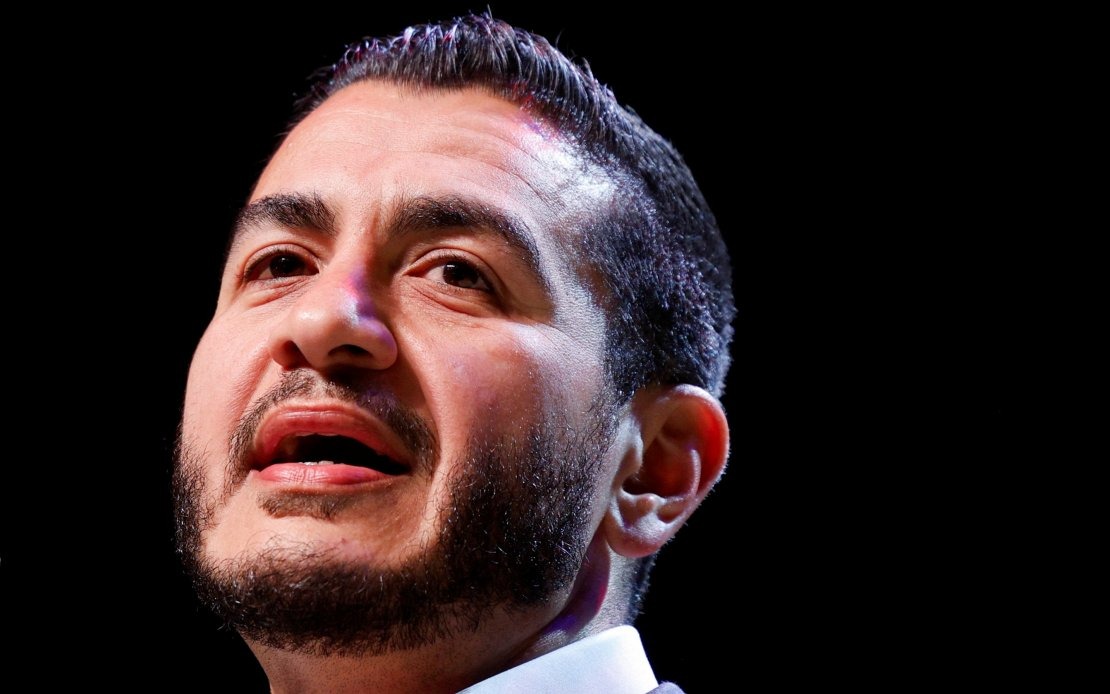
Abdul El-Sayed maintained a slender advantage in Michigan's Democratic Senate primary election early on Wednesday as voters across Kansas, Michigan, Missouri, Virginia and Washington selected their preferred candidates for crucial midterm races scheduled for November. With approximately 91 per cent of ballots processed at the time of reporting, El-Sayed edged ahead of US Representative Haley Stevens in the closely watched contest, though the Associated Press had not yet formally declared a winner in the race.
The Democratic nominee from Michigan will eventually confront Republican Mike Rogers in the general election campaign to succeed retiring Democratic Senator Gary Peters. Rogers faced no opposition in his party's primary and secured the Republican nomination by default. The matchup represents a significant battleground given Michigan's competitive political status and demographic importance in national elections.
El-Sayed's primary victory was underpinned by endorsements and organisational support from figures within the Democratic Party's progressive wing. Notably, Senator Bernie Sanders and Representatives Alexandria Ocasio-Cortez and Rashida Tlaib championed his candidacy. Stevens, by contrast, relied on backing from establishment-oriented Democrats including the outgoing Senator Peters, signalling a fundamental ideological divide within the party's Michigan operations and reflecting broader factional tensions present across American Democratic politics.
The Israel-Palestine conflict and Washington's international posture emerged as a defining policy disagreement throughout the primary campaign. US military aid to Israel and the humanitarian situation facing Palestinian civilians in Gaza catalysed significant grassroots mobilisation and shaped voter preferences, particularly among younger voters and progressive constituencies dissatisfied with mainstream Democratic positioning on Middle Eastern affairs.
Beyond the Senate contest, Michigan voters determined outcomes in multiple congressional districts. Republican Representative Jack Bergman retained his party's nomination in the 1st Congressional District with commanding support, capturing 74.3 per cent of votes against two challengers when 94 per cent of ballots had been tallied. Similarly, Republican Representative Bill Huizenga secured renomination in the 4th District, defeating primary challenger Philip Tanis by a decisive margin of 85 to 15 per cent with 83 per cent of precincts reporting their results.
The Democratic nomination in Michigan's 4th Congressional District went to state Senator Sean McCann, who defeated rival Diop Harris II with 67.2 per cent support, positioning McCann to face Huizenga in what promises to be a competitive general election contest. Kansas Republicans endorsed incumbent Senator Roger Marshall's reelection bid decisively, with Marshall defeating primary challenger Pond Naramore by garnering 79.9 per cent of votes with virtually complete reporting from precincts across the state. Marshall will encounter Democrat Adam Hamilton, who prevailed in a crowded Democratic primary field.
Kansas's gubernatorial race featured Democrat Cindy Holscher successfully navigating her party's primary against two opponents, earning the Democratic nomination. She will ultimately challenge Republican Ty Masterson, whose primary victory came with the explicit endorsement of President Donald Trump and reflected Trump's continuing influence over Republican nomination contests even in contests where he maintains no direct involvement. The winner will assume office as Laura Kelly retires due to constitutional term limits that prevent her from seeking additional terms as governor.
Missouri's primary elections occurred under a redrawn congressional map that Republican state lawmakers adopted with President Trump's backing, a redistricting exercise specifically designed to strengthen Republican prospects in House races and solidify GOP control of Missouri's congressional delegation. Democratic Representative Wesley Bell successfully defended his seat in the 1st Congressional District primary, overcoming challenges from four opponents including former Representative Cori Bush, demonstrating that incumbent advantage and organisational strength can overcome progressive movement mobilisation in internal party contests. Bell will advance to face Republican nominee Paul Berry III in the general election.
Virginia's Republican Party selected Bert Mizusawa as its Senate nominee to challenge incumbent Democratic Senator Mark Warner, whose reelection bid faced no primary opposition reflecting his strong position within his party. In Virginia's 1st Congressional District, Democrat Shannon Taylor secured her party's nomination with 53.1 per cent of votes to face Republican Representative Rob Wittman, who ran unopposed in his primary and pursues a 10th consecutive full term in Congress. Former Democratic Representative Elaine Luria reclaimed her party's nomination in the 2nd District with commanding support of 80.4 per cent, positioning herself for a rematch against Republican incumbent Jen Kiggans.
Virginia's 7th District Republican primary saw Doug Ollivant prevail with 56.6 per cent of votes, allowing him to advance toward a confrontation with first-term Democratic Representative Eugene Vindman, who faced no primary challenger. Washington's all-party primary system produced distinct outcomes across congressional districts, with Democratic Representative Suzan DelBene and Republican Mary Silva both advancing from the 1st District to the general election under the state's unique top-two vote-getter system. Democratic Representative Marie Gluesenkamp Perez will confront Republican John Braun, who enjoyed Trump's formal endorsement, whilst Democratic Representative Emily Randall advanced from the 6th District to face Republican Teresa Fox in November's general election.

