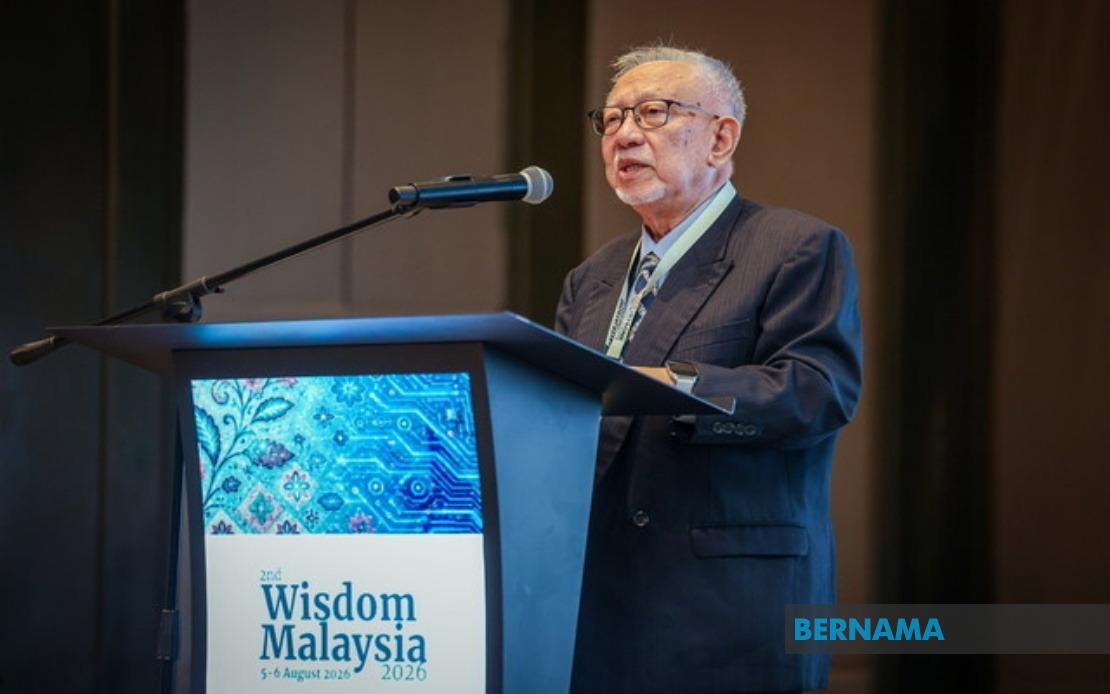
The protection of whistleblowers stands as a critical component in any nation's ability to root out systemic corruption, according to Datuk Syed Ahmad Idid Syed Abdullah, a former High Court Judge of Malaya and Borneo. Speaking at the 2nd Wisdom Malaysia Conference 2026 in Kuala Lumpur, he cautioned that failing to safeguard those who expose wrongdoing creates a chilling effect throughout public institutions, effectively silencing the very voices needed to maintain governmental integrity.
When organisations move to suppress or intimidate individuals willing to come forward with evidence of corruption, they inadvertently guarantee that dishonest conduct will flourish unchecked, Syed Ahmad Idid argued during a dialogue session on principled leadership. Rather than investigating the allegations themselves, this approach sends a powerful message to other potential whistleblowers within the system that speaking up carries significant personal risk. The consequence is predictable: a cascade of larger, more damaging scandals that eventually come to light through other means, often resulting in far greater losses to the nation.
The former judge drew an important distinction between whistleblowing and slander, emphasising that coming forward with evidence of workplace misconduct represents a legitimate act of justice rather than character assassination. This clarification matters considerably for Malaysian audiences, where there remains considerable confusion about the difference between filing frivolous complaints and raising genuine concerns about abuse of power. In the current climate of heightened awareness around governance issues, understanding this distinction becomes increasingly valuable for both public officials and citizens navigating their roles within institutional frameworks.
Beyond the moral imperative, Syed Ahmad Idid highlighted the substantial economic dimension of corruption eradication. If Malaysia successfully recovered all funds diverted through corrupt practices and systemic leakages, the financial windfall would be transformative for national development priorities. Rather than theoretical speculation, he translated this potential recovery into concrete examples that resonate with ordinary Malaysians concerned about public service delivery and educational standards.
The recovered corruption proceeds could fund the construction of at least two general hospitals in every Malaysian state, fundamentally improving healthcare accessibility across both urban and rural communities. This would address significant gaps in medical infrastructure, particularly in less developed regions where residents currently travel considerable distances to access quality hospital services. The scale of such infrastructure investment demonstrates how effectively rooting out corruption directly translates into tangible improvements in citizens' lives.
Education represents another critical beneficiary of such recovered funds. Syed Ahmad Idid suggested that nationwide construction of between 20 and 50 high-quality schools could be accomplished, allowing Malaysia to comprehensively upgrade its learning institutions across diverse regions. Beyond mere construction, these recovered resources could equip schools with modern facilities and teaching materials that presently remain beyond reach in many establishments, particularly in less affluent areas where students operate with significantly fewer educational advantages than their counterparts in developed regions.
Teacher development emerges as another crucial area for investment from recovered corruption funds. Enhanced training programmes would elevate the professional capabilities of educators, translating into improved instructional quality and student learning outcomes. This investment would position Malaysia to genuinely compete internationally in educational excellence, producing graduates capable of thriving in global markets and contributing to the nation's standing in an increasingly knowledge-based international economy.
The implications extend beyond academics into national security and athletics. A strengthened educational foundation would develop the human capital necessary for more effective security personnel, addressing skill gaps that impact national safety. Similarly, improved training facilities and resources could nurture athletic talent more comprehensively, enabling Malaysian athletes to achieve greater international success and bringing prestige to the nation through sporting excellence.
Syed Ahmad Idid also pressed for clarity in how corruption is conceptualised and discussed within Malaysian society. Allowing skewed interpretations or offering lenient readings of corrupt practices represents a fundamental threat to governance integrity. He called upon all segments of society—from government officials to business leaders to ordinary citizens—to maintain uncompromising principles of justice and integrity in their professional and personal conduct.
This emphasis on societal responsibility reflects a nuanced understanding that combating corruption requires more than institutional mechanisms or legal frameworks; it demands a cultural shift where integrity becomes genuinely valued and protected rather than selectively enforced. When officials or leaders accept rationalised versions of wrongdoing, they normalise corruption within institutional cultures, making whistleblowing even more fraught with personal consequences.
The 2nd Wisdom Malaysia Conference, organised by Kerjaya One PLT, provided the platform for these insights from experienced leaders. The conference explicitly aims to facilitate knowledge transfer between current and former industry leaders, creating opportunities for emerging leaders and professionals to learn from those with decades of institutional experience. Such forums become increasingly important as Malaysia navigates questions about governance standards and institutional accountability.
For Malaysian readers, Syed Ahmad Idid's remarks carry particular relevance given ongoing national conversations around transparency and the anti-corruption agenda. The argument that whistleblower protection directly enables economic development provides a practical framing that extends beyond abstract principles of justice. When citizens understand that protecting those who expose corruption can literally fund hospitals, schools, and national development, the case for institutional safeguards becomes more concrete and compelling.
Moving forward, the challenge for Malaysian institutions involves translating these principles into enforceable protections and creating genuine safety mechanisms for those willing to expose wrongdoing. Without tangible safeguards—legal, professional, and financial—warnings about the importance of whistleblower protection remain largely rhetorical. Building such systems requires sustained commitment from government, civil society, and the private sector to signal that integrity is not merely celebrated in conference speeches but actively protected through concrete institutional practices.

