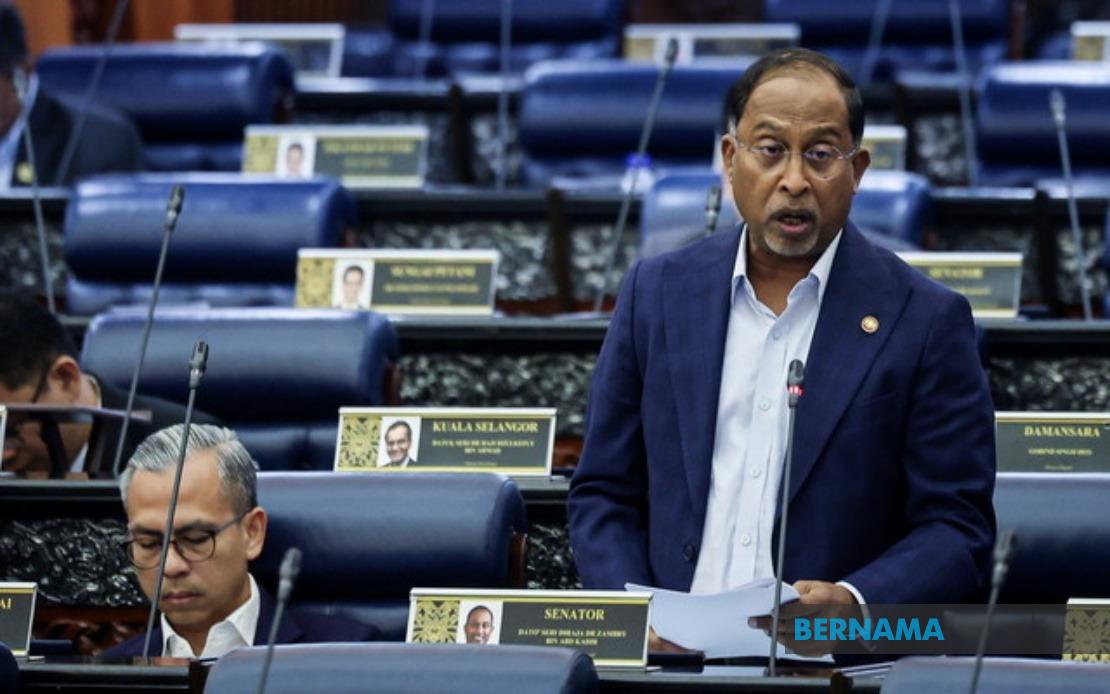
The National Higher Education Fund Corporation (PTPTN) has secured RM197 million in loan repayments through appointed debt negotiation agencies (APH) in the period from July 2025 to May this year, according to Higher Education Minister Datuk Seri Dr Zambry Abdul Kadir. The collection figure demonstrates a year-on-year growth of 6.4 per cent compared to the equivalent timeframe in the preceding year, suggesting that the strategy of engaging third-party debt negotiators is yielding measurable results in improving repayment rates among borrowers facing prolonged arrears.
The uptick in collections reflects what ministry officials characterise as the effectiveness of APH services in motivating borrowers to settle outstanding debts. As of May, approximately 103,418 borrower accounts carrying combined arrears exceeding RM3 billion have been transferred to APH for collection efforts. These figures underscore the scale of the challenge facing Malaysia's higher education financing system, where a significant portion of the borrower population struggles with loan obligations spanning years or even decades.
Dr Zambry clarified that the assignment of cases to APH follows a carefully structured process designed to target only the most problematic accounts. Only borrowers whose arrears have accumulated for more than 120 months—equivalent to a decade of non-payment—and who have already exhausted PTPTN's internal collection mechanisms proceed to APH. Furthermore, these accounts must have passed through the formal legal system, with a judgment already recorded against the borrower. This graduated approach ensures that APH involvement represents a final step in collection efforts rather than an initial enforcement mechanism.
Crucially, Dr Zambry emphasised that the involvement of APH is not intended as a punitive measure or a mechanism to harass struggling borrowers. Instead, he framed it as one component of a comprehensive portfolio of collection strategies applied selectively to accounts demonstrating the longest delinquency patterns and having undergone legal processes. This positioning carries significant implications for borrower sentiment, particularly given the politically sensitive nature of student loan management in Malaysia, where large segments of the electorate remain indebted to PTPTN years after completing their tertiary education.
The minister's remarks came during questioning in the Special Chamber session of the Dewan Rakyat from Lim Lip Eng, the PH-Kepong representative, who raised concerns about oversight mechanisms governing APH operations and alternative repayment structures for borrowers experiencing genuine financial hardship. The parliamentary exchange reflects broader societal concern about the balance between institutional debt recovery imperatives and the financial realities of citizens whose earnings may not align with their original loan obligations.
Dr Zambry stressed that dialogue channels remain permanently open even after APH involvement, acknowledging that the transfer to negotiation agencies does not foreclose opportunities for borrowers to negotiate revised settlement terms. This commitment to maintaining communication pathways appears designed to counter perceptions that referral to APH represents an irrevocable escalation toward aggressive collection or legal sanctions.
To address borrowers facing financial constraints, PTPTN maintains a formal appeals process whereby individuals can lodge requests and engage with legal officers employed by the fund. These discussions aim to identify repayment arrangements aligned with the borrower's demonstrated capacity to pay, taking into account employment status, income level, existing financial obligations, and broader socioeconomic circumstances. The framework reflects recognition that a significant portion of PTPTN's borrower base comprises individuals working in lower-income segments of the Malaysian labour market, where educational credentials have not necessarily translated into earnings sufficient to service loans on original terms.
The minister's emphasis on case-by-case assessment underscores PTPTN's stated commitment to fairness and prudence in loan administration. By explicitly incorporating considerations of individual financial capacity, the fund appears to be attempting to navigate the politically fraught territory between creditor interests and debtor welfare. This approach acknowledges that blanket enforcement mechanisms, regardless of effectiveness in individual cases, carry reputational costs within a electorate significantly composed of borrowers or borrowers' families.
The RM197 million collection through APH, while substantial in absolute terms, must be contextualised against the broader landscape of PTPTN's portfolio. With over 103,000 accounts in arrears exceeding RM3 billion collectively, the annual collection rate suggests that debt recovery remains a protracted process requiring sustained effort across multiple institutional channels and extended timeframes. The 6.4 per cent year-on-year growth, while positive, indicates that APH's contribution to overall debt reduction remains incremental rather than transformative.
For Malaysian readers and policymakers, the performance data raises questions about the sustainability and scalability of current collection strategies. The concentration of arrears among such a large population segment reflects systemic challenges in matching higher education financing mechanisms to actual labour market outcomes and earnings trajectories. While APH involvement shows measurable returns, the underlying imbalance between loan obligations and borrower capacity suggests that structural interventions—potentially including loan restructuring frameworks, income-contingent repayment mechanisms, or revised underwriting criteria for future cohorts—may ultimately prove necessary to arrest further accumulation of problematic arrears.
The continued evolution of PTPTN's collection methodology, including expanded reliance on APH services, will likely remain subject to parliamentary scrutiny and public debate. The fund's ability to pursue recovery objectives while maintaining social legitimacy depends substantially on demonstrating that enforcement mechanisms are applied judiciously and that genuine hardship cases receive appropriate consideration. Dr Zambry's repeated emphasis on dialogue and flexibility may reflect institutional awareness that sustainable debt recovery requires sustained borrower cooperation and perceived procedural fairness, particularly in an environment where alternative political narratives about student loan burdens carry resonance with affected voters.

