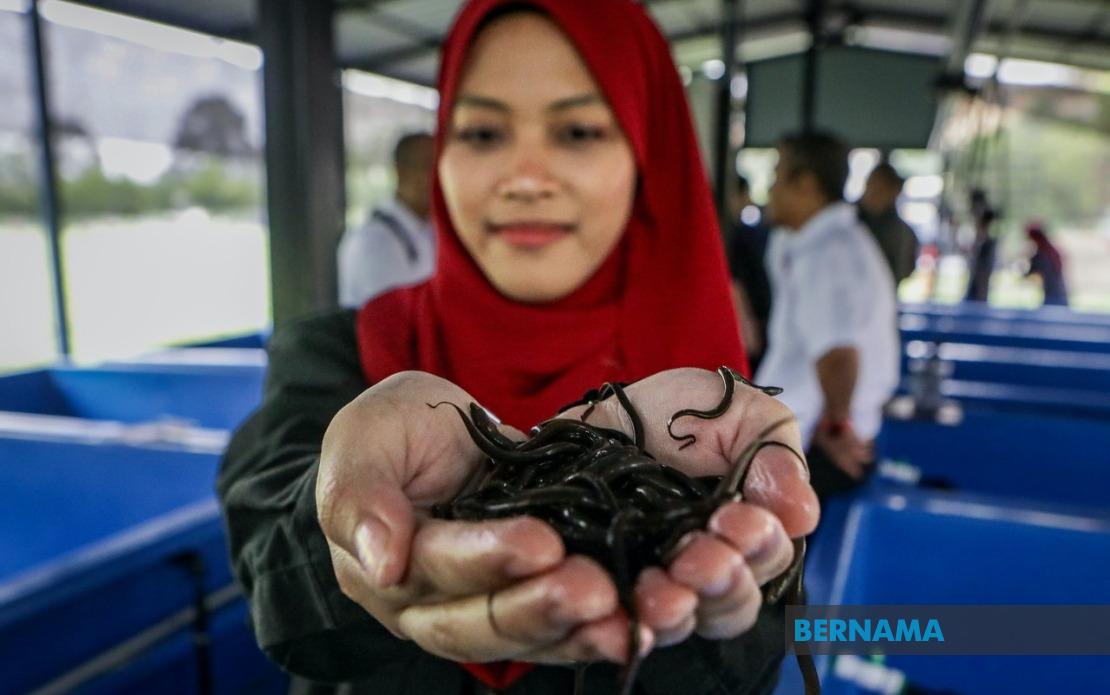
Politeknik Tuanku Syed Sirajuddin (PTSS) in Arau is proving that technical education extends far beyond classroom walls. The institution's role in launching the Projek Penternakan Belut Komersial Geran Sejati MADANI underscores a broader transformation in how vocational colleges across Malaysia are positioning themselves as catalysts for community-driven economic development. Rather than limiting their contribution to degree production, PTSS and similar institutions are increasingly leveraging their expertise, infrastructure, and faculty to directly uplift rural economies through hands-on initiatives that address real market demand.
The RM500,000 initiative represents a deliberate strategy to activate what vocational education professionals call the "innovation-to-community pipeline." By embedding students directly into commercial aquaculture operations, PTSS creates dual benefits: learners gain irreplaceable experiential knowledge that textbooks cannot provide, whilst simultaneously accelerating the development of viable enterprises within struggling communities. This model recognises that economic growth in Malaysia's peripheral regions often depends less on investment capital and more on access to technical expertise and proven methodologies that local entrepreneurs can adopt and scale.
According to PTSS director Khairul Anuar Ishak, the project targets five communities across Perlis under the Prime Minister's Department's Implementation Coordination Unit (ICU JPM). Each community receives 15,000 eel seeds and access to comprehensive institutional support spanning infrastructure development, equipment procurement, operational training, and financial management guidance. This structured handover approach—where PTSS maintains active involvement for an initial six-month period before full community control—reflects best practices in technology adoption, ensuring local participants develop genuine competency rather than mere dependency on external institutions.
The eel farming sector holds particular promise for Malaysia's rural economy. Unlike traditional agricultural ventures that often struggle with volatile commodity prices and climate vulnerability, controlled aquaculture operations offer predictable production cycles and quality management. Industry projections suggest that regional demand for eels remains robust, particularly given rising protein consumption patterns across Southeast Asia and growing aquaculture export markets. Communities that successfully establish operations stand to capture meaningful margins whilst addressing food security concerns in their own regions.
Production targets illustrate the economic potential embedded in this initiative. Each participating community anticipates harvesting approximately 5,000 kilogrammes of eels after five to six months of cultivation. When aggregated across all five communities, this represents 25,000 kilogrammes of marketable product over a single production cycle. Priced competitively in local and regional markets, such volumes could generate substantial aggregate income for participating households whilst creating secondary employment opportunities in processing, logistics, and distribution.
The contract farming arrangement provides crucial stability for nascent producers. Rather than entering volatile spot markets where individual farmers face significant price risk and buyer uncertainty, the structured approach protects participating communities through pre-arranged purchase agreements. This model, proven successful across multiple agricultural sectors in Southeast Asia, dramatically reduces entrepreneurial risk for communities lacking established market networks or negotiating leverage. For farmers in Perlis, this represents the difference between viable livelihood enhancement and speculative venture.
Khairul Anuar emphasised that PTSS's institutional involvement demonstrates tangible commitment to the principle that technical vocational education institutions hold obligations extending beyond their enrolled students. This philosophy increasingly characterises Malaysia's forward-thinking polytechnics and vocational colleges, which view community development as integral to their institutional missions. Such approaches generate measurable returns for participating regions whilst simultaneously providing faculty and students with research and development opportunities grounded in authentic economic challenges.
The initiative also exemplifies multi-stakeholder collaboration essential for rural development success. The integration of educational institutions, federal development agencies, and community organisations creates feedback mechanisms that academic institutions alone cannot provide. When PTSS faculty engage directly with communities attempting to implement new technologies, they identify practical obstacles and refinement opportunities that can be incorporated into curricula, creating virtuous cycles where classroom learning progressively improves as practitioners share real-world feedback.
For Malaysian policymakers focused on inclusive growth, this model offers replicable architecture. Rural communities across Peninsular Malaysia, Sabah, and Sarawak face comparable challenges: limited access to advanced agricultural knowledge, weak market integration, and brain drain towards urban centres. Activating existing polytechnic and vocational college infrastructure to champion community-based initiatives requires minimal additional public investment whilst leveraging existing institutional expertise and facilities. The approach thus represents efficient capital deployment with multiplier effects across participating regions.
The Perlis initiative also signals important shifts in how Malaysia's vocational education sector measures institutional impact. Beyond traditional metrics such as graduate employment rates and employer satisfaction surveys, forward-looking institutions increasingly track community income enhancement, enterprise sustainability, and technology adoption rates among partner populations. Such expanded impact frameworks better capture the true value that technical education institutions contribute to national development, particularly in underserved regions where conventional economic growth drivers remain limited.
Successful execution of this eel farming project could catalyse broader institutional engagement across Perlis and neighbouring states. Should the five pilot communities achieve production and income targets whilst demonstrating sustainable management capacity, the model becomes replicable across additional communities and potentially expandable to other high-potential aquaculture species or agricultural innovations. Such scaling would position technical vocational institutions as anchors of decentralised economic development, strengthening Malaysia's capacity to generate opportunity and prosperity across diverse geographic and demographic contexts.

