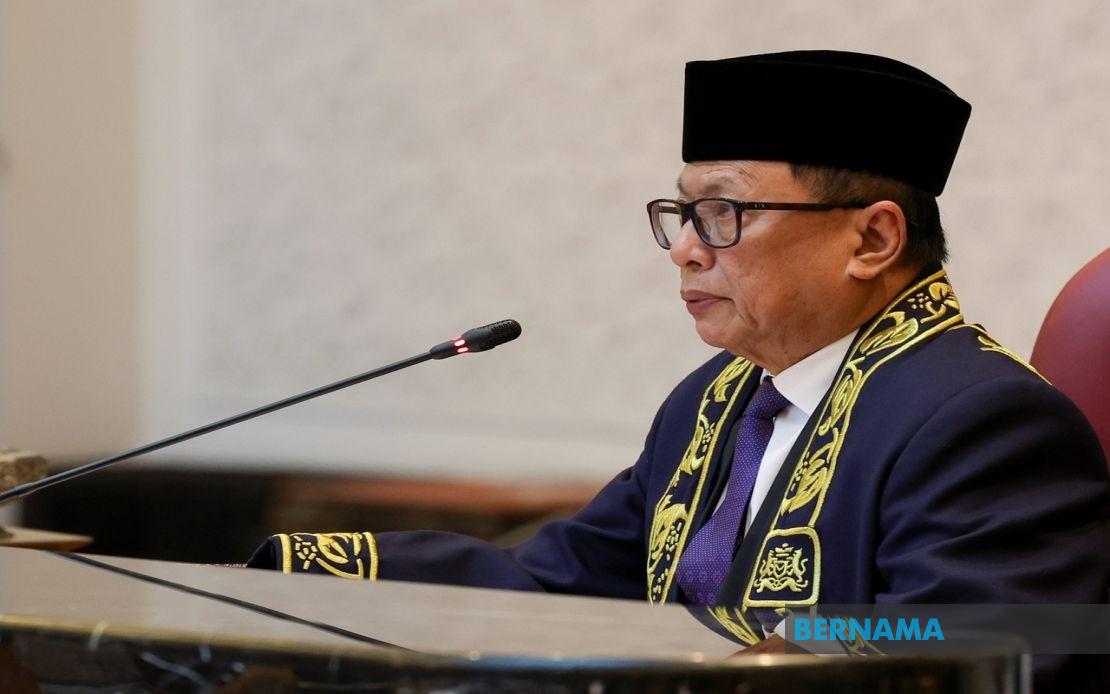
Datuk Dr Mohd Puad Zarkashi, a sitting member of UMNO's Supreme Council, announced his resignation from the party on June 25, citing a desire to express his views without institutional restraint. The Rengit state assemblyman made his exit public through a Facebook statement, characterizing his departure as calculated and deliberate rather than precipitated by internal pressure. By stepping away on his own terms, Puad removed the possibility that UMNO would initiate formal expulsion proceedings, thereby controlling the narrative around his departure and establishing his resignation as a principled stand rather than disciplinary action.
The former Speaker of the Johor State Legislative Assembly framed his decision as an exercise in "political courage," designed to highlight what he described as serious institutional defects within the state party machinery before problems intensify. His announcement carried significant weight given his standing within UMNO circles, including his previous role as Batu Pahat division chief and his tenure in federal government positions. This background suggested his criticisms emerged from inside knowledge of party operations rather than peripheral observation. Puad deliberately rejected insinuations that personal grievance motivated his exit, instead positioning himself as a concerned elder statesman exposing organizational malfunctions.
Central to his critique was the characterization of Johor Chief Minister Onn Hafiz as a "pak turut," a Malay expression denoting servility and unquestioning obedience. By employing this vernacular term rather than formal political language, Puad's message resonated more directly with grassroots UMNO members who might perceive their state leadership as lacking genuine authority or independence. The accusation that Johor UMNO had become a "tethered puppet"—constrained and directed by unseen forces—implied that decision-making within the state branch had become compromised, with structural autonomy eroded by external interference or internal power imbalances.
Puad's departure followed his public expression of concerns regarding the candidate selection mechanism for the upcoming Johor state election. He had flagged alleged irregularities in how Barisan Nasional nominees were chosen, suggesting that meritocratic or transparent processes had been abandoned in favor of arrangements benefiting particular factions. These allegations, coming from someone with Puad's legislative experience and administrative background, carried credibility that might otherwise attach to mere partisan complaint. The timing of his resignation—coinciding with his withdrawal from contesting the Rengit seat despite winning it comfortably in 2022—indicated a deliberate signal that grassroots confidence in party mechanisms had eroded among senior figures.
Puad's decision to step aside from defending Rengit represented a significant gesture within Johor UMNO's internal hierarchy. Rather than cling to his assembly seat, he publicly advocated for younger candidates to receive opportunities, framing his withdrawal as generational magnanimity. This move complicated criticism of his resignation; it suggested his departure reflected genuine concern for party renewal rather than self-preservation instincts. Younger members might have viewed his gesture favorably, complicating the party's response to his allegations and making it difficult for leadership to dismiss him as a disgruntled veteran protecting outdated privilege.
Historically, Puad had competed at the federal parliamentary level, winning Batu Pahat in the 12th General Election with a majority exceeding 12,000 votes before losing the seat to PKR's Datuk Mohd Idris Jusi by roughly 1,500 votes in the 13th election. This electoral trajectory—initial success followed by defeat—positioned him within UMNO's cohort of experienced politicians who had experienced both triumph and reversal. His subsequent focus on state-level politics and internal party structures suggested he retained ambitions within Johor's political ecosystem even as his federal profile diminished. His resignation thus carried implications for UMNO's internal balance, particularly regarding how the party would manage dissent from figures with credible records and institutional memory.
Puad's previous administrative roles expanded the significance of his critique. Having served as Deputy Education Minister from 2009 to 2013 and as Director-General of the Special Affairs Department from 2015 to 2018, he possessed experience within federal government machinery and understood how institutional authority functioned across governmental layers. This background implied that his assessment of UMNO's organizational health derived from sophisticated understanding of institutional dysfunction rather than partisan grievance alone. His willingness to exit the party publicly suggested he believed the costs of continued association outweighed the benefits of maintaining UMNO membership while silenced by party discipline.
The resignation illustrated broader tensions within Malaysian UMNO regarding centralized authority, particularly how state-level leaders exercise agency within larger party structures. Questions of whether Johor's political leadership functioned autonomously or responded to directives from party headquarters or federal powerbrokers remained unresolved, yet Puad's characterization invited speculation about power dynamics. For Malaysian readers attuned to UMNO's internal politics, his departure signaled that senior figures harbored concerns about decision-making quality and legitimacy within the state party apparatus. The fact that a Supreme Council member felt compelled to resign rather than attempt internal reform suggested that established channels for addressing institutional problems had become ineffective or unsafe.
For Southeast Asian observers, Puad's resignation illuminated leadership challenges facing Malaysian political institutions. The apparent gap between formal organizational structures and actual power distribution—suggested by imagery of puppetry and servility—indicated that institutional frameworks might not reflect genuine authority relationships. Questions about whether subordinate leaders could exercise judgment independently or whether higher authorities dictated decisions without consultation spoke to governance quality across the region's political organizations. Puad's explicit desire to criticize UMNO after departure implied that party discipline prevented candid assessment of institutional performance while members remained affiliated, raising questions about organizational cultures that discourage constructive internal critique.
Looking forward, Puad's resignation might influence how UMNO manages dissent among senior members, particularly whether the party could accommodate internal criticism or whether members with concerns faced pressure to exit. His departure created space for other UMNO figures to voice similar concerns, potentially destabilizing the party's unity narratives. The allegation regarding candidate selection irregularities, if substantiated through other member accounts, could erode confidence in electoral processes and party democracy. Conversely, UMNO leadership might deploy party discipline more rigorously to prevent cascading defections, intensifying internal control mechanisms at the cost of organizational openness. The resignation thus marked both a personal departure and a potential inflection point for how UMNO managed institutional legitimacy during a politically consequential period.

