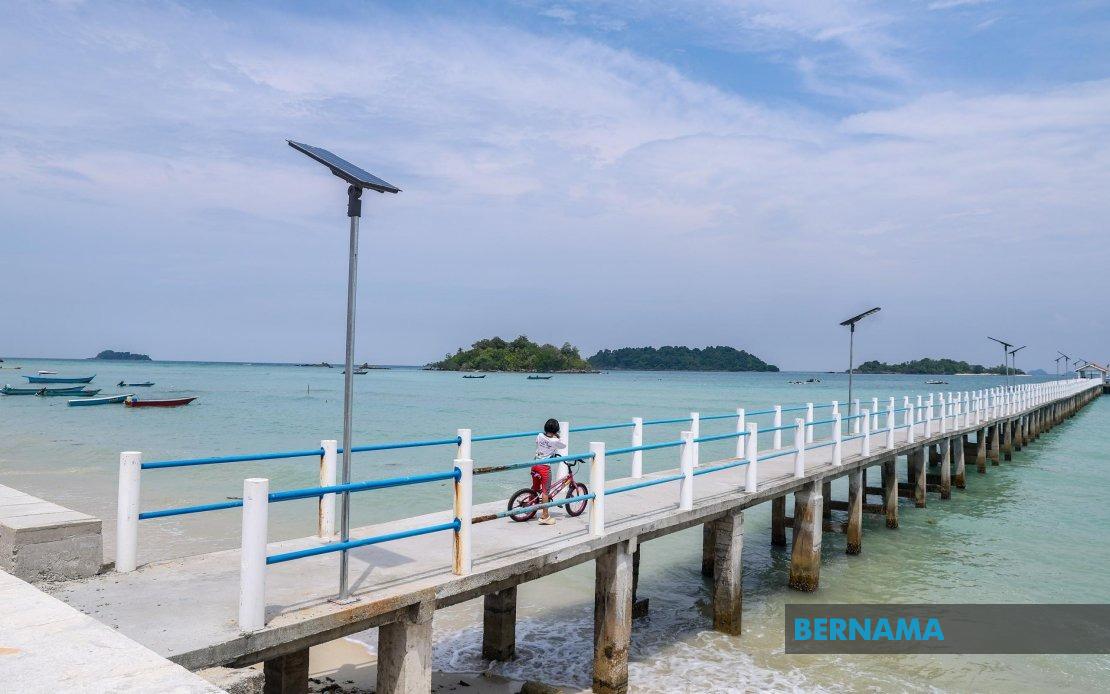
As Johor voters prepare to cast their ballots this weekend, the small island community of Pulau Tinggi is making its priorities clear to incoming representatives. The approximately 150 residents spread across two villages—Kampung Pasir Panjang and Kampung Tanjung Balang—are confronting infrastructure decay and economic hardship that has largely escaped official attention for years, and they are now hoping the electoral cycle brings renewed focus to their long-neglected concerns.
The focal point of community frustration is the Kampung Pasir Panjang jetty, a facility that has been crumbling since around 2017 yet continues to serve both the island's small fishing population and visiting tourists. Village chief Rossana Hussin, who assumed her position in 2024, describes the deterioration as an escalating safety hazard. Though residents continue to rely on the structure, village leaders have repeatedly counselled them to exercise caution while officials consider repair options. The upgrade proposal was formally submitted to the Mersing District Office in March and has generated encouraging signals, but the timeline remains uncertain—a frustration that underlies much of the community's appeals to the next elected representative for Tenggaroh.
Beyond infrastructure, the fishing community's economic vulnerability looms large. Most inhabitants of Pulau Tinggi belong to the bottom 40 per cent of income earners, or B40 category, and many live in homes requiring substantial repairs. Rossana Hussin has made housing assistance a centrepiece of the village's electoral petition, noting that some families are living in partially completed structures while others cannot afford basic maintenance. This housing crisis reflects broader economic pressures that have already prompted migration away from the island; younger residents have sought employment opportunities on the mainland, while others have relocated to Felda schemes, gradually draining the island of population and vitality.
The demographic exodus represents a quiet crisis that extends beyond simple economic hardship. Mariam Mamat, an 85-year-old resident, articulates the concern that Pulau Tinggi risks becoming further hollowed out without deliberate intervention. She points to the island's tourism potential as an underexploited resource that could generate employment for the younger generation and reverse the tide of outmigration. Her observations reflect a broader truth about rural and island communities in Malaysia: without targeted investment in both basic services and economic opportunities, they gradually lose human capital to urban centres, making their decline increasingly difficult to reverse.
The timing of these appeals is significant. With approximately 2.7 million eligible voters preparing to vote on Saturday for 56 state lawmakers in the 16th Johor state election, politicians are actively campaigning for support. For a small island community like Pulau Tinggi, this presents a rare moment of political leverage. Voters can credibly threaten to withhold support from candidates who dismiss their concerns, and incumbents understand that visible progress on promised projects becomes a campaign asset in future elections. The jetty upgrade and housing assistance programme, if initiated promptly, could serve as tangible proof that the new government takes peripheral communities seriously.
The infrastructure deficit on Pulau Tinggi illustrates a wider pattern affecting Malaysia's maritime settlements. Island and coastal communities often occupy a policy blind spot—too small to attract large-scale development investment, yet too geographically isolated to benefit from spillover effects of mainland economic growth. The jetty, used by both commercial fishermen and tourists, sits at this intersection: its decay affects livelihood and tourism revenue alike, yet neither constituency alone possesses enough political weight to demand action. Only during electoral campaigns does attention converge on such problems.
Rossana Hussin's plea for coordination among the elected Tenggaroh representative and relevant authorities signals recognition that solutions require cross-agency cooperation. The jetty upgrade and housing assistance both demand inputs from multiple government departments—local authorities, fisheries agencies, housing programmes, and district administration. Fragmented responsibility and unclear accountability have historically hindered progress on such initiatives, particularly in remote areas where bureaucratic attention naturally gravitates toward larger population centres.
The housing assistance dimension carries particular urgency given Malaysia's wider commitment to inclusive development. B40 households in rural and island communities often miss out on urban-focused housing programmes, and their informal settlement patterns make them difficult to target through centralised schemes. Yet their housing security directly affects health, dignity, and economic productivity. For Pulau Tinggi's fishermen, inadequate housing compounds the vulnerability already inherent in their livelihoods, which depend on seasonal catches and volatile fish prices.
Tourism revitalisation represents another strategic angle worthy of consideration. Pulau Tinggi has accumulated cultural and natural assets—fishing heritage, island ecology, traditional settlement patterns—that could attract ecotourism and heritage tourism if properly developed. Such development would generate secondary economic activity: boat services, guest accommodation, food services, and local crafts. The idea is not to transform the island into a mass-tourism destination, but to create sustainable employment that reduces dependence on fishing alone and incentivises younger residents to remain.
The residents' appeals ultimately reflect a simple expectation: that elected representatives, once in office, will remember campaign commitments and apply government resources to solving concrete problems. For Pulau Tinggi, the bar is not impossibly high—a functioning jetty and housing repair assistance would address the most pressing grievances. Yet even these modest goals have remained unmet for years, suggesting either that previous representatives deprioritised the island or that bureaucratic mechanisms for implementation remain sluggish and inefficient.
As voters across Johor prepare to choose their next state lawmakers on Saturday, the residents of Pulau Tinggi will be watching closely to see which candidates take their concerns seriously. The jetty's continued decay and the fishermen's housing struggles are not abstract policy matters—they are daily realities affecting real people's safety and welfare. Whether the incoming government responds will offer an early test of its commitment to inclusive development beyond the urban core.

