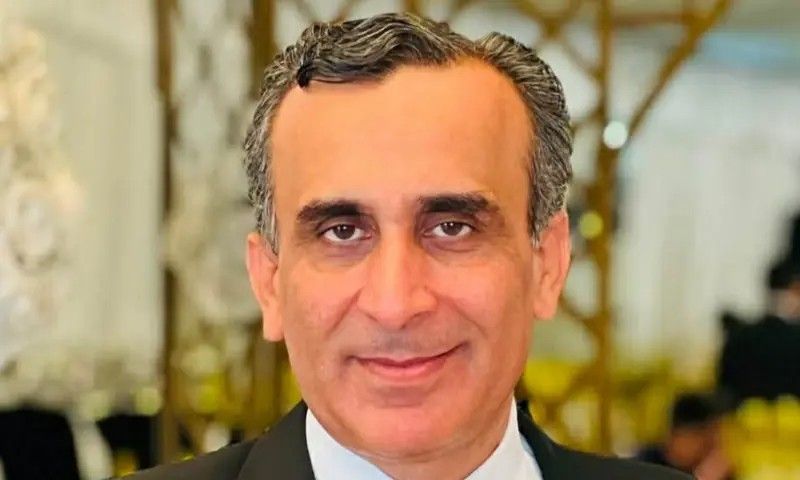
Punjab's provincial government has appointed Irfan Sadiq Tarar to the position of Prosecutor General, marking a significant transition in the province's legal administration. The formal notification, issued on Saturday, designates Tarar to lead the prosecution service for a three-year tenure, applying the regulatory framework established under Section 6 of the Punjab Criminal Prosecution Service Act 2006.
The appointment comes in response to the departure of Farhad Ali Shah, whose advancement to serve as an additional judge of the Lahore High Court created the vacancy. This judicial elevation reflects the common career trajectory in Pakistan's legal system, where senior prosecutors frequently transition to the bench. Shah's move represents recognition of his professional standing within the judiciary and demonstrates the interconnected nature of prosecutorial and judicial appointments in the province.
Tarar brings substantial experience from his previous roles within Punjab's legal community. He has held significant positions including vice chairman of the Punjab Bar Council, the influential body representing lawyers across the province, and vice president of the Lahore Bar Association, one of the country's largest and most prominent bar associations. These leadership roles demonstrate his acceptance among the legal profession and his capacity to navigate complex institutional relationships.
The new Prosecutor General is affiliated with the Ahsan Bhoon-led Independent group, a political faction that operates within Punjab's legislative framework. This political alignment may influence his approach to prosecutorial policy and priority-setting, though the Prosecutor General's office maintains formal institutional independence in its core functions. The intersection of political affiliation and prosecutorial authority remains a subject of ongoing debate within Pakistan's legal system, as civil society observers emphasize the importance of impartial prosecution.
The Prosecutor General of Punjab holds responsibility for directing criminal prosecutions throughout the province, advising government on legal matters related to criminal justice, and overseeing the prosecution service's institutional functioning. This role carries considerable weight given Punjab's status as Pakistan's most populous province and its economic significance. The decisions and policies implemented by the Prosecutor General can shape criminal justice outcomes across millions of residents and affect the functioning of thousands of courts.
Tarar's appointment reflects broader patterns of legal profession mobility in Pakistan, where senior lawyers move between private practice, bar council leadership, prosecution, and the judiciary. This circulation ensures that judicial and prosecutorial institutions draw on deep professional experience, though it also means that personal networks and professional relationships between different branches of the legal system remain closely interwoven. These connections can either enhance institutional coherence or, critics argue, compromise the independence essential to prosecutorial decision-making.
The three-year tenure specified in the appointment order aligns with standard practice for senior legal appointments in Pakistan, providing sufficient duration for implementing prosecutorial strategies while maintaining regular oversight through periodic renewal or replacement. This fixed term structure theoretically allows for accountability mechanisms, as appointing authorities can evaluate performance before reappointment decisions.
From a Southeast Asian perspective, Punjab's prosecutorial leadership changes reflect broader institutional dynamics observable across the region's legal systems. The movement between prosecution and judicial roles, the influence of political affiliations on senior appointments, and the centrality of bar associations in professional governance appear across multiple jurisdictions in South and Southeast Asia, suggesting common patterns in how legal professions have developed in post-colonial democracies.
The appointment also carries implications for criminal justice administration as Punjab navigates evolving challenges including cybercrime, financial offences, and terrorism-related prosecutions. The new Prosecutor General will inherit ongoing cases and must balance competing demands for resources, efficiency, and adherence to due process standards. His approach to prosecutorial discretion—a critical dimension of criminal justice—will influence how the system treats marginalized communities and high-profile defendants alike.
Legal observers in Pakistan have increasingly emphasized the need for transparent criteria in senior prosecutorial appointments and greater insulation from partisan pressure. While Tarar's bar council background suggests professional credibility, his political affiliation raises questions about whether independent prosecutorial judgment can be fully insulated from political considerations. The effectiveness of his tenure will partly depend on whether he can balance his political connections with the institutional demands of impartial prosecution.

