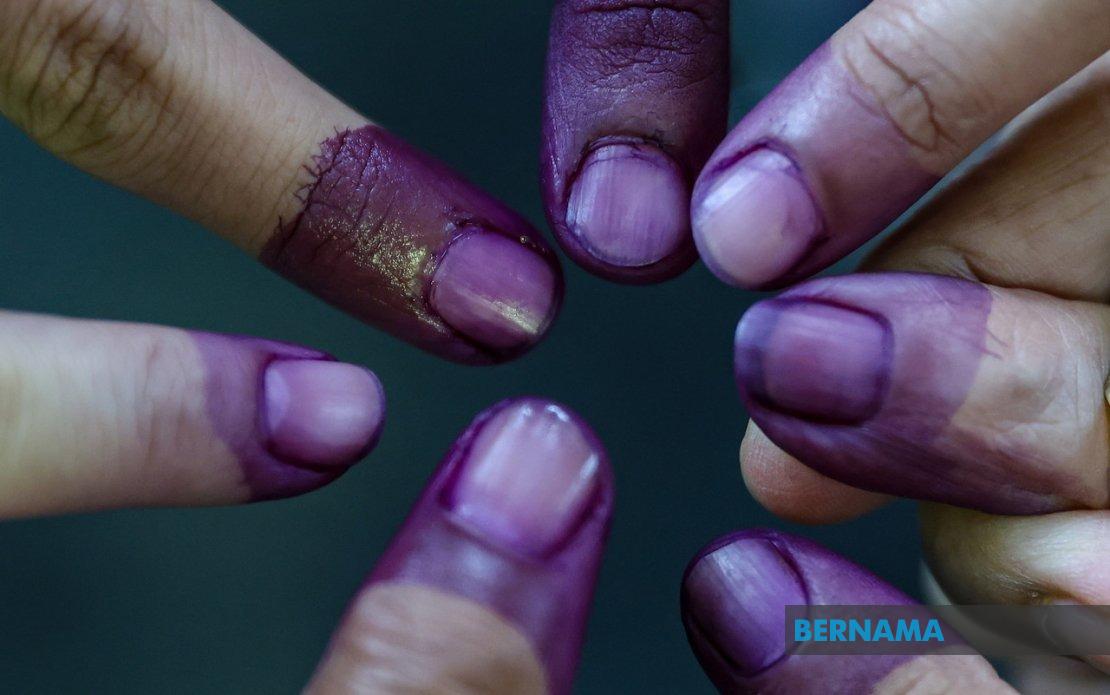
In a novel twist on election day celebrations, Johor voters discovered that the purple ink mark traditionally used to prevent multiple voting had been transformed into a reward voucher by participating businesses. The 16th Johor state election on July 11 saw chains including The Coffee Bean & Tea Leaf, Krispy Kreme, Burger King, and Marrybrown extending special promotions to anyone who could flash the telltale stain on their index finger. What began as a straightforward civic participation symbol evolved into an informal loyalty programme, with images of voters proudly displaying their inked fingers alongside discounted beverages and complimentary fried chicken circulating rapidly across social media platforms throughout the day.
The Coffee Bean & Tea Leaf initiated the trend by offering a 20 per cent markdown on designated menu items, limiting the promotion to the election day itself. Krispy Kreme capitalised on the initiative by pricing its Original Glazed doughnut at a mere RM2 for voters exhibiting their purple-marked fingers, subject to availability at participating Johor outlets. Burger King extended its generosity further by bundling a complimentary Soft Serve Cone ice cream with any set meal purchase, stretching the promotion into the following day. Marrybrown rounded out the merchant participation by providing a free fried chicken piece with the purchase of any MB Combo, creating what amounted to a statewide festival of gratitude toward the electorate.
The cumulative effect of these initiatives produced an atmosphere that transcended the conventional solemnity of voting. Rather than returning directly home or to their workplaces after fulfilling their democratic obligation, many Johoreans made deliberate detours to fast food establishments and café chains, transforming their post-ballot activities into a social occasion. The rewards programme structure, though economically modest in absolute terms, resonated strongly with voters by acknowledging their participation in tangible, immediately redeemable ways. This approach proved considerably more engaging than conventional get-out-the-vote messaging, as the prospect of a subsidised meal or beverage provided concrete motivation beyond abstract civic virtue.
The indelible ink mechanism itself carries significant historical weight within Malaysia's electoral architecture. When the Election Commission first deployed the purple marking fluid during the Kuala Besut by-election in 2013, the primary objective centred on strengthening ballot integrity by rendering multiple voting logistically problematic. The substance, designed to stain skin for an extended period, became immediately recognisable as proof of participation. Its adoption represented a critical infrastructure improvement in preventing electoral fraud, establishing a visual checkpoint that simplified poll worker verification and discouraged opportunistic repeat voting. Over the subsequent decade, the marking evolved from purely functional security measure into a symbol with broader social resonance.
The Johor election itself commanded substantial national attention, with more than 2.6 million eligible voters participating in the contest for 56 State Legislative Assembly seats. The field of 172 candidates reflected the contemporary fragmentation of Malaysian electoral politics. Pakatan Harapan and Barisan Nasional each fielded 56 contenders, effectively presenting the electorate with a binary choice at the headline level. However, Perikatan Nasional's 33 candidates, Parti Bersama Malaysia's 15 representatives, and MUDA's four nominees complicated the landscape considerably. The inclusion of candidates from Parti Orang Asli Malaysia, Parti Sosialis Malaysia, and six independents further illustrated the diversity of political formations competing for state legislative authority.
The decision by food and beverage chains to participate in the reward scheme suggested a calculated business calculus. By extending recognisable promotions contingent upon electoral participation, merchants effectively leveraged the symbolic significance of the purple mark while generating foot traffic during what might otherwise constitute an irregular trading day. The timing of the promotions, announced early in the morning and aggressively promoted through social media channels, ensured rapid dissemination of information among the electorate. The merchants effectively positioned themselves as stakeholders in democratic engagement, aligning their commercial interests with civic values in a manner that proved mutually beneficial.
From a broader perspective, the Johor election reward system illustrated an emerging trend in Southeast Asian electoral culture wherein commercial entities increasingly integrate themselves into the voting narrative. Rather than maintaining the traditional separation between commerce and civic process, businesses recognised opportunities to participate directly in the cultural experience surrounding democratic exercises. The approach carries implications for how future elections might be marketed and experienced, particularly among younger voters for whom the conjunction of consumer benefits and political participation carries intuitive appeal. The phenomenon also suggests that traditional institutional actors, including political parties and electoral commissions, are no longer the sole architects of election day atmospherics.
The social media documentation of the reward system indicated that participants experienced the promotions as elements of a broader communal celebration rather than mere discount transactions. Voters shared images not solely to document their personal transactions but to celebrate the democratic exercise itself, positioning the purple-stained finger as a badge of honour worthy of public recognition. This transformation of a security mechanism into a symbol of civic pride and communal participation demonstrated the malleability of electoral symbols and the capacity for commercial initiatives to reinforce democratic norms, albeit inadvertently. The images circulating on platforms such as Facebook, Instagram, and TikTok functioned as implicit encouragement to others who had not yet voted, creating informal peer pressure toward participation.
The implications for Malaysian electoral engagement extend beyond the immediate context of Johor's state election. If commercial participation in election day reward schemes becomes normalised across different elections and geographical jurisdictions, a new dimension of voter incentivisation emerges that sits outside traditional party machinery. The economic value of individual promotions remained relatively modest, with most discounts ranging from RM2 to a modest percentage reduction in menu prices. However, the aggregate effect of multiple chains offering simultaneous promotions created a compelling narrative around election participation that extended well beyond what any single merchant could accomplish independently. Policymakers and electoral administrators might note that facilitating such positive associations with voting carries potential benefits for long-term democratic participation rates.
Looking forward, the Johor experience establishes a template that could be replicated, refined, or potentially constrained depending on how electoral authorities perceive its implications. Some might argue that attaching commercial rewards to voting introduces market mechanisms into what should remain a purely civic sphere. Others contend that any initiative that increases turnout and generates positive associations with electoral participation merits encouragement. The question of whether such practices should be formally regulated, encouraged, or left entirely to commercial discretion will likely animate discussions among electoral reformers and democratic theorists in Malaysia and across the region. The purple ink mark, originally conceived as a technical security measure, had unexpectedly become the focal point of a broader conversation about the relationship between commercial culture and democratic participation.

