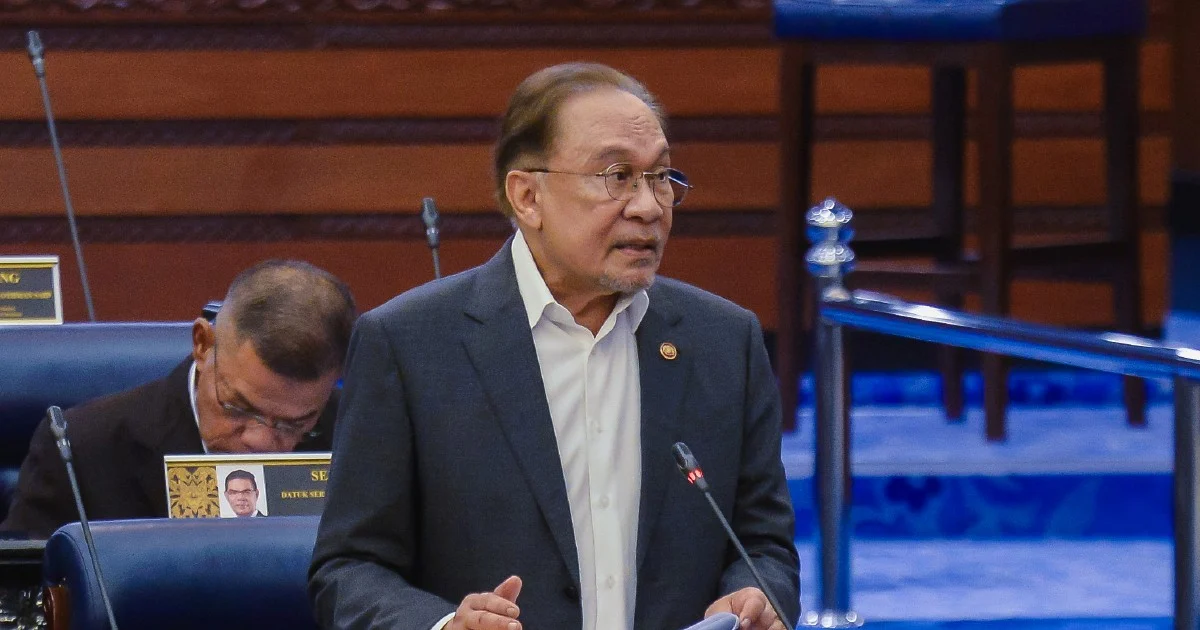
Prime Minister Datuk Seri Anwar Ibrahim has confirmed that the federal government is actively negotiating with Sarawak to boost the state's special grant entitlement under the Malaysia Agreement 1963, underscoring Putrajaya's commitment to strengthening ties with East Malaysia as the ruling coalition seeks to consolidate its parliamentary majority.
The disclosure comes at a pivotal moment in Malaysian federalism, when questions about resource distribution and constitutional obligations to Sabah and Sarawak have gained heightened political salience. The Malaysia Agreement 1963, the foundational document establishing the Malaysian federation that brought Sarawak and Sabah into union with Malaya and Singapore, contains specific provisions regarding the financial allocations and special rights accorded to the East Malaysian states. These guarantees have long been a focal point of political discussion, with state leaders periodically pressing for their full implementation and enhancement.
Putrajaya's willingness to engage in substantive discussions about MA63 provisions reflects broader recognition that securing Sarawak's continued political support is integral to the federal government's stability and legislative agenda. With razor-thin parliamentary margins characterising recent Malaysian politics, the backing of Sarawak's parliamentary members remains strategically valuable. This negotiating posture signals that the administration views resource allocation to East Malaysia as an investment in political cohesion rather than merely a constitutional obligation to be minimised.
The special grant mechanism under MA63 has become increasingly important to Sarawak's economic planning and public service delivery. As a resource-rich state that has historically generated substantial federal revenue through timber exports and increasingly through oil and gas production, Sarawak's leaders have argued that the special grant should proportionally reflect the state's contribution to national wealth creation. The negotiations now underway suggest recognition that the current quantum may not adequately align financial transfers with either constitutional intent or contemporary state needs.
For Malaysian observers, these discussions carry implications extending beyond bilateral federal-state relations. They demonstrate that East Malaysia's constitutional position, distinct from Peninsular Malaysia in several governance and administrative aspects, remains a live political issue rather than settled constitutional history. The willingness to revisit and potentially enhance MA63 commitments implies acknowledgment that aspects of the original federation's bargain require adaptation to modern circumstances while maintaining its fundamental spirit.
Sarawak's political complexion has shifted notably in recent years, with the departure of Pakatan Harapan-aligned representatives and the strengthening of state-based parties. This evolution has altered the calculation for federal governments seeking parliamentary support. Sarawak's Gabungan Parti Sarawak and other state-rooted political forces have leveraged their pivotal position to extract greater attention to state-level concerns, including resource sovereignty and financial entitlements. The current negotiating posture appears responsive to this recalibrated political reality.
The enhancement of MA63 special grants would have cascading effects on Sarawak's development trajectory. Increased federal allocations could enable more ambitious infrastructure projects, improved healthcare and education services, and enhanced capacity for state government operations. These investments, in turn, might reduce economic disparities between Peninsular and East Malaysia, a longstanding developmental challenge affecting inter-regional equity and social cohesion within the federation.
However, the negotiations also highlight persistent questions about resource distribution within a federal system where Peninsular Malaysia dominates demographically and economically. Any significant increase in special grants to Sarawak would necessarily involve trade-offs with allocations to other states or federal programmes. These financial negotiations thus implicitly raise questions about the appropriate balance in a federation where one region contains approximately 75 per cent of the national population but a minority of certain resource endowments.
Historically, discussions around MA63 implementation have often proved contentious, with different interpretations of the agreement's provisions generating disagreement between federal and state authorities. The commitment to ongoing negotiations suggests that both Putrajaya and Sarawak's leadership view dialogue as preferable to prolonged constitutional disputation. This collaborative approach may establish precedent for addressing other outstanding federal-state matters through negotiation rather than litigation or political confrontation.
The timing of these discussions also coincides with broader Southeast Asian patterns where resource-rich subnational units increasingly assert claims to greater fiscal autonomy and enhanced royalty arrangements. Across the region, states producing petroleum, timber, and other valuable commodities have successfully negotiated improved terms with central governments. Sarawak's negotiating stance reflects this regional trend toward more economically empowered constituent units within federal frameworks.
Looking ahead, the outcome of these discussions will offer important signals about the federal government's approach to constitutional federalism and resource distribution. Whether negotiations yield substantive enhancements to MA63 provisions will influence how other states assess their room for manoeuvre in dealings with Putrajaya, and how East Malaysian populations perceive the value of federal union. The commitment to negotiation itself, however, demonstrates recognition that honouring constitutional obligations to Sarawak serves not merely as legal requirement but as investment in national cohesion and political stability.

