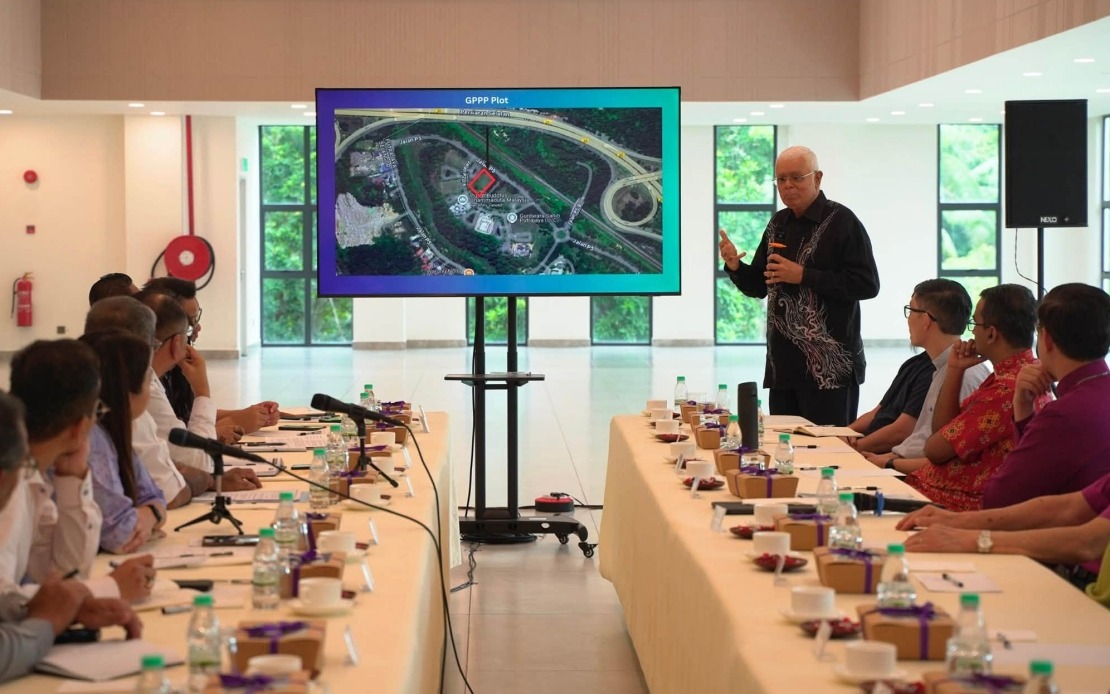
Putrajaya's Precinct 20 is being developed as a dedicated interfaith precinct where multiple religious communities can establish places of worship, according to National Unity Minister Datuk Aaron Ago Dagang. The urban planning initiative, which has been in development since 2013, represents a deliberate effort by federal authorities to accommodate religious plurality within Malaysia's capital administrative centre through systematic land allocation and infrastructure planning.
The designation of Precinct 20 reflects broader national commitments to inclusive governance and social cohesion. By providing designated spaces for churches, temples, gurdwaras and other non-Muslim places of worship within a single precinct, federal planners have sought to create what officials describe as a model for peaceful religious coexistence within urban development frameworks. This approach aligns with contemporary practices in other multicultural cities globally, where mixed-use religious precincts facilitate interfaith dialogue and shared community spaces.
Aaron emphasised that the initiative demonstrates how systematic planning can serve inclusive objectives, allowing citizens of different faiths to practise their religions without competition for limited urban land. The strategy addresses a longstanding challenge in Malaysia's development context: ensuring adequate provision for religious infrastructure across the country's diverse population. Rather than ad-hoc allocations, the Precinct 20 model suggests forward-thinking zoning that anticipates demographic and religious composition needs.
The policy framework supporting this development draws from Putrajaya's broader Structure Plan 2050, specifically Policy 17 focused on building an inclusive and compassionate community. This policy explicitly recognises religious diversity as integral to urban sustainability and social stability. By embedding religious accommodation within long-term strategic planning rather than treating it as a peripheral concern, the federal government signals that religious plurality constitutes a central consideration for future urban development across Malaysia.
The initiative also connects to the Harmoni MADANI framework, a national unity ministry programme launched in 2024. This initiative promotes four foundational principles—understand, respect, accept and celebrate—as mechanisms for strengthening relationships among Malaysia's multireligious society. By aligning Precinct 20's interfaith provisions with Harmoni MADANI messaging, officials frame religious accommodation as part of a coordinated national strategy rather than isolated development decisions.
Currently operating within Precinct 20 is the Prince of Peace Church, a newly established congregation that recently formalised its presence in the precinct. The Dhammaduta Malaysia Buddhist Centre has operated since 2023, providing meditation and dharma study facilities. These operational sites demonstrate that the planning framework is translating into actual religious infrastructure serving resident communities and visitors to Malaysia's administrative capital.
Under active development are several additional facilities that will substantially expand Precinct 20's interfaith capacity. Gurdwara Sahib Putrajaya will serve the Sikh community, while Dewi Sri Lalithaambigai Alayam will accommodate Hindu worshippers. The San Qing Taoist Temple represents another tradition receiving formal space within the precinct. A Roman Catholic church site has also been reserved, indicating that Christian denominations beyond the Prince of Peace congregation are included in the planning framework.
The expansion of Precinct 20 reflects Malaysia's religious demographics, where despite Islam's constitutional position, approximately one-third of the population practises other faiths. By concentrating resources and planning efforts to accommodate this diversity within a single coordinated precinct, federal authorities avoid fragmenting religious infrastructure across Putrajaya while enabling economies of scale in supporting facilities such as car parking, landscaping and community spaces that serve multiple congregations.
Official framing of Precinct 20 emphasises its potential as an interfaith hub where worshippers and community members interact through shared spaces dedicated to dialogue and mutual understanding. This conceptualisation extends beyond mere spatial accommodation of different religions; it suggests that physical proximity and shared civic spaces can facilitate the trust-building necessary for social cohesion in plural societies. The success of this model may inform future religious planning in other Malaysian cities and towns.
For Southeast Asian observers, Putrajaya's interfaith precinct offers a case study in how government planning can either facilitate or constrain religious freedom and social harmony. Malaysia's experience demonstrates both the possibilities and limitations of state-directed religious accommodation. When planning genuinely reflects demographic realities and receives political commitment at ministerial level, as evidenced by Minister Hannah Yeoh's participation in precinct site visits, tangible infrastructure emerges that supports multiple faith communities.
However, the Precinct 20 model also reflects particular Malaysian contexts that may not be universally replicable. The approach assumes that concentrating religious sites within a single administrative precinct enhances rather than isolates religious community life. It depends on sustained political will and consistent implementation across successive administrations. The precinct's success in fostering genuine interfaith engagement will ultimately depend on whether the physical spaces translate into substantive community interaction beyond ceremonial visiting.
As Putrajaya positions itself as a national capital reflecting Malaysian values, the Precinct 20 development carries symbolic significance beyond urban planning. It represents an official commitment to accommodating religious diversity as compatible with, rather than threatening to, the nation's Islamic identity. This positioning becomes increasingly important as Malaysia navigates contemporary global debates about religious pluralism and state neutrality in multicultural democracies.

