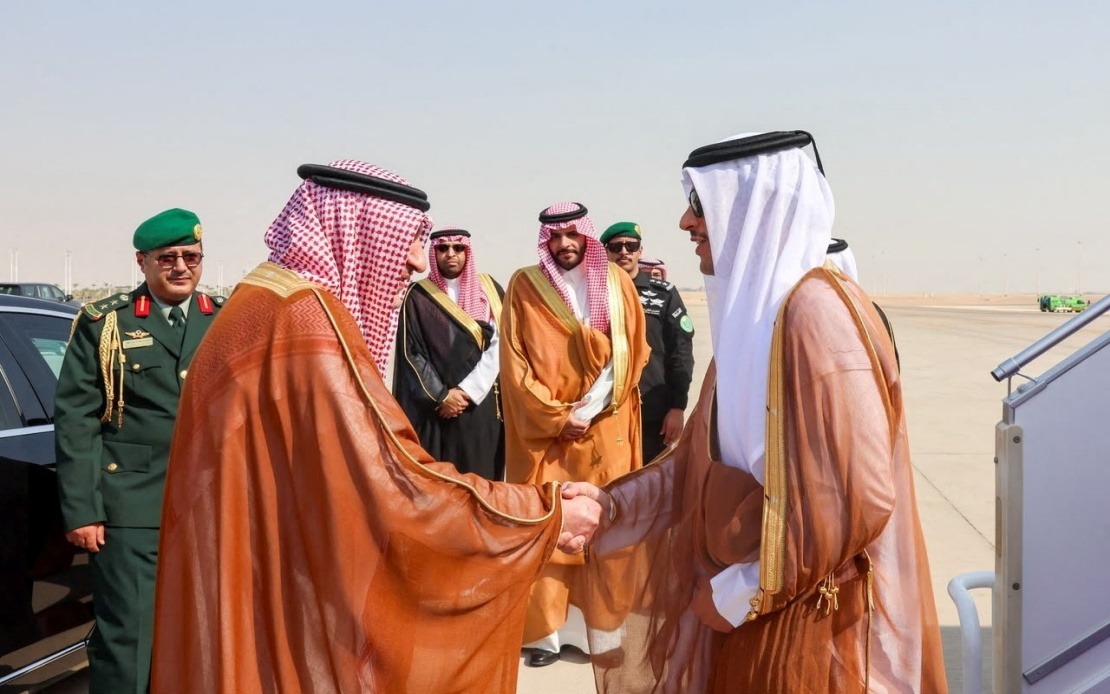
Qatar's Prime Minister Sheikh Mohammed bin Abdulrahman bin Jassim Al Thani travelled to Saudi Arabia this week for substantive talks aimed at reducing the temperature in a region increasingly strained by geopolitical rivalries and security concerns. The high-level visit underscores the urgency with which Gulf powers are attempting to manage a widening diplomatic crisis that threatens trade routes and regional prosperity.
Sheikh Mohammed, who doubles as Qatar's Foreign Minister, held extensive discussions with Saudi Arabia's Foreign Minister Faisal bin Farhan during his time in Riyadh. The focus of their conversations centred on strengthening bilateral relations while addressing the complex web of tensions destabilising the wider Middle East. Both officials acknowledged the importance of pursuing peaceful settlements to regional disputes, signalling a shared commitment to stability even as underlying rivalries persist.
The dialogue between Qatar and Saudi Arabia carries considerable weight because both nations exercise significant influence across the Gulf Cooperation Council and beyond. Their joint emphasis on dialogue as the primary mechanism for resolving differences sends a message to other regional actors that military confrontation remains a last resort. By publicly reaffirming support for diplomatic channels, the two countries are attempting to establish a framework within which other disputes might be addressed through negotiation rather than escalation.
Critical to the discussions was the question of maritime security in two of the world's most vital waterways. The Arabian Gulf and Red Sea together constitute chokepoints through which an enormous volume of global commerce passes daily. Any disruption to shipping lanes, whether through military action or tensions, would have immediate economic consequences across Southeast Asia, including Malaysia. The joint commitment to safeguarding navigation routes reflects both nations' understanding that regional instability ultimately harms their own economic interests and those of trading partners worldwide.
The timing of this diplomatic initiative is particularly significant given the backdrop of broader tensions between Iran and the United States, with Saudi Arabia historically aligned closely with Washington. The escalating US-Iran confrontation has created an environment in which miscalculation becomes increasingly dangerous. By engaging in active diplomacy with Qatar, Saudi Arabia is attempting to preserve space for manoeuvre and prevent the region from fracturing along rigid ideological or strategic lines.
Qatar's role in these discussions is noteworthy given its unique position within Gulf politics. As a nation that has maintained more balanced relations across the region compared to some neighbours, Doha can potentially serve as an intermediary or honest broker in discussions about de-escalation. The Qatari government's willingness to engage directly with Saudi counterparts suggests both countries recognise the mutual benefits of coordinated regional security approaches.
The discussions also highlighted the need for coordination among regional players and international stakeholders. This reflects a growing recognition that unilateral action by individual states cannot adequately address challenges that are inherently multilateral in nature. Whether dealing with maritime piracy, terrorism, or great power competition, the Gulf states increasingly understand that collective security arrangements serve their interests more effectively than isolated positions.
For Southeast Asian nations including Malaysia, developments in the Arabian Gulf carry direct implications. Beyond the immediate impact on shipping and trade, regional stability in the Middle East influences global energy prices, security arrangements, and the international rules-based order that underpins regional commerce. Any escalation of tensions between major powers with interests in the Gulf could reshape the strategic environment in which Southeast Asia operates.
The Saudi Foreign Ministry's statement regarding the visit deliberately avoided specifying how long Sheikh Mohammed would remain in Riyadh, which could suggest either confidentiality around ongoing negotiations or simply standard diplomatic practice. What remains clear is that both nations view sustained engagement as preferable to the alternative of allowing misunderstandings to fester or tensions to mount unchecked.
Beyond the formal statements and official protocols, this visit represents an attempt by Gulf leadership to assert agency in managing their own regional affairs rather than becoming pawns in larger great power competitions. By choosing to meet and discuss, Qatar and Saudi Arabia are signalling that despite their differences and occasional friction, they share enough common interests to warrant the effort of sustained dialogue.
The emphasis on both bilateral ties and broader regional developments indicates a comprehensive approach to diplomacy. Rather than narrowly focusing on specific disputes, both nations are attempting to address the systemic issues that create friction between Gulf states. This holistic perspective may offer a more durable foundation for stability than purely transactional negotiations limited to individual disagreements.
As the region navigates an uncertain future marked by US-Iran tensions and internal Gulf dynamics, the willingness of major players like Qatar and Saudi Arabia to engage directly will likely determine whether the coming period brings escalation or gradual de-escalation. For Malaysia and the broader Asian region, the outcome of such diplomatic efforts carries consequences that extend far beyond the Middle East itself.

