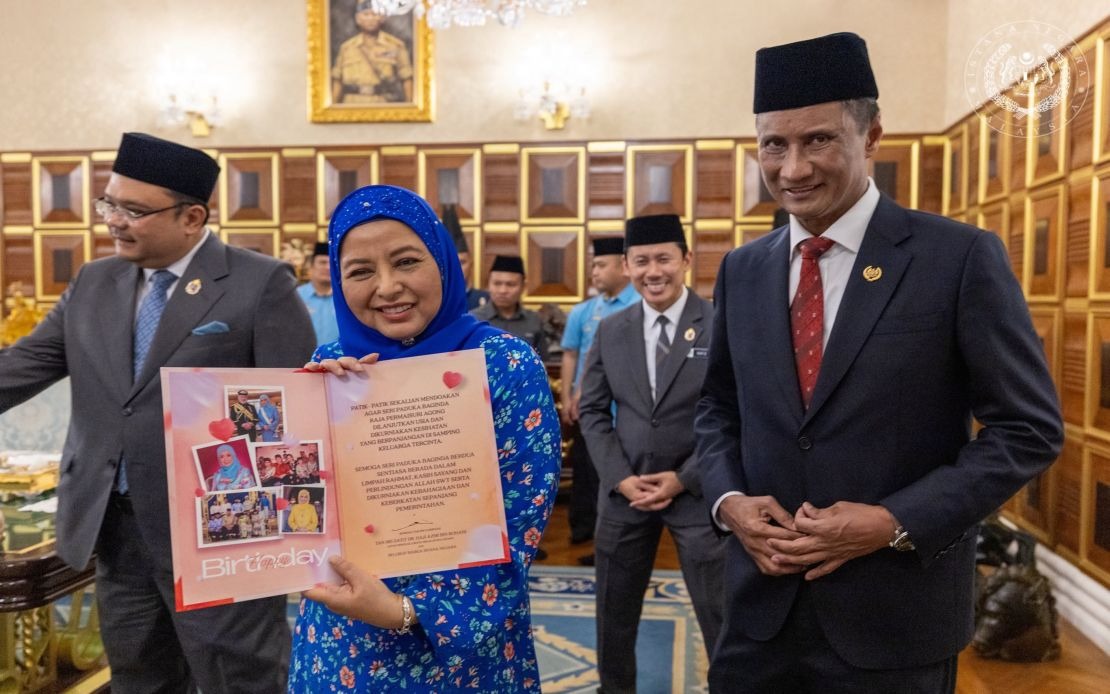
Her Majesty Raja Zarith Sofiah, Queen of Malaysia, marked her birthday today with a formal courtesy visit from senior officials of the royal household, reinforcing the ceremonial traditions that underscore Malaysia's constitutional monarchy. The gathering, which took place at Istana Bukit Serene in Johor, exemplifies the formal protocols that structure interactions between the palace administration and the reigning Queen, a role she has held as consort to Yang di-Pertuan Agong Sultan Ibrahim Sultan Iskandar.
The delegation was led by Tan Sri Dr Azmi Rohani, who serves as the Comptroller of the Royal Household, a position of considerable importance within the palace hierarchy. Accompanying him was Datuk Azuan Effendy Zairakithnaini, who holds the ceremonial title of Paduka Maharaja Lela, commonly referred to as the Grand Chamberlain. This pairing reflects the structure of the palace administration, where senior officials with both administrative and ceremonial responsibilities oversee the day-to-day functioning of the royal household and the execution of state protocols.
Puan Sri Dr Noor Azizah Abdul Latif, the wife of Tan Sri Dr Azmi Rohani, was also present during the occasion. Her inclusion in the gathering adds a personal dimension to what might otherwise be a purely formal administrative exercise, suggesting a level of warmth beneath the ceremonial framework that typically characterizes royal engagements in Malaysia.
The symbolic heart of the celebration centred on the presentation of gifts from palace personnel. Her Majesty received a specially prepared cake and yellow glutinous rice, traditional offerings that carry cultural significance within Malaysian royal circles. These items were presented on behalf of the senior management and entire staff of Istana Negara, a gesture that emphasises the collective participation of those who work within the royal institution in honouring the Queen.
Yellow glutinous rice, in particular, holds special meaning within Malay-Muslim culture and royal traditions, often associated with auspicious occasions and celebrations. The selection of these particular gifts suggests thoughtfulness in choosing items that resonate with cultural values while maintaining the formality expected in royal ceremonies. Such attention to detail reflects the sophisticated protocol awareness that characterises Malaysia's palace administration.
Tan Sri Dr Azmi Rohani, speaking on behalf of the palace administration and staff, conveyed formal prayers and good wishes directed toward Her Majesty. The message emphasized desires for her continued good health, overall well-being, and sustained happiness. This articulation of collective sentiment from those who serve within the palace structure demonstrates how individual milestones of the royal family are integrated into the broader institutional framework of the monarchy.
The birthday courtesy call tradition illuminates an important dimension of how Malaysia's constitutional monarchy operates. Unlike some ceremonial roles that remain relatively distant from public life, the Yang di-Pertuan Agong and the Queen maintain active engagement with palace personnel and participate in structured ceremonial occasions. These gatherings serve multiple purposes simultaneously: they provide moments of personal recognition for the Queen, they reinforce institutional hierarchies and protocols within the palace, and they demonstrate continuity in the observance of royal traditions.
The choice of Istana Bukit Serene as the venue is particularly noteworthy. Located in Johor, this palace serves as one of the royal residences and maintains significant symbolic importance within the state. The decision to conduct the courtesy call at this location rather than elsewhere suggests that the Queen may have been present in Johor at the time, or that the palace administration determined this venue most appropriate for the occasion.
The public disclosure of this private royal engagement through the official Facebook channel of Sultan Ibrahim Sultan Iskandar reflects modern royal communications practices in Malaysia. By sharing news of the courtesy call with the broader Malaysian public, the palace demonstrates its commitment to transparency regarding ceremonial activities while maintaining the dignity and formality that such occasions demand. This balance between accessibility and formality characterises contemporary Malaysian royal communications.
For Malaysians and observers of the region's governance systems, such courtesies and ceremonial occasions represent more than mere formalities. They embody the cultural and institutional values that sustain the constitutional monarchy, a system central to Malaysia's political identity. The participation of palace staff in honouring the Queen underscores the personal dimensions of institutional life, reminding stakeholders that those who serve the monarchy maintain genuine commitment to the institution beyond their administrative duties.

