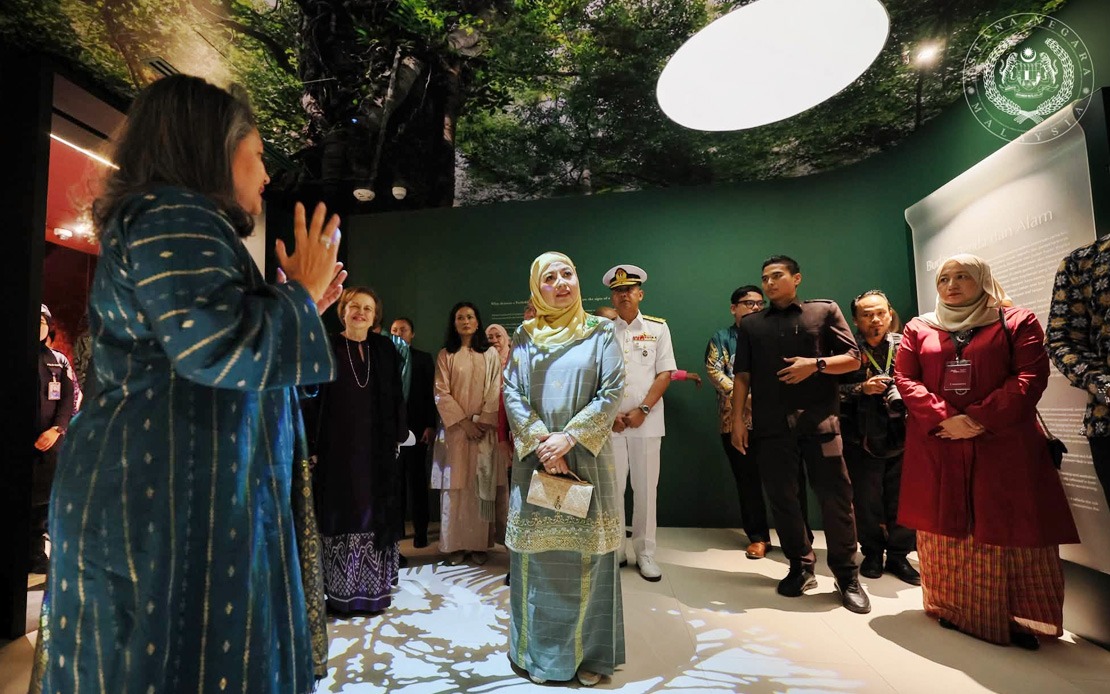
Her Majesty Raja Zarith Sofiah, Queen of Malaysia, officially opened the Merdeka Textile Museum on August 21 at Menara Merdeka Maybank in Kuala Lumpur, marking a significant milestone for Malaysia's efforts to safeguard its rich cultural traditions. The museum, established by PNB Merdeka Ventures Sdn Bhd—a subsidiary of the state-owned investment fund Permodalan Nasional Berhad—represents a comprehensive initiative to document, display, and celebrate the textile traditions that have defined Malaysian and wider Malay civilisations for centuries.
In her remarks, delivered through Sultan Ibrahim Sultan Iskandar's social media channels, the Queen emphasised that heritage preservation transcends mere nostalgia; rather, it forms an essential component of national identity and continuity. She articulated the view that every nation possesses cultural assets worthy of appreciation, conservation, and intergenerational transmission. This framing positions textile heritage not as historical artefact but as living expression of societal values, drawing explicit connections between the fabrics on display and the identity markers that bind Malaysian communities together. The Queen's intervention underscores official recognition that cultural stewardship carries strategic importance for national cohesion.
The Queen further directed her message toward two critical audiences: contemporary Malaysian women and younger generations. She expressed hope that the museum would serve as an inspirational beacon for women today and those who follow, suggesting that textile traditions carry particular significance within female cultural practice. Her appeal to young people reflected broader institutional concern that traditional knowledge risks erosion in the face of globalisation and rapid technological change. By positioning the museum as a repository against cultural loss, the Queen articulated anxieties about continuity that extend well beyond textiles themselves into questions of national identity preservation in an increasingly interconnected world.
The museum's foundation rests upon an extraordinary private collection assembled by Sharifah Azah Syed Mohammed Alsagoff, widow of the late Professor Ungku Abdul Aziz Abdul Hamid and mother of former Bank Negara Malaysia Governor Tan Sri Dr Ungku Zeti Akhtar Aziz. The Azah Aziz family has donated 240 distinct textile pieces and 69 traditional jewellery items to form the collection's core. These artefacts encompass songket sarongs, Limar Baju Kurung garments, and intricate Tekat Emas embroidered pieces, each representing distinct regional and temporal traditions within Malay textile practice. The decision to place such a significant private assembly within a publicly accessible institution signals both the family's commitment to cultural stewardship and recognition that preservation requires institutional frameworks beyond domestic custodianship.
The decision to centre the museum around Azah Aziz's collection carries particular resonance, given her prominent position within Malaysia's intellectual and cultural establishment through marriage and familial connection. Her work has inspired the museum's broader curatorial approach, extending the institution's significance beyond mere display into engagement with historical scholarship and cultural documentation. This intellectual lineage lends the museum scholarly credibility and connects textile preservation to longer traditions of Malaysian academic and cultural inquiry. The positioning of women's cultural knowledge—both in the textiles themselves and in Azah Aziz's documented work—as foundational to the institution represents a deliberate curatorial choice with implications for how Malaysia narrates its own history.
The physical infrastructure supporting the museum reflects contemporary international standards for textile conservation and research. Eight distinct galleries provide thematic organisation of the collection, while supporting facilities include a dedicated conservation laboratory—essential for managing fragile historical materials—alongside a fabric library and textile knowledge centre. This comprehensive approach transforms the museum from passive display space into active research facility, enabling scholars, designers, and students to engage with textile traditions at multiple levels of sophistication. The conservation laboratory particularly signals institutional commitment to scientific preservation methodology, recognising that authentic heritage stewardship requires technical expertise alongside curatorial vision.
The museum's establishment arrives at a moment of renewed interest in traditional Malaysian textiles across creative industries and fashion sectors. Regional and international designers increasingly draw inspiration from songket and batik traditions, and the museum provides authoritative reference point for understanding historical development, regional variation, and technical methodology embedded in these practices. For Malaysian creatives seeking to work with traditional forms, the facility offers both inspirational resource and educational grounding in authentic technique. The museum thus positions itself at intersection of heritage preservation and contemporary creative practice, avoiding the trap of treating traditional textiles as purely historical phenomena rather than living traditions capable of contemporary evolution.
Among attendees at the launch were Minister in the Prime Minister's Department Hannah Yeoh, Chief Secretary to the Government Tan Sri Shamsul Azri Abu Bakar, and PNB Group Chairman Raja Tan Sri Arshad Raja Tun Uda. This gathering reflected cross-sectoral institutional support, spanning federal administration, government machinery oversight, and sovereign wealth management. The presence of these senior officials underscores that textile heritage preservation carries official standing within government priorities, moving the initiative beyond charitable cultural work into framework of strategic national interest. Hannah Yeoh's participation particularly signals alignment between the museum's gender-conscious curatorial approach—its emphasis on women's cultural knowledge and contemporary women's inspiration—and broader federal diversity and inclusion objectives.
For Malaysian audiences and regional observers, the museum's opening represents both practical achievement and symbolic statement about cultural confidence in the post-Merdeka era. Malaysia's textile traditions encompass extraordinary technical sophistication and aesthetic refinement; their preservation in institutional form acknowledges that these achievements deserve scholarly attention and public appreciation equivalent to that accorded to Western or East Asian textile traditions. The museum implicitly asserts that Malaysian cultural expression merits preservation infrastructure comparable to that in developed economies, rejecting subordinate positioning of Southeast Asian heritage within global hierarchies of cultural value. This positioning carries implications extending well beyond textiles into broader Malaysian cultural diplomacy and international heritage discourse.

