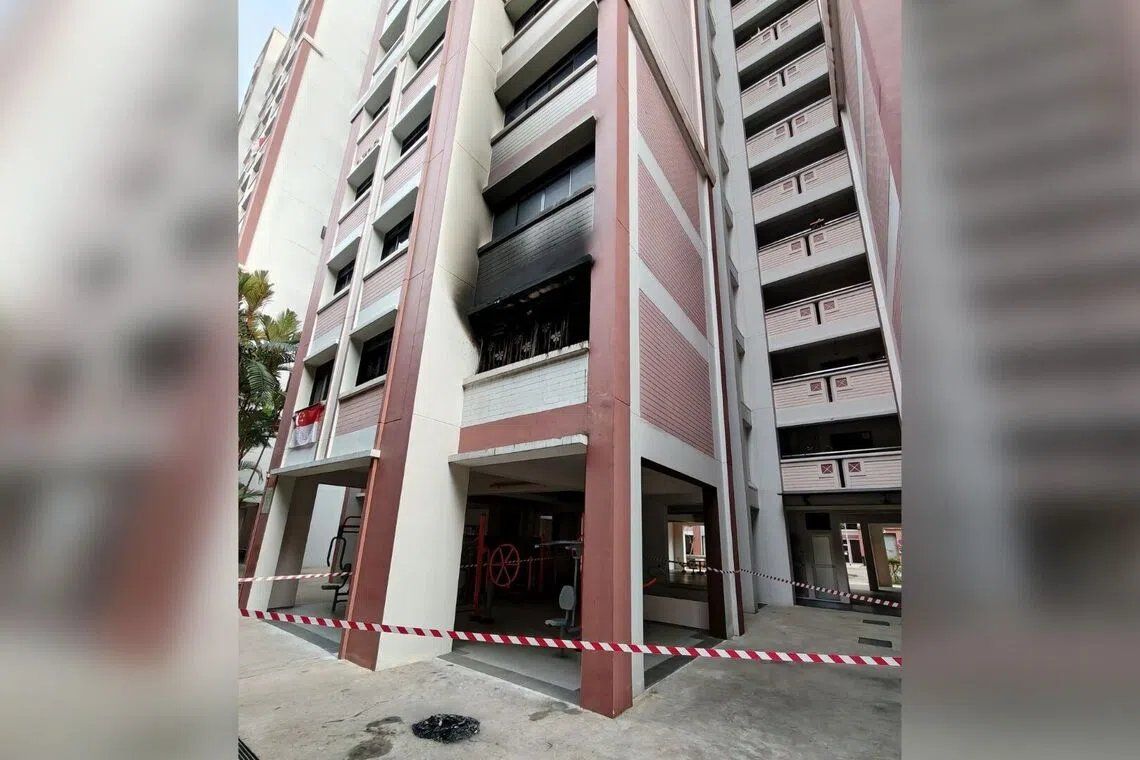
A fire that erupted in a second-floor bedroom at Block 979B Buangkok Crescent in Singapore's Ang Mo Kio district during the early morning hours of Thursday necessitated hospitalization for an elderly resident, though swift action by a quick-thinking neighbor appears to have averted a more serious outcome. The Singapore Civil Defence Force responded to the emergency call at approximately 12:25am and extinguished the flames using a water jet directed at the bedroom contents where the blaze had taken hold.
The incident unfolded rapidly in the pre-dawn darkness, when most residents would have been asleep and potentially unaware of the danger developing nearby. The affected unit was occupied by multiple residents when the fire broke out, creating a situation where rapid evacuation was critical. Medical personnel transported one individual to Sengkang General Hospital for treatment, though the extent of injuries sustained appeared relatively minor by comparison to what could have transpired.
In a Facebook update posted around 1pm on August 20, Ang Mo Kio GRC Member of Parliament Victor Lye provided details about the elderly resident's condition, noting that the patient had sustained cuts to his feet but had already been discharged from hospital care. The relatively positive outcome stood in stark contrast to the potential danger posed by an uncontrolled residential fire in a densely populated public housing estate.
The intervention of an ITE student residing in the adjacent unit proved instrumental in limiting damage and protecting lives during those critical initial moments before professional firefighters arrived. The young student deployed a fire extinguisher to combat the flames while simultaneously coordinating the evacuation of three people from the endangered unit. Such actions underscore the importance of community awareness and rapid response capabilities among residents of high-rise residential buildings where seconds can determine outcomes.
MP Lye specifically acknowledged and thanked the ITE student for his decisive response, highlighting the contribution of young people to community safety and resilience. The recognition served as a reminder that heroism often emerges from ordinary citizens in extraordinary circumstances, and that proximity to an emergency—in this case, simply living next door—can place individuals in positions where their actions directly impact their neighbors' survival and wellbeing.
Following the emergency, affected residents were offered access to the Residents' Network centre as a place to regroup and receive support services. However, the family opted to remain with their helpful neighbor rather than relocate to the community facility, suggesting the strong bonds of mutual aid that characterize public housing communities. This choice also reflected confidence in the stability of the neighboring unit and a preference for personal support networks over official accommodations.
MP Lye made a point of visiting the affected flat to provide personal reassurance and support to the displaced family, demonstrating the hands-on engagement expected of constituency representatives in Singapore's political system. Such visits serve multiple functions beyond sympathy, allowing elected officials to assess conditions firsthand and coordinate assistance through available community resources and networks.
The cause of the fire remains under investigation by the relevant authorities, who will examine the origin point in the bedroom and any contributing factors that led to ignition. Understanding how residential fires start is crucial for public housing authorities across Southeast Asia, where high-density living environments mean that single fires can pose risks to neighboring units and broader building safety.
This incident carries implications for Malaysia as well, given that most major Malaysian cities contain similar public housing configurations with substantial populations living in multi-story apartment blocks. The rapid spread potential within such structures and the critical importance of immediate neighbor intervention highlight the need for enhanced fire safety awareness campaigns and accessible emergency equipment in residential communities throughout the region.
The episode also underscores broader questions about evacuation procedures, building safety standards, and community preparedness in Southeast Asian public housing. While Singapore's response mechanisms and outcomes in this case appear effective, the region continues to grapple with balancing affordability, safety compliance, and rapid emergency response across aging and newly constructed residential estates.
Community safety culture, as demonstrated by the ITE student's actions, represents an often-overlooked dimension of disaster prevention and response. When residents understand their collective responsibility and possess basic emergency response training, outcomes improve measurably. The contrast between passive acceptance of fire risk and the active intervention witnessed here suggests that regional governments might benefit from expanded public education campaigns about fire hazards and response protocols in residential settings.

