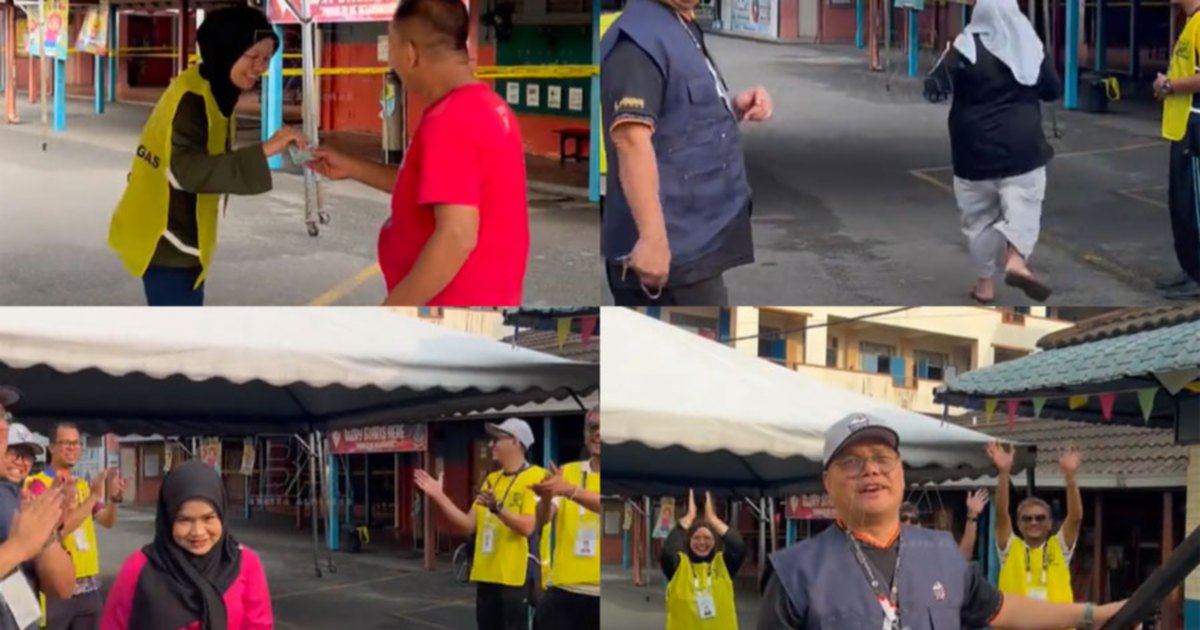
The closing hours of voting in the Negri Sembilan state election became the subject of intense online scrutiny when a video circulated widely across social media platforms, documenting the determined scramble by citizens to exercise their democratic rights moments before the ballot boxes were sealed. The footage, which struck a chord with Malaysian viewers nationwide, illustrated the genuine commitment some electors demonstrated in ensuring their voices were heard, even as the clock ticked toward the final 6pm deadline marking the end of polling operations across the state.
Such scenes at election closing time are not uncommon in Malaysian polling exercises, yet this particular recording gained traction by encapsulating what appears to be a particularly intense convergence of last-minute voters at polling stations. The visual narrative presented in the clip resonated with audiences in an age where election participation rates and voter engagement have become increasingly scrutinized metrics of democratic health. The viral nature of the content underscores how digital platforms have transformed the way Malaysians consume and discuss electoral moments, with individual incidents now capable of reaching millions within hours.
The Negri Sembilan state election itself represented a significant political moment in the state, with voters determining the composition of their state assembly at a juncture when national and regional political dynamics continue to evolve. The enthusiasm captured in the closing-hour footage suggests that messaging around the importance of voting or awareness of the election date may have effectively mobilized portions of the electorate, though it also raises questions about voter preparation and whether poll schedule communication could be improved to distribute turnout more evenly throughout the day.
From an electoral administration perspective, the concentration of voters in the final hours before polls close presents both logistical and operational challenges for election officials and polling station personnel. Staff must manage increased crowds while maintaining voting security protocols, verifying voter eligibility, and processing ballots efficiently. The viral documentation of these scenes adds a layer of public scrutiny to electoral operations, with online audiences evaluating not just voter enthusiasm but the effectiveness of voting procedures in accommodating demand.
The phenomenon of last-minute voting surges also reflects broader patterns observed in Malaysian elections, where significant proportions of the registered electorate exercise voting rights concentrated in specific time windows rather than distributed throughout polling hours. This clustering effect has implications for resource allocation at polling stations and may influence future discussions about voting duration, the distribution of polling centers, and whether alternative voting methods such as early polling or postal voting might help spread participation more evenly.
For Malaysian election observers and political analysts, the circulation of such footage provides informal data about voting behavior and public engagement with electoral processes. The willingness of citizens to expend effort and time to vote, even in the compressed timeline of the final hours, indicates a baseline commitment to democratic participation, though it remains an open question whether such commitment extends uniformly across all demographic and geographic segments of Negri Sembilan's population.
The viral video also reflects the evolving relationship between electoral events and social media in Malaysia. Citizens now routinely document and share aspects of voting day experiences, creating a crowdsourced record of electoral activity that supplements official reporting by election authorities. This democratization of electoral documentation can enhance transparency and public awareness, though it also means that individual incidents or snapshots may generate disproportionate attention relative to their actual significance in the broader election narrative.
Regionally, such scenes echo patterns seen in other Southeast Asian democracies where voter enthusiasm sometimes clusters at specific times. The Negri Sembilan footage thus offers Malaysian audiences a tangible reminder of how their democratic processes compare internationally and how their own electoral culture manifests during crucial moments when citizens must decide whether to prioritize voting before deadlines close.
Looking forward, the attention generated by this video may prompt election officials to reflect on communication strategies and voter education initiatives. If significant portions of the electorate remain uncertain about voting schedules or procedures until the final hours, additional investment in pre-election awareness campaigns could potentially smooth voting distribution and reduce last-minute congestion. Simultaneously, the footage serves as a powerful affirmation of civic engagement that election authorities might leverage to encourage broader participation in future electoral exercises.
The broader significance of such viral moments extends beyond the individual election, suggesting how digital platforms have transformed political participation and observation in Malaysia. What once would have been witnessed only by those physically present at polling stations now reaches thousands or millions, shaping perceptions of electoral enthusiasm and procedural efficiency. As Malaysia continues to navigate evolving patterns of political engagement, the role of such unfiltered documentation in shaping public discourse around elections will likely grow increasingly significant.

