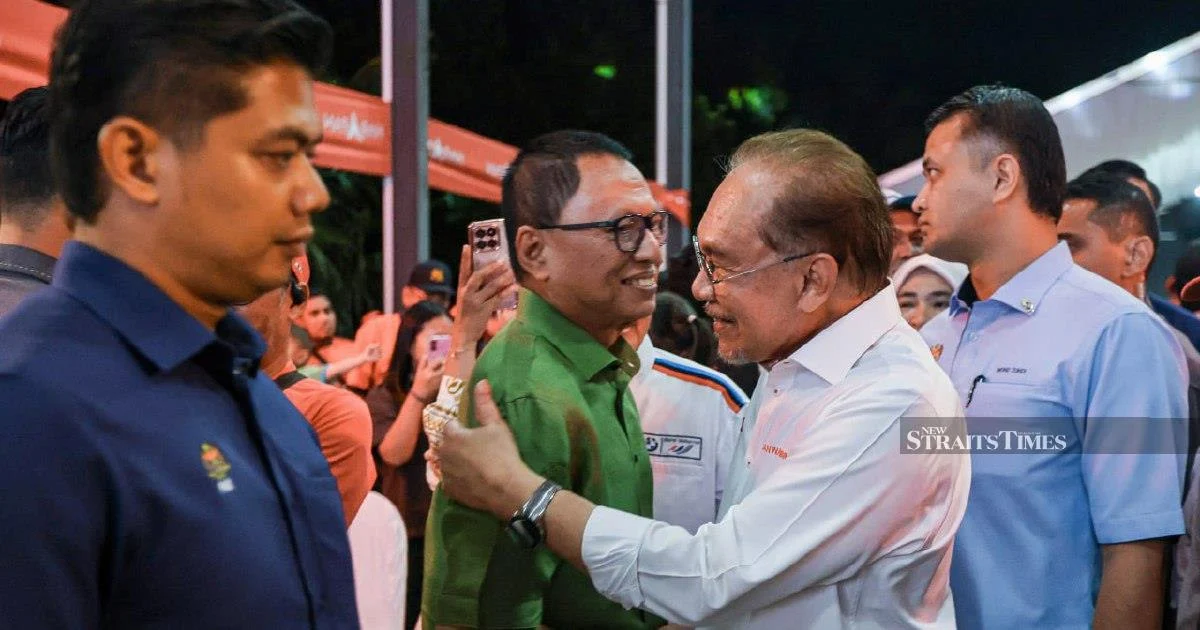
Johor Baru has become the backdrop for fresh political ribbing, as Bersama leader Datuk Seri Rafizi Ramli took aim at Datuk Dr Mohd Puad Zarkashi following what witnesses describe as a notably warm public greeting between the latter and Prime Minister Anwar Ibrahim on Saturday. The exchange, caught in public view, prompted Rafizi to deploy what he framed as gentle humour but carried unmistakable barbs about political allegiance and shifting loyalties within Malaysia's fractious coalition landscape.
The timing of Rafizi's quip reflects the broader volatility characterising Malaysian politics, where public displays of camaraderie between political actors often trigger speculation about backroom manoeuvres and coalition recalibrations. In a system where personal relationships frequently signal deeper political intentions, such moments rarely pass without comment from rivals and observers keen to decode what they might portend for the stability of existing arrangements. Rafizi's intervention suggests that the government coalition remains acutely sensitive to any suggestion that its constituent members might be developing alternative associations or hedging their political bets.
Puad's position has been subject to intense scrutiny in recent months, reflecting the delicate balance required of senior figures attempting to maintain standing across multiple stakeholder groups. His embrace with the Prime Minister, seemingly cordial and unguarded, evidently struck Rafizi as sufficiently noteworthy to warrant public commentary. The Bersama leader's characterisation of this interaction as a metaphorical 'portfolio switch'—invoking business terminology to describe political repositioning—demonstrates how Malaysian politicians employ humour as a vehicle for more pointed criticism while maintaining plausible deniability.
The reference to a portfolio shift carries particular resonance in Malaysia's contemporary context, where defections and party-hopping have become increasingly commonplace across the political spectrum. The suggestion that Puad might be moving his allegiances from Umno to PKR, even if stated in jest, touches upon genuine anxieties within the coalition about cohesion and loyalty. Such uncertainties have bedevilled Malaysian politics for years, contributing to governments that often lack decisive majorities and face constant pressure from internal fractures.
Rafizi's intervention must also be understood within the competitive dynamics of Pakatan Harapan itself. Bersama, as a component party within the broader opposition-turned-government coalition, maintains its own institutional interests and leadership considerations. By publicly addressing the Puad-Anwar interaction, Rafizi positions himself as an alert guardian of coalition interests while simultaneously signalling to his own party's constituency that he remains engaged and vigilant about potential threats to their political standing.
The public nature of Rafizi's commentary is particularly significant, suggesting that such matters cannot be resolved through quiet backroom discussions alone. When senior coalition figures resort to public jabs and humorous asides about their colleagues' political orientations, it indicates that underlying tensions have assumed a dimension that demands broader acknowledgment. This dynamic reflects the transparency paradox in Malaysian politics, where matters ostensibly handled privately through coalition management mechanisms inevitably spill into public discourse.
Anwar Ibrahim's embrace of Puad, whatever its actual significance, has clearly been interpreted by Rafizi as a moment requiring intervention. Whether the Prime Minister intended this interaction as a gesture of solidarity, conflict resolution, or something else entirely remains unclear, but its interpretation within the coalition's internal dynamics demonstrates how carefully calibrated such exchanges must be. In a coalition environment where multiple parties maintain distinct power bases and leadership structures, even seemingly innocuous gestures can acquire larger meanings.
The incident also highlights the persistent challenge facing any Malaysian government attempting to maintain a coalition of convenience between parties with different ideological foundations and interest bases. Umno, despite its reduced parliamentary representation compared to earlier periods, retains considerable organisational strength and regional influence, making its members and those associated with its constituencies crucial to any government's survival. Puad's prominence within Umno circles would make any suggestion of his political reorientation particularly disruptive if taken seriously.
Looking forward, the extent to which such public exchanges and speculative commentary affect actual coalition dynamics remains uncertain. Malaysian political history suggests that governments can survive considerable public acrimony between coalition partners, yet they remain vulnerable to more decisive shifts in allegiance or parliamentary support. Rafizi's jab at Puad, while entertaining for political observers and coalition watchers, likely reflects genuine concerns about loyalty and commitment that periodically surface whenever coalition partners demonstrate excessive warmth toward each other.
The broader significance of this exchange transcends the particular figures involved, illuminating the fundamental fragility of Malaysian coalition arrangements. As the government continues navigating competing demands from its various constituent parties and managing expectations among supporters disappointed by the complexities of actual governance, such moments of public sparring serve as releases for underlying tensions while simultaneously reminding observers that political consolidation in Malaysia remains perpetually incomplete and provisional.

