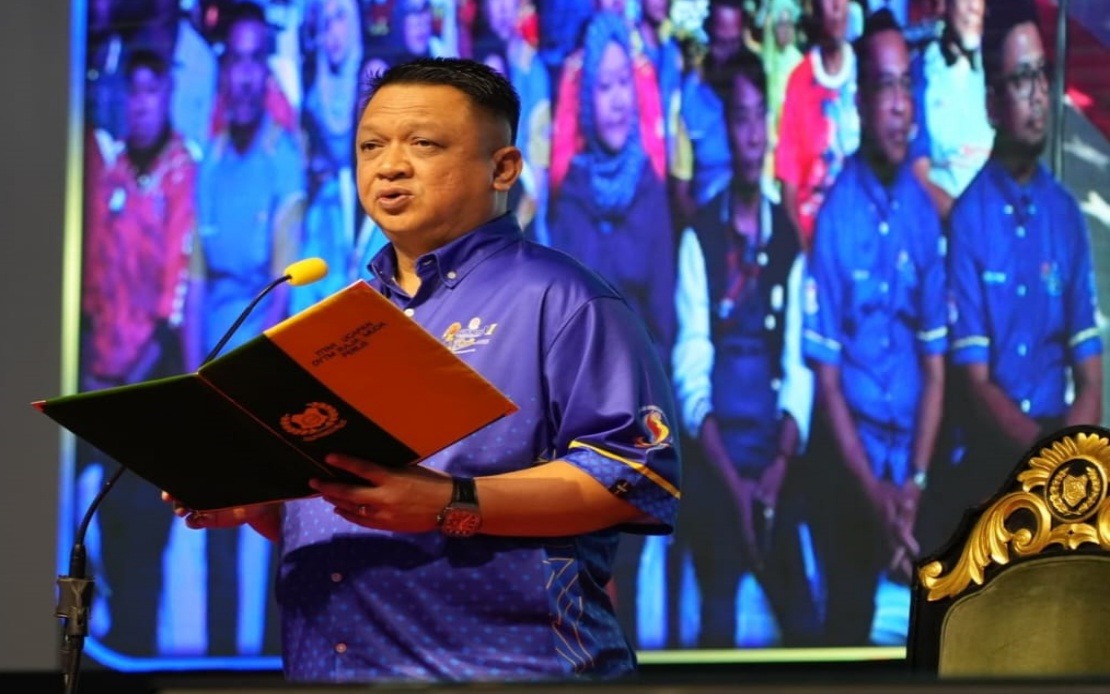
The Raja Muda of Perlis, Tuanku Syed Faizuddin Putra Jamalullail, has articulated a comprehensive strategic roadmap for Majlis Amanah Rakyat (MARA) centred on three interlocking pillars designed to position the institution at the vanguard of Malaysia's economic and social development. Speaking during the inauguration of the 11th Sukan MARA Se-Malaysia (SUKMAS) in Kangar, His Royal Highness emphasized that MARA must transcend reactive adaptation to technological change and instead become an active architect of Malaysia's future landscape, particularly in harnessing emerging digital tools and methodologies.
The first strategic thrust centres on technological innovation, with particular emphasis on artificial intelligence and its transformative potential across MARA's operational ecosystem. Tuanku Syed Faizuddin underscored that embracing AI is not merely a matter of institutional modernization but rather a competitive imperative that will unlock new dimensions of organizational efficiency, foster creative problem-solving, and enhance MARA's capacity to deliver value to its stakeholders. This orientation reflects broader regional trends wherein Southeast Asian development agencies are increasingly integrating AI systems into training, business advisory, and performance measurement frameworks. For MARA, which serves as a critical engine for Bumiputera entrepreneurship and skills development, this technological pivot could substantially augment the quality and scale of support extended to emerging business leaders, particularly those in smaller states like Perlis where access to specialized expertise remains constrained.
The second pillar addresses entrepreneurship and market competitiveness, with His Royal Highness calling for the cultivation of a new generation of Malaysian entrepreneurs characterized by innovation, adaptive resilience, and international market ambition. Rather than merely sustaining domestic market presence, MARA should concentrate its developmental efforts on equipping business participants with the strategic acumen and operational sophistication necessary to establish themselves in global markets. This objective carries particular significance given Malaysia's persistent challenges in producing mid-sized enterprises capable of scaling beyond regional boundaries. By channelling MARA's substantial training and financing apparatus toward globally competitive ventures, the institution can contribute meaningfully to Malaysia's aspirations for higher-value economic participation and reduced dependence on commodities and contract manufacturing.
The third strategic dimension addresses leadership capacity and organizational culture within MARA itself. Tuanku Syed Faizuddin advocated for cultivating personnel who demonstrate decisiveness, strategic foresight, and transformational thinking rather than incremental management. This prescription reflects mounting recognition across Malaysian public institutions that navigating contemporary complexity demands leaders who can anticipate disruption, mobilize resources rapidly, and drive substantive organizational change. For MARA, which has historically functioned within relatively structured frameworks, this cultural reorientation toward agile, strategic leadership represents a meaningful evolution likely to enhance the institution's responsiveness to emerging opportunities and challenges in Malaysia's evolving economy.
The sporting competition itself, now in its eleventh iteration, served as an appropriate venue for articulating these aspirations given SUKMAS's role as a unifying platform for MARA personnel across Malaysia's diverse states and operational contexts. His Royal Highness characterized the biennial tournament as far more than recreational activity, identifying it instead as a cohesive mechanism that reinforces organizational solidarity, cultivates disciplinary habits, and embeds sporting values throughout MARA's institutional fabric. This multi-dimensional understanding of sports resonates with contemporary approaches to institutional development wherein organizations increasingly recognize that physical competition and team-based activities contribute to cultural alignment and enhanced interpersonal collaboration.
The 11th iteration of SUKMAS, extending from late August through early September, represents a substantial undertaking involving approximately 3,000 athletes and officials representing fourteen MARA teams across Malaysia. The tournament's comprehensive sporting program encompasses fifteen distinct disciplines spanning conventional team sports such as football, netball, and volleyball, alongside culturally resonant activities including sepak takraw and tennis. This breadth of competition reflects MARA's commitment to inclusive participation across varying athletic abilities and sporting interests while maintaining competitive standards that encourage excellence and tactical sophistication.
Speaking to journalists following the inauguration, MARA director-general Datuk Seri Zulfikri Osman characterized the tournament as offering MARA personnel enhanced opportunities for substantive community engagement, particularly within Perlis where the state-level hosting creates possibilities for meaningful interaction between MARA representatives and broader Perlis society. Such community connectivity serves multiple institutional purposes, from public relations and stakeholder relationship management through to practical demonstration of MARA's operational capacity and values-orientation. The Perlis venue thus acquires significance beyond the immediate sporting context, providing a platform whereby MARA can showcase its personnel, operational standards, and developmental philosophy to regional audiences.
The strategic vision articulated by the Raja Muda reflects broader imperatives confronting Malaysian development institutions as the nation navigates accelerating technological change, intensifying global competition, and shifting demographic profiles. MARA, long positioned as a cornerstone institution for Bumiputera advancement and economic participation, must demonstrably evolve its capabilities and methodologies if it is to remain relevant and impactful across successive generations. The emphasis on AI adoption, international entrepreneurship, and transformational leadership suggests recognition that traditional development models, however successful historically, require substantial recalibration to address contemporary opportunities and constraints.
For Malaysian stakeholders across public policy, business, and civil society sectors, the articulated strategic directions carry implications extending well beyond MARA's internal operations. The institution's trajectory will significantly influence Malaysia's aggregate capacity for Bumiputera economic advancement, skills development, and competitive participation in digital-era markets. The emphasis on entrepreneurial internationalization particularly addresses longstanding Malaysian concerns regarding the limited number of locally-originated companies achieving substantial global market presence. If MARA can successfully orient its training, mentoring, and financing mechanisms toward cultivating globally competitive enterprises, the institutional impact could measurably accelerate Malaysia's economic transformation objectives.
The convergence of technological innovation, entrepreneurial orientation, and leadership development outlined by Tuanku Syed Faizuddin represents a coherent framework wherein each pillar reinforces the others, creating multiplicative effects on MARA's developmental capacity. Personnel equipped with digital fluency and strategic thinking can more effectively mentor entrepreneurs navigating complex international markets. Entrepreneurs possessing resilience and innovation capabilities can adapt rapidly to AI-mediated competitive environments. Leaders demonstrating transformational thinking can create organizational cultures wherein technological adoption and entrepreneurial ambition become embedded institutional values rather than externally imposed requirements. This systemic coherence distinguishes the proposed framework from fragmented or ad-hoc institutional development approaches that often yield limited sustainable impact.
As MARA moves forward in implementing these strategic directions, the institution faces substantial operational challenges spanning capability building among existing personnel, organizational culture modification, and resource allocation optimization. The transition toward AI-centered operations requires not merely technology acquisition but extensive staff retraining and process redesign. Cultivating entrepreneurs capable of international market penetration demands that MARA's advisory personnel themselves possess global business exposure and international network connectivity. Creating transformational leadership necessitates succession planning, mentoring arrangements, and organizational structures that facilitate decisive action and strategic risk-taking. How effectively MARA navigates these implementation complexities will substantially determine whether the strategic vision translates into tangible institutional performance improvements and measurable developmental outcomes for MARA's beneficiaries across Malaysia's diverse regions and communities.

