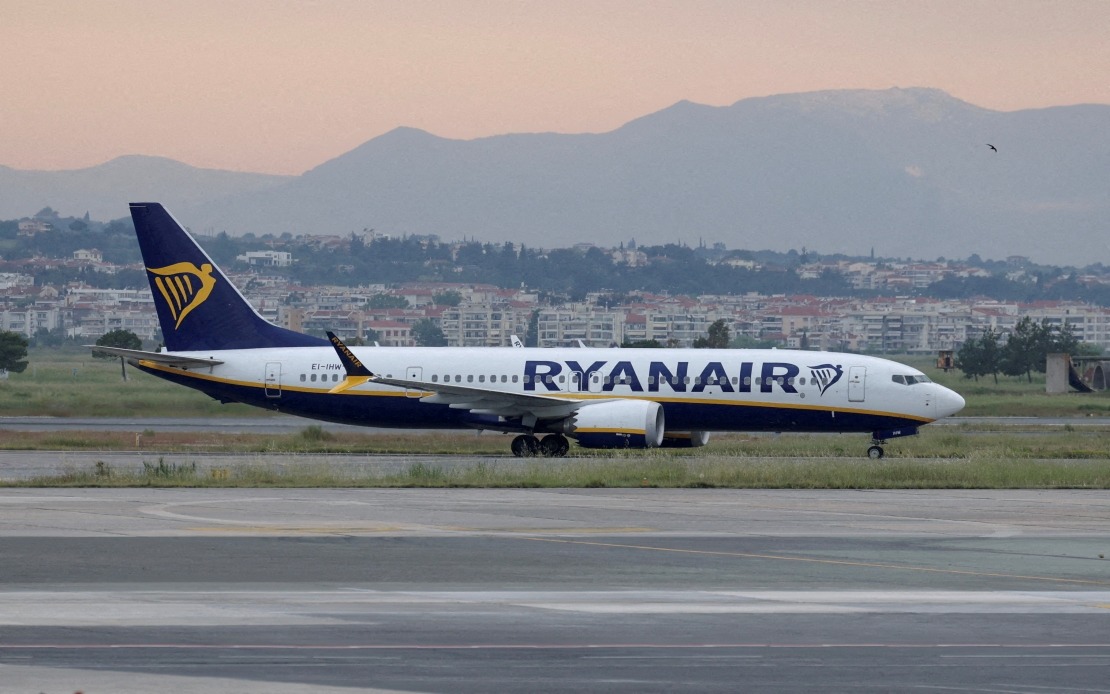
A routine commercial flight descended into chaos over Greece on Friday when a window on a Ryanair aircraft suddenly fractured, forcing an immediate return to Thessaloniki Airport. The incident, which unfolded on a service bound for Memmingen in southern Germany, left passengers and crew scrambling to manage a potentially catastrophic structural failure at altitude. The dramatic episode has reignited concerns about aircraft maintenance and structural integrity on budget carriers operating across European routes serving millions of passengers annually.
According to eyewitness accounts relayed to international news agencies, passengers aboard the aircraft heard an unexpectedly loud bang shortly after the plane had lifted off from Thessaloniki Airport. Within moments, the window pane in one section of the cabin disintegrated completely. The sudden failure exposed passengers seated nearby to the pressurised cabin environment, creating an emergency scenario that required immediate intervention from fellow travellers and crew members. The proximity of nearby passengers to the damaged window proved critical in what could have escalated into a far more serious incident.
The most immediate and alarming consequence of the window failure involved a Serbian passenger who was positioned nearest to the breach. Eyewitnesses reported that portions of his body—specifically his head and shoulders—became exposed outside the aircraft fuselage through the gaping opening. This positioning placed him in extreme danger, as the pressure differential and altitude would have created hazardous conditions. However, other passengers in the vicinity reacted decisively, managing to grasp and pull the man back into the safety of the cabin before the situation deteriorated further.
The psychological impact on the cabin became evident within seconds. Videos subsequently shared across social media platforms documented oxygen masks automatically deploying throughout the passenger cabin—a standard safety response triggered by cabin pressure anomalies. Passengers, visibly distressed by the unexpected emergency, could be heard screaming and crying as the aircraft's emergency systems activated. The combination of the structural failure, physical danger to one passenger, and automatic safety responses created an atmosphere of genuine panic throughout the aircraft.
The flight crew's response to the emergency was swift and decisive. The pilot, recognizing the severity of the situation and the structural compromise the window failure represented, immediately made the decision to abort the scheduled flight to Memmingen. Instead, the aircraft was manoeuvred into a direct return trajectory toward Thessaloniki Airport, the point of origin. This decision represented the safest available option given the circumstances, prioritising the safety of all passengers and crew over schedule adherence. The return journey to the airport consumed approximately twenty minutes of flight time, during which the situation remained contained and no additional incidents were reported.
Upon landing safely at Thessaloniki Airport, emergency response personnel were positioned and ready to receive the aircraft. The injured Serbian passenger was immediately transferred to waiting emergency services and transported to a hospital facility in Thessaloniki for evaluation and treatment. Medical teams assessed the extent of his injuries, which resulted from his partial exposure to the exterior environment during the incident. The condition and prognosis of the passenger have not been publicly disclosed, though his survival and successful extraction from the damaged area suggest the intervention of fellow passengers may have prevented more severe harm.
The incident has triggered formal investigation protocols, with authorities in Greece launching a comprehensive examination into the causes and circumstances surrounding the window failure. Such investigations typically examine maintenance records, manufacturing defects, installation procedures, and any unusual operational stresses that may have contributed to the structural failure. The investigation will seek to determine whether the failure resulted from manufacturing defects, improper maintenance, accumulated fatigue from repeated pressurisation cycles, or external factors such as foreign object damage during operations or ground handling.
As of the reporting timeline, neither Ryanair nor the relevant aviation authorities had issued formal public statements regarding the incident. This absence of immediate official communication is typical during the initial phases of aviation incidents, as agencies prioritise information gathering and verification before making statements to the public. However, the silence has allowed speculation and eyewitness accounts to circulate across social media platforms and news outlets, potentially raising passenger anxiety regarding aircraft safety on budget carriers.
The incident carries implications for budget aviation in Europe and Southeast Asia's burgeoning low-cost airline sector. Incidents involving structural failures, while statistically rare in modern aviation, generate disproportionate public concern regarding maintenance standards and safety protocols at operators known for cost minimisation. For Malaysian and regional travellers who frequently utilise budget carriers for intra-European travel, such incidents inevitably prompt questions about the adequacy of maintenance oversight and the safety culture at discount airlines competing aggressively on price. The investigation's findings will likely influence regulatory discussions regarding maintenance interval standards for older aircraft operating on budget networks.
The broader context of this incident relates to aging aircraft fleets increasingly operated by budget carriers across Europe. Many low-cost operators have expanded their networks using aircraft from earlier manufacturing batches, which may experience higher rates of component fatigue and failure as they accumulate flight hours beyond their initial operational design expectations. While modern aircraft are engineered with multiple redundancies and safety systems, cumulative effects of intensive utilisation schedules can progressively degrade structural elements and systems. This economic model of maximising aircraft utilisation creates inherent tension with maintenance requirements that demand increasingly thorough inspections as aircraft age.
For passengers travelling on European routes, particularly those using budget carriers, the incident underscores the importance of understanding airline safety records, aircraft ages, and operator maintenance practices. While aviation remains extraordinarily safe statistically, individual operator standards vary, and passengers exercising informed choice regarding carrier selection can influence market incentives. The incident also demonstrates the critical role of passenger awareness and collective action in emergency situations—the swift intervention of fellow passengers almost certainly prevented a tragedy that could have resulted in loss of life.
The investigation results, when released, will provide crucial data regarding whether this represents an isolated incident or symptomatic of wider concerns regarding aircraft maintenance standards within the budget carrier sector. Regulatory bodies across Europe will monitor the findings closely to determine whether enhanced oversight, mandatory maintenance interval revisions, or operational restrictions on aging aircraft are warranted. For the aviation industry and travelling public, understanding the root causes of such incidents proves essential for maintaining the high safety standards that commercial aviation has achieved globally.

