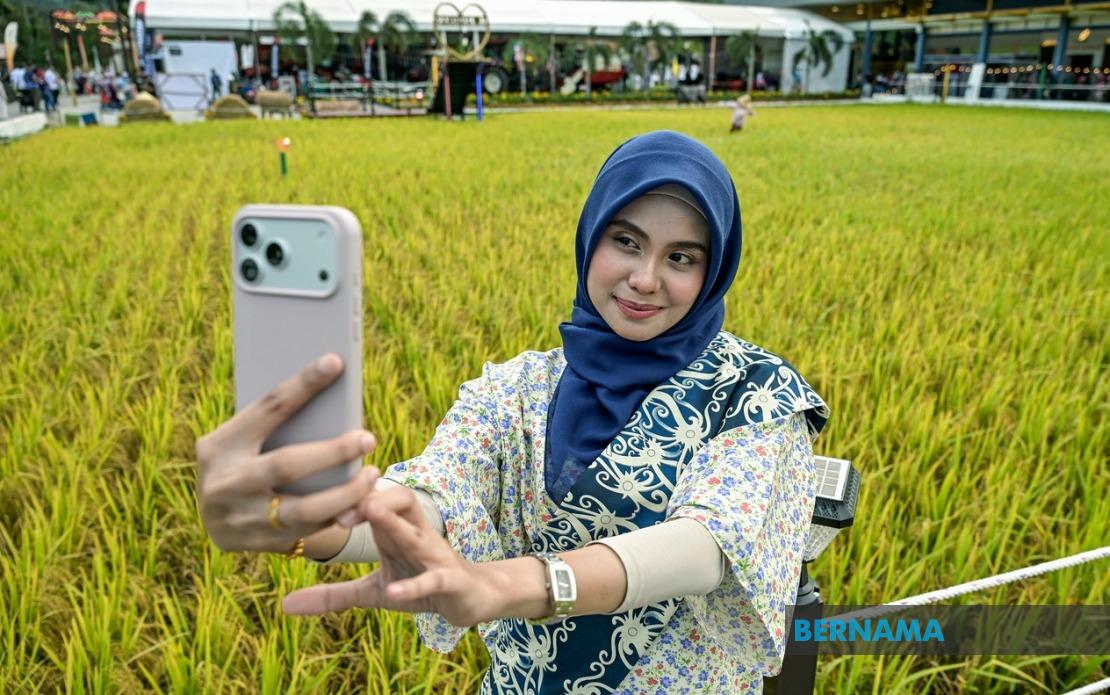
Malaysia's agricultural sector has achieved a significant milestone with the inauguration of Paddy Art at Laman Padi during the Malaysia Agriculture, Horticulture and Agrotourism Exhibition 2026, earning recognition from the Malaysia Book of Records for creating the nation's largest paddy art formation. The achievement underscores a broader shift in how the country's farming communities are diversifying their income streams and engaging with the public, particularly urban visitors with limited exposure to farming practices.
The paddy art installation, created using the MR284 paddy variety, showcases the Jalur Gemilang national flag alongside heart and hand motifs, complemented by the word 'Jati', which speaks to Malaysian identity and values. The artistic creation employed a sophisticated staged planting technique that capitalizes on the natural colour variations that emerge as crops mature at different rates, transforming a functional agricultural space into a visually compelling cultural statement. This approach demonstrates how traditional farming methods can be repurposed to serve aesthetic and cultural purposes without compromising agricultural objectives.
Minister of Agriculture and Food Security Datuk Seri Mohamad Sabu emphasized during the opening ceremony at Malaysia Agro Exposition Park Serdang that the initiative represents a collaborative effort between the government and private sector partners. The minister articulated a strategic vision for the nation's paddy fields, positioning them beyond their conventional role as grain-producing agricultural zones. Instead, he advocated for a comprehensive reimagining of paddy landscapes as multifunctional spaces capable of generating employment, facilitating technological advancement, and establishing educational platforms while simultaneously creating substantial economic value through agrotourism ventures.
The broader implications of this initiative extend far beyond a single record-breaking art installation. Mohamad's comments reflect a recognition that Malaysia's farming sector faces mounting pressure to adapt to changing economic conditions and demographic shifts. With younger generations increasingly disconnected from agricultural realities and urban populations seeking authentic experiences and connections to their food sources, the conversion of paddy fields into tourist destinations addresses both cultural and commercial imperatives. The minister argued that paddy landscapes can no longer be evaluated solely through the lens of yield metrics and production volumes, but rather should be assessed for their comprehensive contribution to rural economies and national identity.
The Laman Padi facility itself spans seven acres, incorporating seven distinct paddy plots alongside two dedicated information centres and gallery spaces, each presenting a unique narrative about paddy cultivation and the rice industry's historical evolution. This architectural approach enables visitors to experience a curated journey through both traditional and contemporary aspects of rice farming, from historical cultivation methods to modern agricultural technologies. The dual focus on preservation and innovation creates an educational environment that resonates with diverse visitor demographics while maintaining authenticity.
According to Paddy Industry Development Division secretary Shamsul Akbar Sulaiman, the installation is projected to attract approximately 10,000 daily visitors during the 10-day MAHA 2026 exhibition, though early figures indicated more modest numbers with 4,000 visitors recorded on the opening day. These projections reflect confidence in the concept's appeal, though achieving such targets will require sustained marketing efforts and programme diversity. The integration of traditional and contemporary elements aims to tell the comprehensive story of Malaysia's paddy and rice industries, documenting their transformation across decades while highlighting their continuing relevance.
The educational component of Laman Padi carries particular significance for long-term sectoral development. Around ten schools are participating in hands-on paddy planting activities, providing students with direct exposure to agricultural processes that many have never experienced. This experiential learning represents an investment in cultivating the next generation's understanding of and potential interest in agricultural pursuits. For Malaysia, where urban migration and employment in service sectors have historically drawn talent away from farming, such initiatives may help reverse perceptions of agriculture as a declining or unglamorous profession.
The exhibition functions simultaneously as a commercial showcase, with strategic partnerships spanning the paddy and rice value chain. Organizations including BERNAS and numerous private sector companies utilize the platform to present and promote their products directly to consumers, converting the agricultural exhibition into a business development opportunity. This commercial integration ensures that Laman Padi remains financially viable while serving educational and cultural functions, creating a sustainable model that can potentially be replicated across other agricultural regions in Malaysia and throughout Southeast Asia.
Culinary offerings form another significant dimension of the visitor experience, with Laman Padi featuring food concepts and dishes representing Malaysia's diverse regional traditions. By integrating gastronomy with agricultural education, the facility creates multiple touchpoints for visitor engagement and extends the appeal beyond agricultural enthusiasts to general tourists seeking diverse experiences. This multifaceted approach—combining record-breaking artistry, education, commerce, and culinary culture—positions the installation as a blueprint for modernizing Malaysia's agritourism sector.
For Malaysian farmers and agricultural communities, the Paddy Art initiative and Laman Padi facility represent tangible opportunities for economic diversification beyond commodity production. By transforming paddy fields into destinations that attract thousands of daily visitors, farming operations can generate supplementary income through tourism while maintaining core agricultural activities. This dual-purpose model proves particularly attractive for smallholder farmers and rural communities seeking sustainable alternatives to purely production-focused farming in an era of fluctuating commodity prices and climate uncertainties.
The recognition from the Malaysia Book of Records serves as national validation for innovative thinking within the agricultural sector, signalling that creativity and tradition need not be mutually exclusive in farming contexts. For Southeast Asia more broadly, Malaysia's experiment with large-scale paddy art and integrated agrotourism facilities may inspire similar initiatives in neighbouring countries where rice farming constitutes a cultural cornerstone. The success of Laman Padi could position Malaysia as a regional leader in sustainable agricultural transformation and innovative rural development strategies that balance economic imperatives with cultural preservation and educational advancement.

