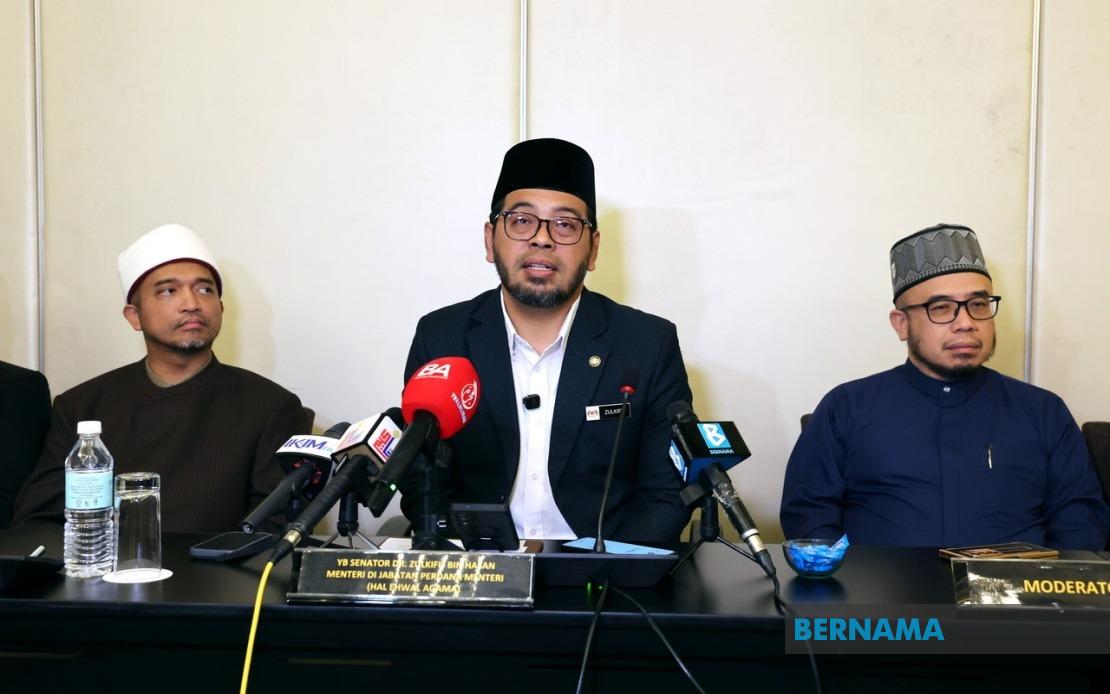
Religious Affairs Minister Dr Zulkifli Hasan has declared that the term 'kafir harbi'—a classical Islamic legal designation—is not suitable for application within Malaysia's constitutional and pluralistic framework. Speaking in Putrajaya on August 10, the Minister in the Prime Minister's Department outlined consensus reached during a formal roundtable discussion convened specifically to examine the implications and appropriateness of the terminology within the Malaysian context.
The distinction drawn by the minister reflects the fundamental tension between historical Islamic jurisprudential categories and the modern nation-state's constitutional architecture. The term 'kafir harbi' originates from classical Islamic law and refers to non-believers living in territories not under Islamic governance, a categorisation developed in mediaeval contexts vastly different from contemporary plural societies. By declaring it unsuitable, the minister articulated the principle that all Malaysian citizens—regardless of religious affiliation—occupy a shared constitutional status and possess identical fundamental rights and civic obligations.
Dr Zulkifli emphasized that Malaysia's constitutional framework binds all inhabitants in mutual responsibilities, making such divisive categorisations incompatible with national unity. His statement recognizes the Federal Constitution as the supreme legal document governing citizen relationships and civic standing. This clarification addresses concerns that the invocation of such terms could undermine social cohesion by creating artificial legal or moral distinctions between citizens based on religious identity rather than constitutional status. The minister framed the issue not as a restriction on religious discourse but as an acknowledgment that Malaysian citizenship transcends religious boundaries.
The roundtable discussion that preceded this announcement brought together stakeholders to examine the term's usage and implications systematically. Rather than issuing an edict, the government facilitated dialogue and deliberation, allowing participants to reach shared conclusions about its unsuitability. This consultative approach signals sensitivity to religious concerns while firmly anchoring the discussion within the constitutional framework. The collaborative method also strengthens the legitimacy of the conclusion by building consensus rather than imposing restrictions.
Responding to the outcomes, the Department of Islamic Development Malaysia (JAKIM) will coordinate with other government agencies and ministries to amplify public awareness regarding this position. This institutional approach ensures that the clarification reaches diverse audiences through multiple channels and institutional voices. Rather than treating this as exclusively a religious matter, the government is mobilising a cross-sectoral response, involving secular and religious authorities in communicating the position. This broader engagement recognises that strengthening national integration requires coordinated effort across different governmental domains.
The minister stressed that efforts to promote national cohesion cannot succeed if confined solely to the religious sector or treated as a matter of faith instruction. Genuine unity requires participation from civil service ministries, security agencies, educational institutions, and civil society. By enlisting various sectors in the awareness initiative, the government acknowledges that Malaysian identity and citizenship transcend religious boundaries and demand institutional reinforcement across multiple spheres. This holistic approach also protects against the perception that religious actors alone bear responsibility for managing inter-communal harmony.
For Malaysia's Muslim-majority population, this statement provides authoritative guidance from a senior religious ministry official that such terminology, however historically rooted in Islamic legal tradition, contradicts modern Malaysia's constitutional and social reality. This carries particular weight given Dr Zulkifli's position and religious credentials, as it comes from within the government's Islamic establishment rather than from secular quarters. The clarification demonstrates that Islamic perspectives and constitutional governance can align, rather than existing in tension.
The significance extends to Southeast Asia's broader demographic and governance challenges. Malaysia's experience as a multiethnic, multireligious nation navigating constitutional pluralism while maintaining Islamic institutions offers lessons to other regional societies managing religious identity within secular legal frameworks. The approach taken here—dialogue, consensus-building, and whole-of-government implementation—may resonate with other nations grappling with balancing religious traditions with inclusive citizenship.
Dr Zulkifli's explicit call for Malaysian unity emphasises mutual respect, cultural understanding, and shared investment in national development. His rhetoric reframes citizenship not merely as legal status but as an active commitment to collective progress. This framing transforms the issue from one of theological precision into one of national responsibility, suggesting that Malaysians of all faiths have joint stakes in strengthening bonds and understanding diverse perspectives.
The government's intervention on this matter reflects awareness of how unguarded religious terminology can inadvertently divide rather than unite, particularly in plural societies where citizens of different faiths negotiate shared civic space. By proactively clarifying that such categorisations have no place in Malaysian discourse, the authorities preempt potential misuse while affirming the constitutional supremacy of citizenship over religious identity. The statement thus serves both as clarification and as reinstatement of foundational constitutional principles.

