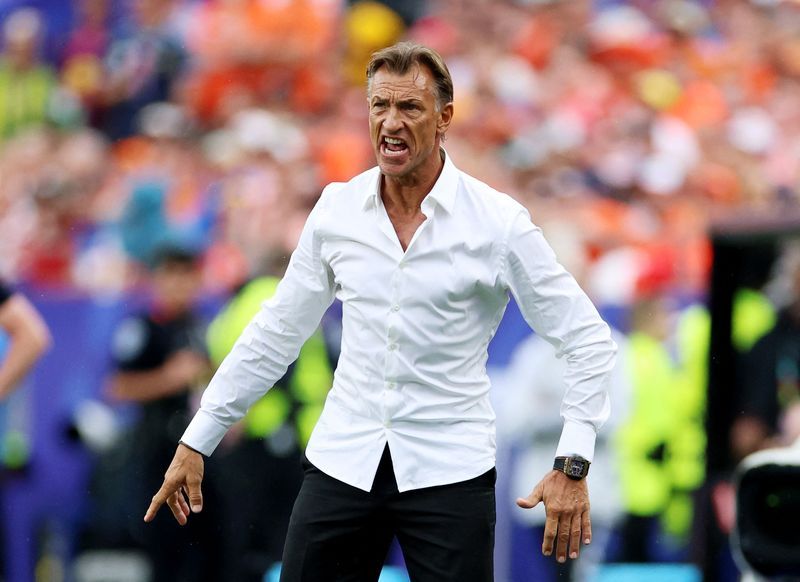
Hervé Renard's brief tenure as Tunisia's head coach has come to an end following the national team's failure to advance from the World Cup group stage. The 57-year-old French tactician announced his departure on Saturday through Instagram, stating that his "adventure ends here" while expressing gratitude to the Tunisian Football Federation for the opportunity to lead the team at football's premier competition. Despite describing the experience as an honour that would remain forever memorable, Renard acknowledged that his appointment ultimately could not reverse the dramatic collapse of a campaign that had begun with considerable promise.
Tunisia's World Cup journey deteriorated swiftly, exposing fundamental tactical and defensive vulnerabilities that proved difficult to remedy. The team arrived in Qatar having completed their qualifying campaign with an impressive defensive record, yet this solidity evaporated almost immediately once tournament football commenced. Their opening match against Sweden resulted in a devastating 5-1 defeat that laid bare organisational problems at the back and prompted the dismissal of predecessor Sabri Lamouchi after just a single game. The scale of that defeat served as the catalyst for Renard's appointment, brought in as an emergency solution to stabilise the squad during the tournament itself.
Renard's remedial efforts proved insufficient to halt the team's downward trajectory. In his first match in charge, Tunisia suffered a 4-0 hammering by Japan, a result that visibly affected the French coach emotionally. Speaking afterwards, Renard expressed shame at the magnitude of the defeat, recognising the gap between expectations and performance that had emerged. The emotional toll of consecutive heavy losses underscored the impossibility of his position—tasked with reviving a team whose confidence had been shattered in such dramatic fashion and whose structural problems could not be addressed through in-game adjustments alone.
A final group match against the Netherlands, which Tunisia lost 3-1, confirmed their premature exit without a single victory across their three matches. This outcome starkly contrasted with their qualifying campaign and raised uncomfortable questions about the state of North African football at the elite level. The failure to register even one win at a World Cup tournament represented a significant setback for a programme that had invested considerable time and resources in reaching the competition.
The statistical dimensions of Tunisia's collapse are particularly striking. Across their three group matches, the team conceded twelve goals—an unfortunate distinction that established a new unwanted World Cup record in the expanded 48-team format. This surpassed the previous benchmark of eleven goals conceded by Costa Rica during the 2022 tournament in Qatar, highlighting how comprehensively Tunisia's defensive structure disintegrated under tournament pressure. The defensive deterioration suggests that deeper issues existed within the squad's preparation and organisation that mid-tournament coaching changes could not resolve.
From a strategic perspective, Tunisia's predicament illustrates the inherent risks and limitations of appointing a new coach during an active World Cup campaign. While emergency managerial changes occasionally stabilise struggling teams, they typically cannot address systemic problems that emerge during qualifying or pre-tournament preparation. Renard's inability to improve upon Lamouchi's results within such a compressed timeframe reflects the unrealistic expectations placed upon any incoming coach operating with minimal preparation time and a demoralised squad.
The broader implications for Tunisian football are considerable. The team enters a period of reflection regarding coaching philosophy, tactical direction, and player development pathways. Questions will inevitably arise about the selection process that produced such an unprepared squad for tournament football, despite their qualifying achievements. For Southeast Asian observers, Tunisia's experience serves as instructive—demonstrating that qualification success does not guarantee tournament readiness, and that defensive vulnerabilities exposed early in competition can be difficult to remedy once momentum and confidence are lost.
Renard's departure marks the conclusion of a historically brief and unsuccessful managerial appointment. His willingness to acknowledge the failure publicly through his Instagram statement suggests a degree of professionalism in accepting responsibility, though it provides limited comfort to Tunisian supporters who had anticipated a more competitive showing. The search for Tunisia's next permanent coach will likely focus on securing a manager capable of conducting longer-term developmental work rather than attempting mid-tournament salvage operations.
Looking forward, Tunisia faces the challenge of rebuilding both team confidence and tactical foundation ahead of future qualification campaigns. The World Cup experience, though disappointing, provides valuable diagnostic information about areas requiring remediation. Whether the Tunisian Football Federation pursues a foreign coaching appointment similar to Renard's model or opts for domestic expertise remains to be determined, but the bar for success at subsequent tournaments has been significantly lowered by this campaign's outcome. For regional football administrators, Tunisia's World Cup experience underscores the critical importance of thorough pre-tournament preparation and the dangers of late coaching interventions when fundamental issues remain unaddressed.

