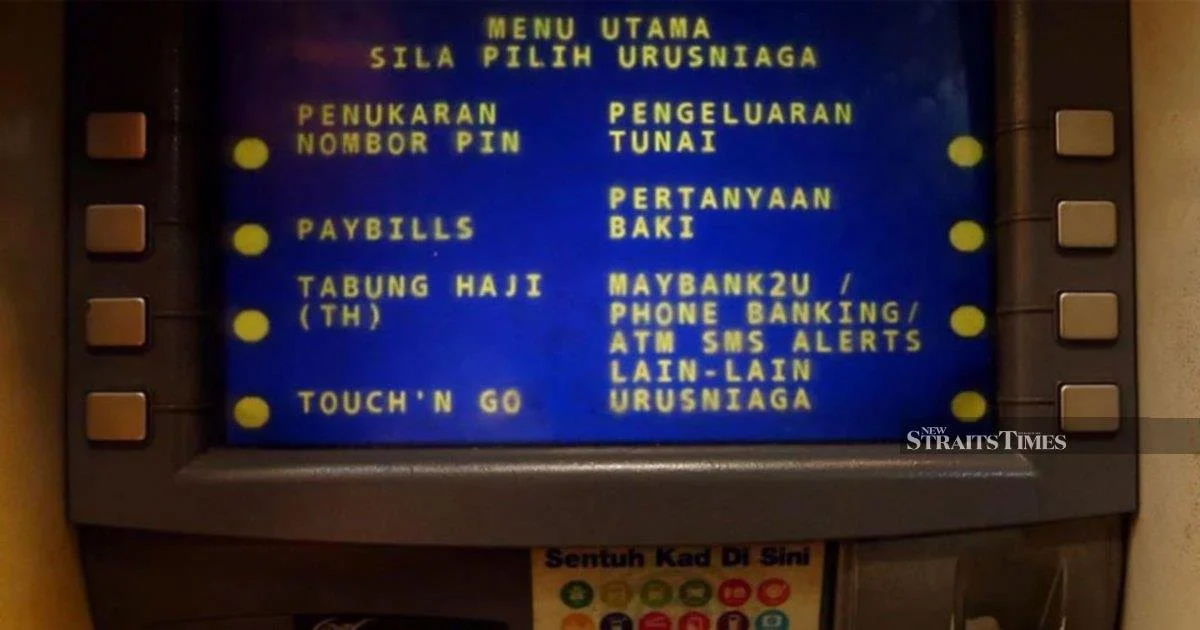
The central bank has made clear that customers should not face charges when withdrawing funds from automated teller machines operated by their own financial institutions, Communications Minister Datuk Fahmi Fadzil announced, urging the public to bring violations to the authorities' attention. Under current regulations established by Bank Negara Malaysia, the RM1 interbank withdrawal fee applies only when customers use ATMs belonging to rival banks. Charging customers at their own bank's machines represents a breach of these established guidelines and warrants official investigation.
The directive reflects an ongoing effort by Bank Negara Malaysia to protect consumers from what regulators view as unjustified fees. Although the RM1 charge for cross-network withdrawals has become accepted practice in the Malaysian banking landscape, the prohibition on fees at a customer's own bank's ATM represents a fundamental consumer protection measure. The central bank has indicated that such charges erode customer trust and do not serve legitimate operational purposes, since banks incur no additional costs when processing withdrawals through their own infrastructure.
Datuk Fahmi Fadzil's statement underscores the government's commitment to ensuring transparency and fairness in banking services. The Communications Minister's emphasis on reporting mechanisms suggests that Bank Negara Malaysia remains committed to investigating complaints and enforcing compliance among financial institutions. This public messaging campaign aims to empower consumers who may be unaware of their rights or uncertain whether they have been subjected to unauthorized charges.
For Malaysian consumers, this clarification carries practical significance. Many banking customers may not scrutinize ATM receipts carefully or may assume that all withdrawal charges represent standard practice. The statement effectively provides a benchmark against which customers can evaluate their bank's conduct and encourages them to question charges that fall outside regulatory expectations. Those who have experienced unexpected RM1 debits at their own bank's machines now have a clear pathway to lodge formal complaints.
The issue touches on broader questions about banking accessibility and cost equity. In Malaysia's increasingly digital financial ecosystem, ATM networks remain essential infrastructure for segments of the population that prefer cash transactions or lack convenient access to digital banking platforms. Charging customers to access their own funds through their own bank's machines undermines financial inclusion objectives and creates barriers to basic banking services. Regulators view such practices as incompatible with responsible banking conduct.
Bank Negara Malaysia's framework recognizes that interbank fees serve a purpose—compensating the operator of an ATM for maintenance, security, and network costs when a competitor's customer makes a withdrawal. However, when a customer uses their own bank's ATM, no such cross-network transaction occurs, and costs should be absorbed by the bank itself as part of normal account service provision. The distinction, while seemingly straightforward, requires vigilant oversight to enforce.
Consumers who believe they have been wrongly charged should document the transactions, including dates, amounts, and ATM locations, before submitting complaints to Bank Negara Malaysia. The central bank maintains formal complaint mechanisms designed to investigate such cases and, if warranted, issue directives requiring refunds or remedial action. This process may take time, but it creates an official record and contributes to regulatory oversight of the sector.
The statement also carries implications for smaller and regional banks, which may face different operational constraints than larger institutions. However, regulatory compliance with Bank Negara Malaysia's directives applies uniformly across all licensed banks. No institution is exempt from the prohibition on charging customers at their own machines, regardless of scale or competitive position. This ensures a level playing field and protects customers regardless of which bank they choose.
For Malaysia's banking sector more broadly, clear enforcement of consumer protection rules strengthens institutional credibility and fosters long-term customer loyalty. While some banks might view the RM1 charges as minor revenue sources, the reputational cost of violating regulatory expectations and imposing unauthorized fees likely exceeds any short-term financial gain. Banks that comply readily with Bank Negara Malaysia's directives demonstrate professional standards and customer-centric governance.
The incident also highlights the importance of consumer awareness in financial services. Many Malaysians may not be fully familiar with banking regulations or confident in their ability to challenge institutions over charges. Public statements from senior government figures like Datuk Fahmi Fadzil help bridge this awareness gap and embolden consumers to assert their rights. Education campaigns about proper ATM fees represent a complementary regulatory tool alongside formal enforcement mechanisms.
Moving forward, Bank Negara Malaysia will likely monitor compliance through customer complaints and periodic audits of bank practices. Financial institutions that continue charging at own-network ATMs risk regulatory penalties, public criticism, and customer attrition. The combination of regulatory oversight, public awareness, and customer reporting creates a system of accountability that protects the Malaysian banking public.

