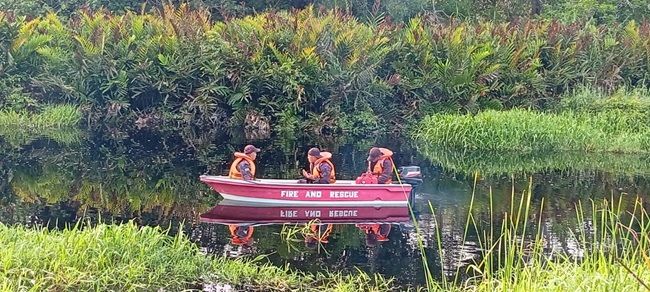
Rescue personnel in Brunei have extended their search into a third consecutive day for a man suspected of being attacked by a crocodile in the waters of Kampong Baru Sungai Bera, with no significant developments reported as of Wednesday. The coordinated operation has mobilized resources from several government agencies, demonstrating the scale of the response to what authorities believe may be a fatal wildlife encounter in one of the sultanate's river systems.
The Fire and Rescue Department (FRD) confirmed that the multi-pronged search strategy encompasses continuous patrols of the river using specialized FRD vessels, methodical sweeps along both banks, and overhead reconnaissance flights utilizing the department's unmanned drone technology. This layered approach reflects the challenging nature of locating any trace of the victim in a river environment where crocodiles are native and water conditions may complicate recovery efforts.
The operation has been significantly bolstered by partnership with the Royal Brunei Police Force (RBPF), which contributed personnel from multiple units including officers stationed at Seria Police Station and specialized marine law enforcement from the Royal Brunei Police Force Marine Police division, commonly known as POLMAR. The Wildlife Division has also joined the coordination, bringing expertise in understanding crocodile behavior and habitat patterns that might aid in predicting where the animal or any remains could be located.
Operational command rests with Senior Superintendent Amirul Hadi Junaidi, the Commanding Officer of the Operations Branch, who oversees the coordination between the various responding agencies. This centralized leadership structure is typical for major search and rescue incidents in Brunei, ensuring clear communication and efficient deployment of resources across different departments with distinct mandates.
The emergency response was triggered on Wednesday, June 24, when authorities received a distress call reporting a male victim in the river. The initial FRD dispatch sent two fire engines carrying nine personnel led by Acting Station Officer Mohd Zulkifli Md Tahir to the scene at Kampong Baru. Upon arrival, firefighters interviewed family members present at the location and established that the victim had been engaged in fishing activities when the alleged crocodile attack occurred.
The establishment of a Tactical Command Post at the scene marked the transition from an emergency response to a sustained rescue operation. This facility would have served as the operational hub for coordinating personnel movements, managing communications between different units, and tracking the search grid to ensure comprehensive coverage of the affected river area. The initial deployment of ground teams was quickly supplemented by aerial assets, reflecting a decision to leverage technology in an effort to cover larger areas more rapidly.
Crocodile attacks in Southeast Asia, while relatively uncommon, carry significant risk when they do occur, and they tend to generate urgent multi-agency responses due to the severity of potential injuries and the unpredictable nature of the animals involved. Fishing in rivers known to harbor crocodiles represents a recognized occupational and recreational hazard throughout the region, and incidents periodically prompt discussions about safety awareness and protective measures.
Brunei's geography includes numerous river systems that provide habitat for saltwater and freshwater crocodile species, making wildlife encounters a factual reality for communities and visitors who venture into these environments. The Sungai Bera area, where this incident occurred, is not an isolated location but rather represents the type of river environment where such encounters, though infrequent, remain a possibility that local residents understand and navigate.
The continuation of search operations without positive findings through the second and third days reflects both the commitment of rescue services and the inherent difficulties in locating individuals in river environments. Factors including water flow, current conditions, and the behavior of large predators complicate recovery scenarios significantly, and rescue coordinators must balance resource intensity with the decreasing probability of positive outcomes as time extends.
For Malaysian and wider Southeast Asian readers, this incident underscores the continuing reality of wildlife risks in the region's natural areas and the sophisticated emergency response capabilities that neighboring nations like Brunei maintain for major incidents. It also serves as a reminder of the importance of safety precautions when engaging in riverside activities, particularly in areas where crocodile populations are established. The inter-agency coordination demonstrated here reflects best practices in regional emergency management that increasingly influence how neighboring countries structure their own rescue operations.

