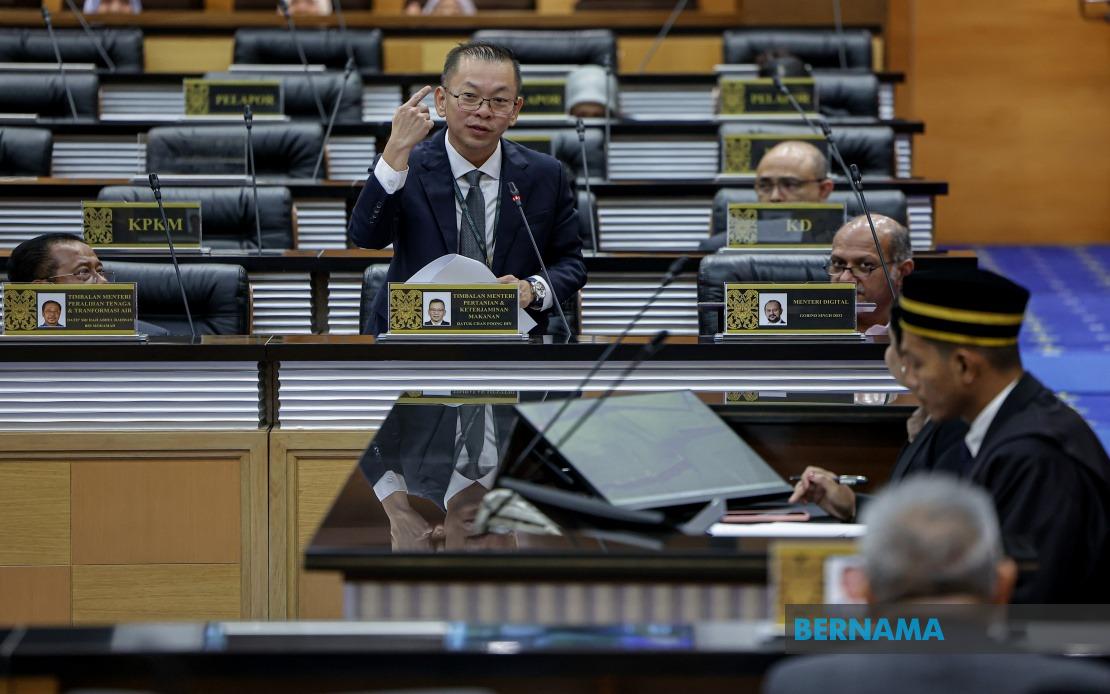
The Malaysian government has moved to clarify enforcement intentions surrounding its amended Control of Padi and Rice Act 1994, reassuring farmers that compliance efforts will concentrate on supply chain intermediaries and illicit traders. In a parliamentary statement during the Upper House debate on July 28, Deputy Minister of Agriculture and Food Security Datuk Chan Foong Hin explained that wholesalers, millers, importers, retailers, and those engaged in rice smuggling and hoarding represent the primary enforcement focus, not the farming community that produces the commodity.
This distinction carries significant weight for Malaysia's rice sector, where smallholder paddy farmers constitute a substantial portion of production yet operate with limited resources for navigating complex regulatory frameworks. The clarification addresses longstanding concerns that overly aggressive enforcement of agricultural legislation could burden vulnerable producers already contending with input cost pressures and market volatility. By ringfencing the farming community from enforcement action, the government signals an intent to direct regulatory pressure upward through the value chain toward entities with greater operational capacity and financial cushion.
Chan outlined a graduated enforcement methodology designed to balance regulatory objectives with practical implementation realities. First-time violations will trigger administrative warnings rather than immediate court proceedings, creating space for traders to correct non-compliance issues. Only persistent or repeated breaches will escalate to judicial action, establishing what the Deputy Minister characterized as an educational rather than purely punitive framework. This approach acknowledges that regulatory compliance involves learning curves, particularly for smaller businesses unfamiliar with new administrative requirements.
The regulatory framework will detail specific offences and enforcement protocols through subsidiary legislation rather than leaving enforcement officers with discretionary authority. This emphasis on specification and transparency aims to counteract historical concerns about regulatory overreach and arbitrary application of laws affecting trading communities. Violations encompass familiar administrative matters such as failure to display or renew trading licences, inadequate product labelling regarding grade specifications, pricing information, and weight declarations. These represent standard hygiene measures within consumer protection frameworks globally, designed to prevent information asymmetries between traders and end consumers.
Recognizing that blanket penalties could disproportionately impact small retailers operating on modest margins, the amended legislation introduces differentiated penalty structures calibrated to offence severity. Rather than subjecting all violations to a maximum RM250,000 fine, the revised framework establishes proportionate lower penalties for minor infractions. This calibration serves multiple objectives simultaneously: it prevents regulatory capture of small traders while maintaining meaningful deterrent effect against egregious violations, and it frames enforcement as rational and proportionate rather than punitive and arbitrary. Such nuance builds legitimacy for the regulatory system among trading communities whose cooperation remains essential for effective implementation.
The government has signalled openness to implementing a digital rice tracking infrastructure that would monitor commodity movement throughout the supply chain. Such a system addresses genuine market manipulation concerns, particularly repackaging schemes where traders rebrand imported white rice under local branding to exploit price differentials between imported rice and the government-supported Beras Putih Tempatan (BPT) programme. By establishing transparent, verifiable commodity tracking from production through retail distribution, authorities gain visibility into trading patterns and can identify manipulation without relying on farmer-level inspections. This technological approach shifts enforcement toward systemic transparency rather than labour-intensive field operations.
The amended legislation expands ministerial regulatory powers across multiple domains affecting rice supply dynamics. The Minister gains expanded authority to regulate licensing frameworks for paddy buyers, to establish grade specifications determining commodity classifications, to implement price controls for retail rice, and to restrict paddy and rice movements to suppress hoarding and smuggling activities. These consolidated powers reflect recognition that supply chain manipulation occurs through coordinated action across multiple nodes—buyer collusion, grade manipulation, artificial scarcity creation, and cross-border diversion. Concentration of regulatory authority facilitates coordinated responses to such complexity.
The bill's passage through the Dewan Rakyat on July 13 preceded its Upper House consideration, following parliamentary custom. After debate involving 20 senators, the Dewan Negara approved the measure by majority voice vote, indicating cross-party support for the legislative direction. This consensual passage suggests the regulatory intent commands broader political agreement, reducing prospects for contentious implementation or subsequent legislative reversal. Such stability matters for trader planning and investment decisions within the rice sector.
The BPT price support programme, which provides domestic farmers a guaranteed market for controlled-grade rice at defined prices, functions as core agricultural policy underpinning rural income stability in rice-producing regions. Market manipulation schemes undermining this programme—particularly through repackaging imported rice as locally-sourced to access premium pricing—represent direct threats to programme integrity and farmer welfare. Enforcement attention to trading manipulation rather than farm-level compliance thus aligns regulatory effort with protecting the farmer support mechanism rather than burdening its beneficiaries.
For Malaysia's broader rice security objectives, distinguishing between farmer-focused and trader-focused enforcement holds strategic implications. The country maintains self-sufficiency targets for rice production, treating the commodity as essential to national food security given its staple status. Regulatory approaches that impose compliance burdens on farmers risk reducing production incentives and supply reliability. Conversely, addressing supply chain manipulation enhances market confidence and supports domestic producer prices, incentivizing continued or expanded paddy cultivation. The enforcement reorientation thus serves dual objectives of market integrity and production security.
Regional context further elevates the policy significance of Malaysia's approach. Across Southeast Asia, agricultural regulation frequently intersects with rural-urban tensions, elite capture concerns, and farmer-trader relationship dynamics. Malaysia's explicit commitment to farmer-protective enforcement, combined with transparency through regulatory specification and proportionate penalties, offers a model addressing widespread tensions between regulatory objectives and rural livelihood concerns. The approach suggests that effective supply chain governance need not entrench adversarial relationships between enforcement authorities and farming communities.

