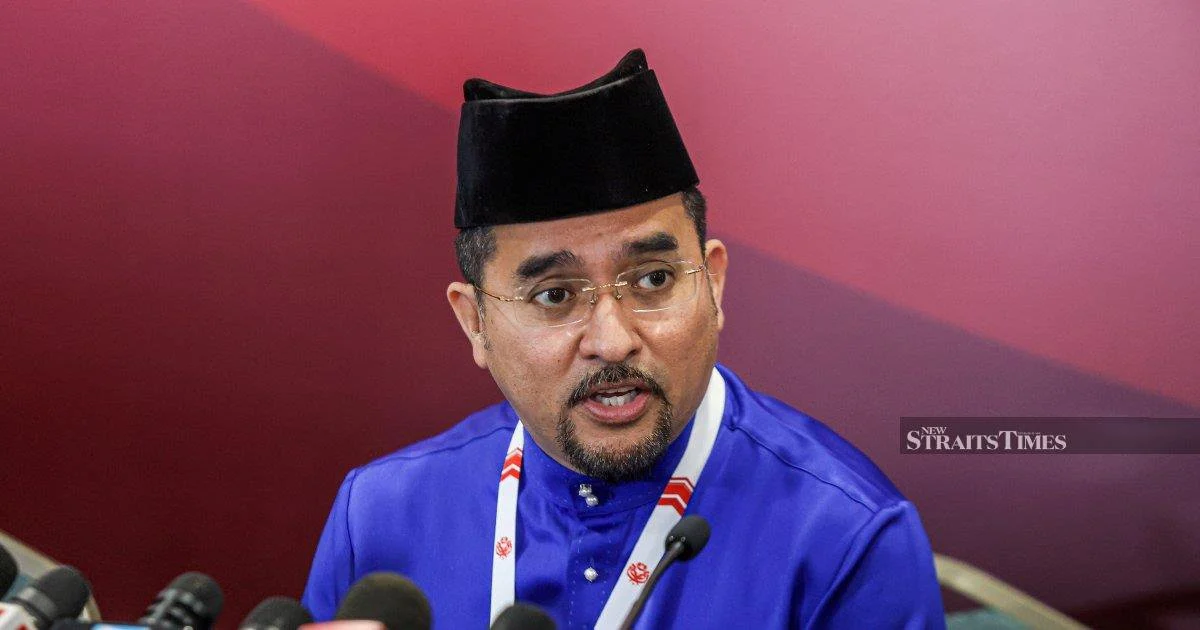
The announcement of Barisan Nasional candidates for the Johor state election experienced a notable delay, a postponement that Umno secretary-general Datuk Dr Asyraf Wajdi Dusuki attributed to an intensive vetting process rather than internal coalition disagreements or logistical failures. Speaking from Kuala Lumpur, the senior party official explained that the coalition had prioritised thoroughness in candidate selection, a stance that lengthened the timeline between initial preparations and the eventual public unveiling of the slate.
The vetting mechanism employed by BN reflected the coalition's stated commitment to fielding candidates of sufficient quality and standing to compete effectively in what was anticipated to be a closely contested state election. This multi-layered screening approach involved examining the credentials, background, integrity records, and electoral viability of potential nominees across BN's component parties, including Umno, MCA, and MIC. The process necessarily consumed additional time as party machinery cross-referenced information and evaluated whether prospective candidates could withstand scrutiny in their respective constituencies.
For Malaysian political observers, the emphasis on rigorous candidate selection carries particular significance given the volatility of state-level elections in recent years. The Johor election represented a crucial test of BN's organisational capacity and electoral competitiveness following the coalition's mixed performance in the 2022 general election and subsequent state ballots. Any misstep in candidate selection—whether through nominating individuals with questionable backgrounds or failing to account for local sentiment—could have proven costly in constituencies where margins of victory traditionally remained tight.
The delayed announcement also underscored tensions inherent in managing a multi-party coalition. Umno, as the dominant component, would have needed to negotiate allocations with MCA and MIC while simultaneously ensuring that nominee selections reflected internal party dynamics and factional interests. Such coordination requires careful timing and consensus-building, particularly when different parties within the coalition harbour competing claims to certain constituencies or insist on fielding particular candidates despite reservations from allies.
From a voter perspective, the extended timeline preceding candidate announcement inevitably affects campaign preparation and public engagement. Constituencies remained in limbo regarding who would represent BN in their areas, potentially dampening grassroots enthusiasm or allowing opposition parties to consolidate their own positioning before facing confirmed opponents. The delay effectively compressed the campaign window available to BN nominees, particularly those contesting for the first time or challenging sitting assembly members from opposing parties.
The commitment to stringent vetting also reflects evolving standards within Malaysian political parties regarding candidate quality. Corruption allegations, integrity issues, and controversial statements by representatives have increasingly influenced voter decisions, making thorough background checks not merely procedural but strategically essential. BN's emphasis on this process suggested awareness that fielding tainted or unsuitable candidates could undermine the coalition's recovery narrative and provide ammunition to opposition forces.
Contextually, the Johor election carried implications extending beyond state politics into national dynamics. The southern state remains economically significant and electorally influential, serving as a bellwether for broader political trends. A successful BN performance in Johor could strengthen the coalition's position ahead of potential early general elections, while a poor showing would intensify questions about BN's long-term viability and internal cohesion. The rigour applied to candidate selection thus represented an investment in what BN considered a critical electoral battleground.
Datuk Dr Asyraf Wajdi Dusuki's explanation also served a defensive purpose within party circles. By attributing delays to principled vetting rather than dysfunction or infighting, Umno leadership attempted to frame the extended timeline as reflecting due diligence rather than organisational weakness. This narrative positioning mattered internally, where different factions might otherwise exploit delays as evidence of poor senior management or unresolved conflicts between coalition partners.
For Southeast Asian observers monitoring Malaysian politics, the episode illustrated how coalition governance in plural-party systems generates inherent inefficiencies. Unlike single-party systems capable of rapid decision-making, multi-party coalitions must balance competing interests, negotiate allocations, and maintain internal consensus—processes that necessarily consume time. BN's experience reflected broader regional patterns seen in other Southeast Asian democracies where coalitions govern or contest elections.
The emphasis on candidate vetting also hinted at tactical considerations regarding potential anti-defection provisions and party loyalty mechanisms. Candidates selected for BN would face expectations regarding party discipline and would likely encounter constraints on their freedom of action once elected. The vetting process presumably included assessments of whether nominees could be trusted to maintain coalition loyalty and adhere to agreed-upon positions on critical matters.
Looking forward, the delay and its cited justification shaped expectations regarding BN's campaign strategy and organisational quality. A well-vetted slate of credible candidates could translate into improved electoral performance, vindicating the decision to prioritise thoroughness. Conversely, if selected nominees subsequently encountered scandals or proved ineffective campaigners, the vetting process would attract criticism as having failed in its purported objective. The announcement's timing and candidate quality would thus be scrutinised as indicators of BN's readiness for electoral competition.