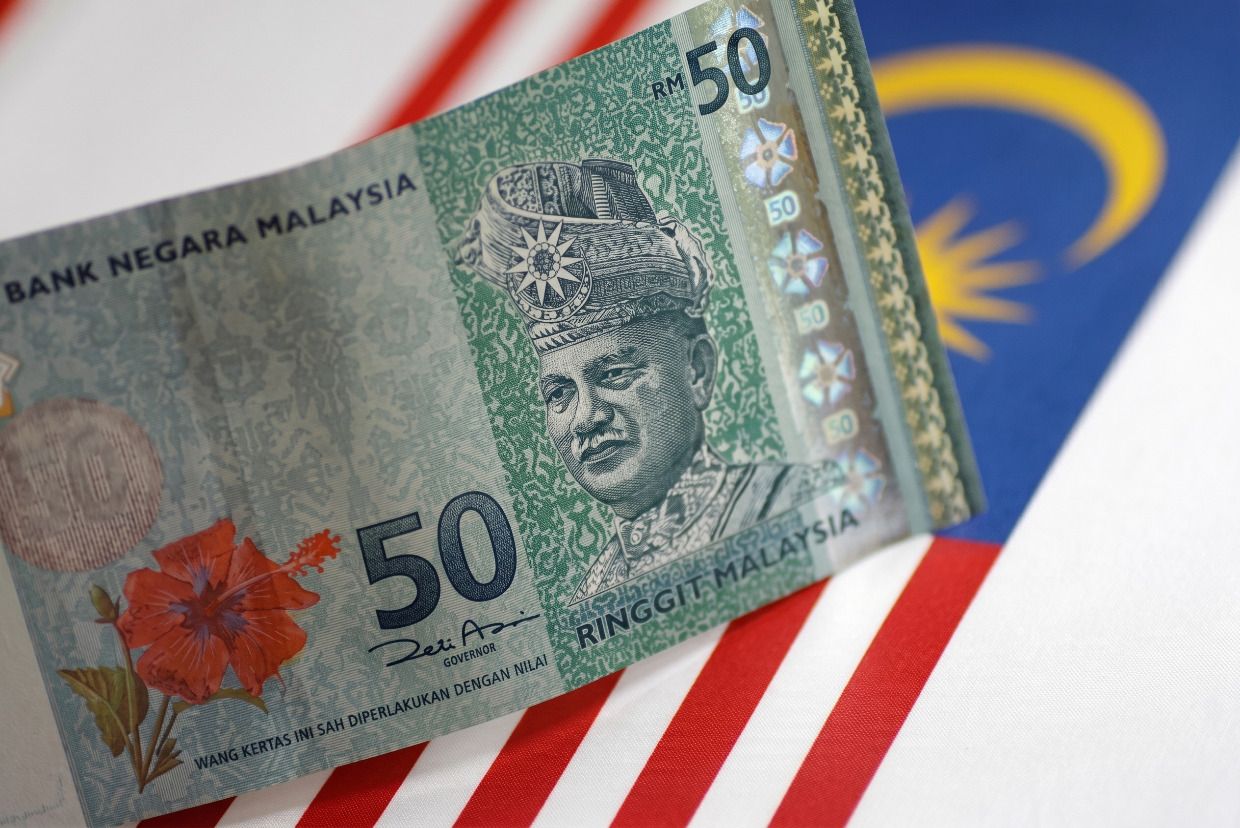
Malaysia's currency is set for a meaningful recovery following what has been a challenging period against regional competitors, with financial strategists increasingly confident that a combination of policy support and underlying economic strength will propel the ringgit higher through the remainder of the year. After finishing June as the weakest-performing currency in Asia, the ringgit has already begun reversing course, bolstered by Bank Negara Malaysia's commitment to stepped-up measures designed to encourage the repatriation and conversion of corporate foreign-exchange holdings. The momentum appears genuine, with the currency already notching gains in early trading, closing Friday at 4.0722 against the dollar, a modest but positive movement that signals renewed investor confidence.
Analysts at major financial institutions have attached specific price targets to their optimistic outlook, reflecting expectations that the ringgit could appreciate significantly from current levels. Royal Bank of Canada's research team projects the ringgit will trade at approximately 3.95 per dollar by year-end, representing an appreciation of nearly 3 percent from July levels. Even more bullish is the assessment from Australia & New Zealand Banking Group, whose strategists forecast the ringgit could strengthen to 3.80, a level that would mark the strongest performance since 2015 and reflect a more substantial shift in currency dynamics. These projections are not speculative musings but grounded in what analysts view as structural improvements in Malaysia's economic position and the effectiveness of policy interventions.
The foundation for this expected rebound rests on Bank Negara's deliberate efforts to facilitate larger flows of foreign currency into the domestic economy. The central bank's announcement on June 24 signalled an intensification of existing initiatives aimed at encouraging companies to convert their overseas earnings into ringgit. This represents a calculated policy response to the reality that Malaysia's substantial trade surplus—buoyed by extraordinary export demand—has not been translating fully into currency support. By creating incentives and streamlined procedures for corporate repatriation and conversion, Bank Negara is attempting to capture what strategists view as a critical missing link between Malaysia's economic performance and currency valuation.
Malaysia's external position has strengthened dramatically, providing the economic bedrock that underpins currency forecasts. The nation's total exports expanded by a remarkable 45 percent on a year-on-year basis in May, a surge that reflects the intersection of Malaysia's strategic position in global supply chains and the unprecedented appetite for computing infrastructure supporting artificial intelligence applications. This export dynamism generated a monthly trade surplus of 40 billion ringgit—approximately $9.8 billion—the highest monthly figure on record. These figures underscore Malaysia's capacity to generate foreign currency through real economic activity rather than speculative inflows, a distinction that lends durability to currency strength.
The artificial intelligence-driven boom has particularly benefited Malaysia's electronics and electrical goods sectors, which have experienced extraordinary international demand. Malaysian companies are well-positioned to supply both the physical infrastructure—data centre equipment and cooling systems—and the semiconductors and components essential to AI expansion. This demand has created a secular tailwind for Malaysian exports that extends beyond cyclical economic recoveries, suggesting the export momentum is likely to persist for several years as global artificial intelligence investment accelerates.
Fixed income markets are reflecting this optimism through enhanced foreign investor participation in Malaysian debt securities. Global fund managers deployed approximately $2.1 billion into local bonds through June 29, putting the market on course for its largest monthly inflow since May 2025. This capital movement is particularly significant because it represents genuine diversification decisions by international investors rather than speculative positioning. When foreign institutions commit substantial resources to ringgit-denominated debt, they are simultaneously taking a directional view that the currency will hold or strengthen, creating a reinforcing cycle of demand.
Bank Negara's current push to encourage corporate foreign-exchange conversion echoes similar initiatives implemented during 2024, which proved effective in supporting the ringgit after the currency had deteriorated to its weakest level against the dollar in over two decades. That intervention, combined with market adjustments, resulted in the ringgit rebounding to become Asia's strongest-performing currency through the remainder of 2024. The success of those earlier measures suggests policymakers understand the mechanics of currency support and possess credible tools to implement it.
Beyond policy measures and cyclical export strength, Malaysia benefits from what analysts describe as solid underlying economic fundamentals that justify foreign investor confidence. The nation's trade position, the resilience of its financial system, and the attractiveness of local assets to global allocators all point toward a stable or improving currency outlook. According to research from ANZ, foreign currency deposits held by Malaysian businesses expanded materially during the March-May period, suggesting companies are accumulating foreign exchange that can be converted into ringgit through Bank Negara's new framework. This pool of convertible foreign currency represents a latent source of ringgit demand that policy measures can unlock.
Despite the positive trajectory, the ringgit's ascent is not assured against headwinds from the international environment. The United States Federal Reserve's increasingly hawkish policy stance—signalling potentially higher interest rates for longer—creates upward pressure on the dollar that can offset positive factors supporting the ringgit. Higher US rates increase the carry-trade appeal of dollar assets and can trigger capital outflows from emerging markets as investors rotate toward safer, higher-yielding alternatives in developed economies. This external constraint means Malaysia's currency recovery, while likely, will remain dependent on the specific path of US monetary policy decisions through the remainder of the year.
Domestically, Malaysia faces political considerations that could influence investor sentiment and capital flows. Upcoming state elections will serve as a barometer of public support for Prime Minister Anwar Ibrahim and the ruling coalition ahead of national polls, creating a period of potential political uncertainty that sophisticated investors typically discount into currency valuations. Political instability or surprising election results could trigger rapid reassessments of Malaysia's risk profile and trigger capital outflows, providing a downside risk to the bullish ringgit outlook. However, most analysts judge that strong economic fundamentals and clear policy direction provide substantial insulation against political noise.
The confluence of factors supporting ringgit appreciation—from deliberate policy intervention to exceptional export growth to renewed foreign investor interest in Malaysian assets—creates a credible foundation for the currency recovery that analysts are forecasting. If these elements remain in place through the remainder of the year, the ringgit could indeed reach the 3.80 to 3.95 range that major financial institutions project, representing a meaningful improvement from current levels and reflecting Malaysia's enhanced economic position within regional and global markets.

