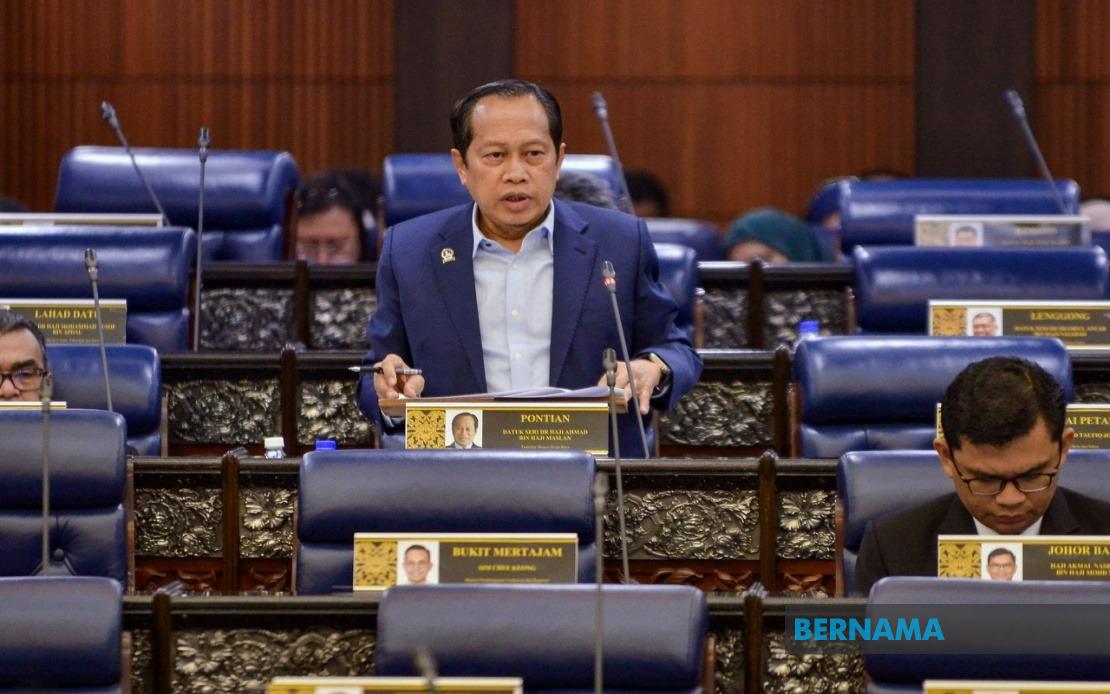
The federal government has disbursed RM1.2 billion in land compensation for the Sabah Pan Borneo Highway Phase 1 Project, Deputy Minister of Works Datuk Seri Ahmad Maslan announced during parliamentary proceedings on July 14. The substantial payout underscores the government's commitment to protecting landowners affected by the major infrastructure initiative, which stretches across Sabah's geography. In a parallel development, the Sarawak section of the Pan Borneo Highway has generated RM737 million in compensation payments, reflecting the scale of land acquisition efforts across both East Malaysian states.
The compensation framework represents a deliberate policy choice by the federal government to absorb the full financial burden of property acquisition, ensuring that affected landowners do not bear the costs of supporting national development projects. This approach demonstrates a shift towards prioritising community welfare within the context of large-scale infrastructure delivery, particularly in states where land acquisition can significantly impact rural and indigenous communities. The government's positioning of this burden-sharing arrangement highlights broader concerns about equitable development in East Malaysia.
When responding to questions posed by Isnaraissah Munirah Majilis, the WARISAN Member of Parliament for Kota Belud, Ahmad Maslan addressed growing scrutiny surrounding the project's escalating expenditure. The Sabah PBH Phase 1 Project's cost has nearly doubled from its initial 2015 estimate of RM12.86 billion to the current figure of RM24.889 billion, a development that has invited parliamentary scrutiny about value for money and project management efficiency.
The principal explanation for this substantial cost inflation centers on a fundamental shift in project delivery methodology. In 2019, the federal government terminated the Project Delivery Partner model, transitioning instead to the Federal Conventional Contractor approach. This restructuring followed considerations of national interest and required comprehensive reassessment of remaining construction scope and technical specifications. The shift represented a significant management decision that effectively reset the project's financial baseline after five years of implementation.
From a technical perspective, Ahmad Maslan outlined multiple factors contributing to the cost increase. Modifications to project scope and design specifications necessitated recalibration of engineering approaches. Geotechnical investigations revealed soil conditions that demanded more extensive treatment measures than originally anticipated. Additionally, utility relocation operations—involving the repositioning of telecommunications, water, electricity, and other essential services—emerged as a major cost driver, requiring substantial coordination with multiple service providers and government agencies.
The project's organisational structure reflected the complexity of the undertaking. Phase 1A encompasses sixteen separate work packages valued at RM10.9 billion collectively, while Phase 1B extends across nineteen packages totalling RM13.989 billion. This fragmented delivery approach allows for staged construction and risk distribution but inevitably introduces coordination complexities and administrative overhead that may contribute to cost expansion.
Macroeconomic factors significantly influenced the project's trajectory. The extended construction timeline exposed the initiative to sustained inflationary pressures affecting both labour and material costs. Global commodity price fluctuations, particularly in critical construction inputs including iron, cement, and bitumen, created additional budgetary pressures beyond the control of project management. Domestic labour market tightness drove wage escalations, while machinery rental and operational costs similarly experienced upward pressure throughout the construction period.
For Malaysian policymakers and East Malaysian communities, the Pan Borneo Highway's cost trajectory raises fundamental questions about infrastructure project planning and oversight. The doubling of project costs within a decade suggests potential deficiencies in initial scoping, risk assessment, or market analysis. Future megaprojects may require more sophisticated contingency planning and adaptive management frameworks to accommodate the complex realities of large-scale infrastructure delivery in geographically challenging terrain.
The project's significance extends beyond mere financial considerations. The Pan Borneo Highway represents a strategic initiative intended to enhance economic connectivity across Sabah and Sarawak, potentially unlocking commercial opportunities and improving inter-regional mobility. However, the substantial cost escalation necessarily influences the initiative's economic return calculations and raises questions about opportunity costs—the alternative investments that might have been pursued with similar financial resources.
For landowners and communities along the highway corridor, the compensation framework provides important protections, though the adequacy and fairness of valuation methodologies remain important considerations. In rural and semi-urban areas of Sabah, land acquisition for major projects can represent transformative events for affected households, making compensation design a matter of genuine social consequence.
Looking forward, the completion of Phase 1 construction will provide empirical evidence regarding actual versus projected costs and timelines. Such outcomes will inform approaches to future major infrastructure commitments in East Malaysia and potentially across the nation. The Pan Borneo Highway serves as a case study in the complexities of delivering large-scale transportation infrastructure in demanding geographical contexts, where careful estimation and adaptive management prove essential.

