Malaysia's subsidy system faces a credibility crisis after the Public Accounts Committee (PAC) disclosed that RM10.879 billion allocated for cooking oil subsidies between 2019 and February 2025 failed to benefit intended recipients. The staggering shortfall represents not merely a budgetary mishap but a fundamental breakdown in the government's ability to manage public resources effectively, with implications extending across the entire subsidy architecture that underpins the nation's social safety net. The revelation comes at a time when Malaysian households continue to grapple with cost-of-living pressures, making the disappearance of such substantial subsidy resources particularly troubling for policymakers and the public alike.
The PAC's findings strike at the heart of the government's central economic argument regarding subsidy reform. Over successive administrations, Malaysian policymakers have championed the transition from universal to targeted subsidies, claiming this approach would eliminate waste, prevent smuggling to neighbouring countries, and concentrate assistance on vulnerable groups most dependent on affordable staple goods. The logic underlying this strategy appeared sound: by narrowing the scope of subsidies, the government could reduce fiscal burden while improving the allocation efficiency of public spending. Yet the emergence of a RM10.879 billion leakage suggests the implementation has fundamentally failed to deliver on these promises, undermining confidence in the entire framework.
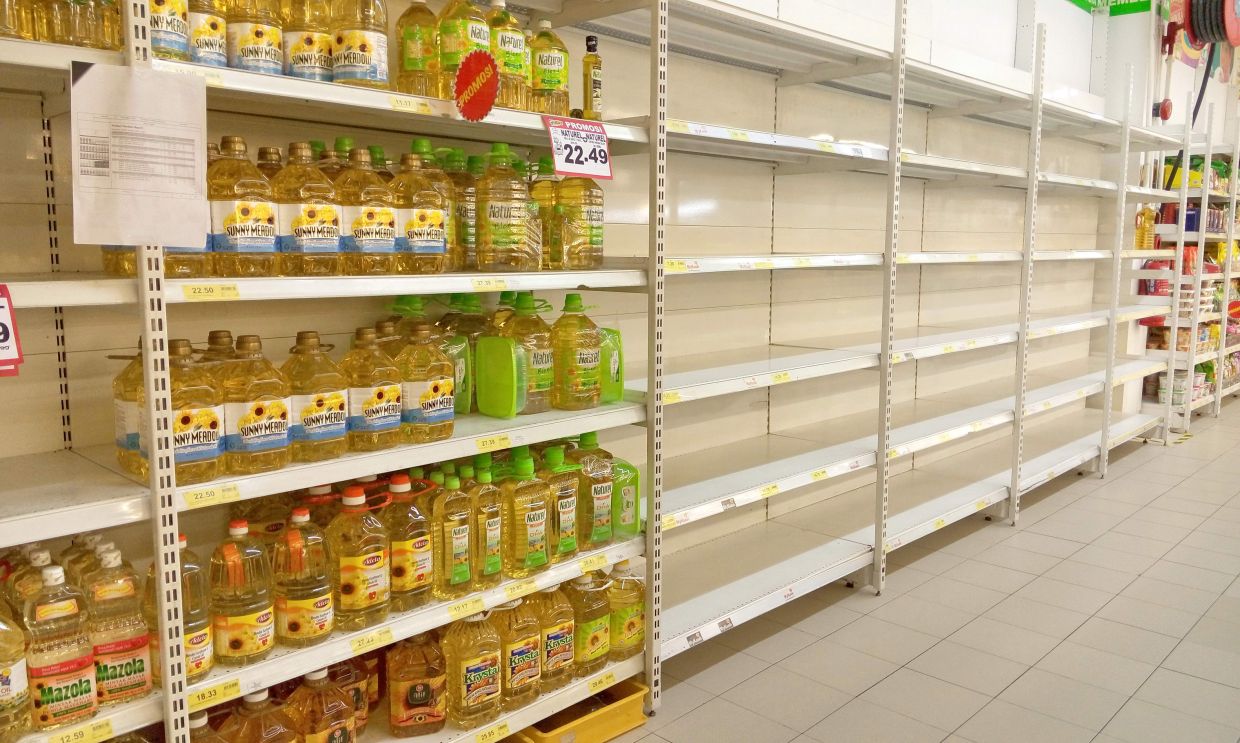
What makes this subsidy loss particularly damaging is the visibility of the problem at point of sale. Malaysians have witnessed cooking oil shelves running empty across supermarkets and wet markets, a phenomenon linked directly to the subsidy programme's dysfunction. When consumers cannot access subsidised goods despite government assurances of availability, the loss of public trust extends beyond mere economic metrics. The empty shelves represent the visible failure of government administration, more impactful to voter sentiment than abstract discussions of fiscal management or efficiency targets. This disconnect between promised subsidy benefits and their actual availability has become emblematic of deeper governance challenges.
The scale of the loss demands examination of how such a sum could evaporate without triggering earlier intervention. Systemic failures at multiple levels appear evident: market monitoring mechanisms failed to detect the problem with sufficient urgency; enforcement capacity proved inadequate to prevent leakages once subsidised goods entered the distribution chain; and accountability structures did not function to alert policymakers to the accumulating losses. The RM10.879 billion figure spanning nearly six years suggests this was not an isolated incident or temporary disruption but rather a persistent structural flaw that continued unchecked, compounding year after year. Such longevity in a failure of this magnitude raises uncomfortable questions about the quality of government oversight institutions.
One critical dimension involves the movement of subsidised cooking oil across borders to Thailand and other neighbouring countries where unsubsidised prices are significantly higher. This leakage has long been identified as a risk within Malaysia's subsidy system, yet appears to have continued with little effective containment. Smuggling networks exploit price differentials, diverting domestically subsidised goods for sale at market prices abroad, capturing the spread as profit. Without robust border controls, price monitoring systems, and enforcement mechanisms specifically designed to combat this grey market, subsidised goods will inevitably leak regardless of how well-targeted the initial subsidy mechanism appears on paper. The PAC's findings suggest these preventive measures have functioned inadequately.
The timing of this revelation also matters contextually. Malaysia faces mounting fiscal pressure, with subsidy expenditures consuming significant portions of the annual budget. Against this backdrop, the loss of RM10.879 billion in cooking oil subsidies alone becomes particularly galling, as it suggests money that could have expanded assistance to other vulnerable groups or invested in productive infrastructure instead vanished into opacity. Policymakers defending future budget allocations will struggle to justify continued subsidy spending when such massive leakages remain unresolved. This creates a vicious cycle: as public confidence erodes, the political appetite for targeted assistance programmes weakens, potentially harming genuine beneficiaries who depend on these mechanisms.
Accountability mechanisms within government appear insufficient to prevent or quickly detect such large-scale subsidy losses. The PAC itself, though empowered to investigate after the fact, clearly could not prevent the losses from accumulating. This temporal lag between occurrence and discovery represents a critical weakness. More proactive monitoring systems, perhaps involving real-time tracking of subsidised goods movement through supply chains, could theoretically provide earlier warning. Yet implementing such systems requires investment and coordination across multiple agencies—both resources and inter-agency cooperation that have apparently been lacking. The absence of these mechanisms suggests either insufficient priority given to subsidy oversight or endemic coordination failures within the bureaucracy.
The political dimensions of this issue extend beyond simple administrative failure. The government must assign accountability for losses of this magnitude, yet doing so risks embarrassing sitting or former ministers and officials. This creates incentives to minimise the apparent seriousness of findings or to blame systemic factors rather than individual decisions. However, public patience with such evasiveness has limits. Malaysians increasingly expect transparency regarding how public resources are managed, and the discovery of such massive subsidy leakages demands clear answers about who bore responsibility and what consequences they faced. Without credible accountability, public cynicism regarding government competence and integrity deepens.
Looking forward, the government faces difficult choices regarding subsidy policy. Maintaining current mechanisms without addressing leakage pathways simply guarantees continued losses. Expanding targeted subsidies without solving these problems compounds the waste. Some analysts suggest more radical options: shifting from price subsidies toward income transfers that empower consumers to purchase at market rates, reducing the incentive for smuggling by narrowing price arbitrage opportunities. Yet any significant restructuring requires political courage and sustained implementation discipline. The cooking oil subsidy failure demonstrates that good policy design alone cannot ensure good outcomes without effective execution capabilities.
The broader Southeast Asian context adds another dimension. Thailand, Indonesia, and other regional neighbours struggle with similar subsidy challenges. Malaysia's experience provides a cautionary tale about the practical difficulties of maintaining targeted subsidy programmes. As regional governments consider subsidy reforms, Malaysia's RM10.879 billion loss illustrates how easily theoretical frameworks can unravel during implementation. This suggests that regional policy learning networks might benefit from candid discussions about what has failed and why, moving beyond the standard rhetoric about efficiency and targeting to address the underlying governance and enforcement challenges that determine actual outcomes.
For Malaysian consumers dependent on cooking oil as a staple, the immediate implication is uncomfortable: the disappearance of RM10.879 billion in subsidies reduces the resources available to maintain affordable food staples regardless of how that loss occurred. Whether the money leaked through smuggling, administrative inefficiency, or deliberate misappropriation, the end result is the same: less assistance reaching households. This reality underpins why subsidy losses matter not as abstract fiscal problems but as direct threats to living standards for millions of ordinary Malaysians. Restoring public confidence in subsidy management requires not merely identifying what went wrong but demonstrating concrete improvements in oversight, enforcement, and accountability.

