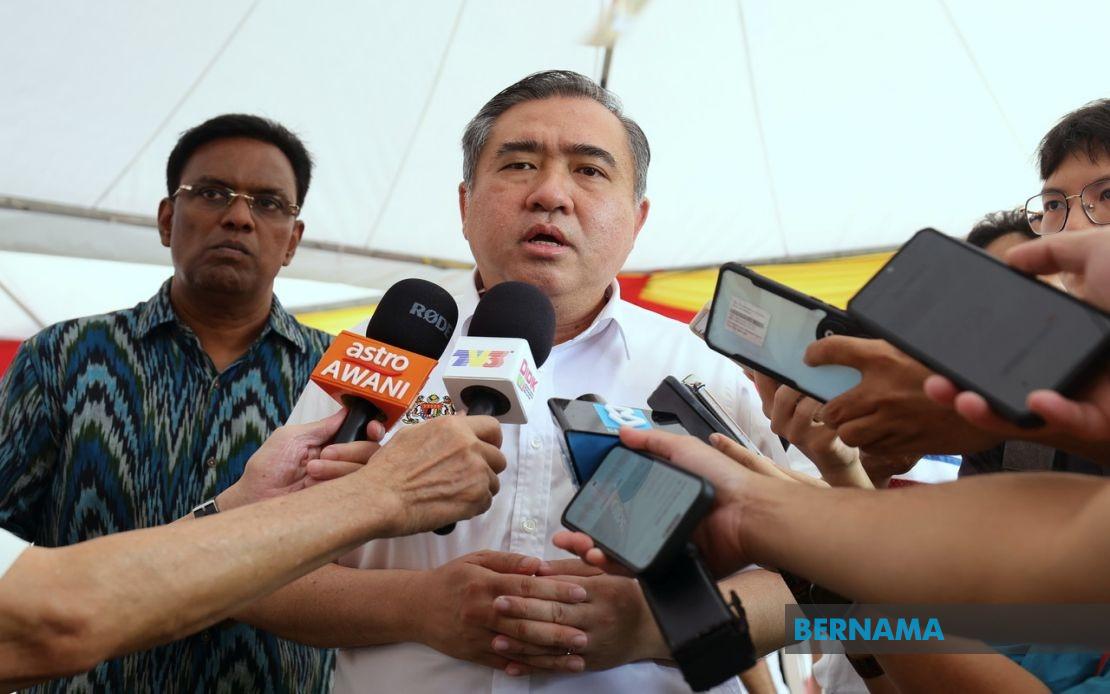
Transport Minister Anthony Loke announced on July 16 that Kampung Bukit Temiang in Seremban will receive RM100,000 in development funding as part of the MADANI Adopted Village Programme, a government initiative designed to strengthen direct engagement between federal ministries and rural communities. The funding stems from two sources: RM50,000 contributed by the Railway Assets Corporation (RAC), which operates under the Transport Ministry's purview, and an equivalent RM50,000 from Loke's allocation as the Seremban Member of Parliament.
The financial commitment reflects a broader strategic approach where the federal government seeks to bridge the gap between policy formulation and ground-level implementation. Rather than imposing predetermined development plans, the MADANI framework prioritises listening to residents' actual concerns and needs before allocating resources. For Kampung Bukit Temiang, this consultative process has identified several priority areas requiring immediate attention, including structural repairs to the community meeting hall, restoration of residential roofing in homes experiencing weather damage, enhancement of the village's drainage infrastructure, and installation or repair of other essential facilities that residents have highlighted as necessary.
The funds will be channelled through the Federal Village Development and Security Committee (JPKK), a coordinating body responsible for overseeing rural infrastructure projects across Malaysia. This institutional arrangement allows for flexible implementation strategies that can adapt to local circumstances. The committee can undertake construction and repair work through multiple mechanisms: direct engagement of the RAC's own workforce for certain projects, organisation of community-led gotong-royong (mutual self-help) initiatives that build social cohesion while reducing costs, or engagement of local contractors who possess knowledge of regional construction practices and materials.
Loke's statements underscore how the MADANI Adopted Village Programme positions itself as a departure from top-down development models that often fail to address actual community priorities. By establishing direct ministry-to-community pathways, the government aims to create more responsive governance structures where departments like Transport actively participate in village improvement rather than relegating rural development to a separate bureaucratic silo. This approach has particular relevance for Malaysia's rural economy, where infrastructure deficiencies in drainage, housing, and community facilities often reflect decades of underinvestment and competing budget priorities.
Beyond the Kampung Bukit Temiang project, Loke also detailed progress on the National MADANI Taxi Renewal Programme, which represents another facet of the government's effort to support specific economic communities facing modernisation pressures. An additional RM10 million allocation announced in early July 2024 demonstrates sustained commitment to this initiative, building upon the RM10 million provided in Budget 2026 for vehicle replacement matching grants targeting taxi operators. The cumulative RM20 million injection acknowledges that Malaysia's taxi industry faces existential challenges as e-hailing platforms reshape urban mobility markets.
The taxi renewal programme extends considerably beyond simple vehicle financing. Rather than treating the initiative as a straightforward subsidy mechanism, the government frames it as a comprehensive ecosystem intervention addressing multiple dimensions of taxi drivers' circumstances. Components include driver-friendly financing schemes designed to accommodate operators with limited collateral or credit histories, opportunities for income enhancement through improved vehicle standards and competitive positioning, social protection measures that strengthen the economic security of drivers and their families, streamlined permit application procedures that reduce bureaucratic friction, and modernisation incentives that encourage adoption of contemporary vehicle standards and safety technologies.
A critical policy dimension involves the relationship between traditional taxi services and emerging e-hailing platforms. Rather than viewing these sectors as zero-sum competitors, the government explicitly positions them as complementary economic actors that can coexist and strengthen each other. Loke articulated this vision as one where taxi operators and platform-based ride services collaborate to expand overall mobility options, with taxi drivers capturing income gains through enhanced service provision and potential integration with digital platforms. This framing differs markedly from earlier confrontational approaches in which taxi associations and ride-hailing companies were treated as locked in irreversible conflict.
For Malaysian readers and the broader Southeast Asian context, the MADANI approach signals a governance philosophy that emphasises stakeholder coordination over regulatory imposition. The Ministry of Transport, the Land Public Transport Agency (APAD), and allied government entities are explicitly committing to ongoing consultation with taxi associations, financial institutions, automotive manufacturers, and e-hailing platform operators. This multi-stakeholder model recognises that sustainable sectoral transformation requires voluntary participation and mutual benefit rather than enforced compliance, a lesson relevant across Southeast Asia where transport sectors face similar modernisation pressures.
The allocation patterns reveal budgetary prioritisation choices within Malaysia's fiscal framework. While RM100,000 for a single village might appear modest in absolute terms, it represents meaningful resource reallocation when multiplied across multiple communities. The additional RM10 million for taxi financing, similarly, reflects deliberate policy choice to support a politically significant constituency experiencing economic disruption. These allocations must be understood within constraints of federal budget allocation across competing priorities, making the visible commitment to both rural infrastructure and transport sector support noteworthy.
Implementation challenges will likely test whether the MADANI framework can deliver on its consultative promise. Rural infrastructure projects frequently encounter delays related to contractor availability, material sourcing, monsoon seasonality, and coordination across multiple responsible agencies. The choice to involve the JPKK provides institutional accountability, but successful outcomes will depend on adequate oversight and timely fund release. Similarly, the taxi renewal programme must navigate complex financial arrangements, insurance requirements, and potential disputes regarding vehicle specifications and pricing.
The government's emphasis on ministry-community engagement reflects lessons from earlier development initiatives where rural projects failed due to poor design-reality alignment. By positioning departments like Transport as active participants in village improvement rather than distant administrators, the MADANI framework seeks to create feedback loops that inform policy adjustment. For Kampung Bukit Temiang residents, this translates to infrastructure improvements identified through their own priorities. For the taxi industry, comprehensive support addressing financing, training, and sectoral coordination offers more substantive assistance than isolated vehicle subsidies.
Looking forward, the MADANI Adopted Village Programme's success will shape how Malaysia approaches rural development across other sectors and regions. If implementation demonstrates genuine benefit to participating communities and generates measurable improvements in living standards and economic opportunity, the model could become more extensively institutionalised. Conversely, if projects stall or fail to address identified priorities, the initiative risks becoming another announcement-heavy programme with limited ground-level impact. The coming months will reveal whether Kampung Bukit Temiang's RM100,000 allocation translates into completed infrastructure and improved community conditions.

