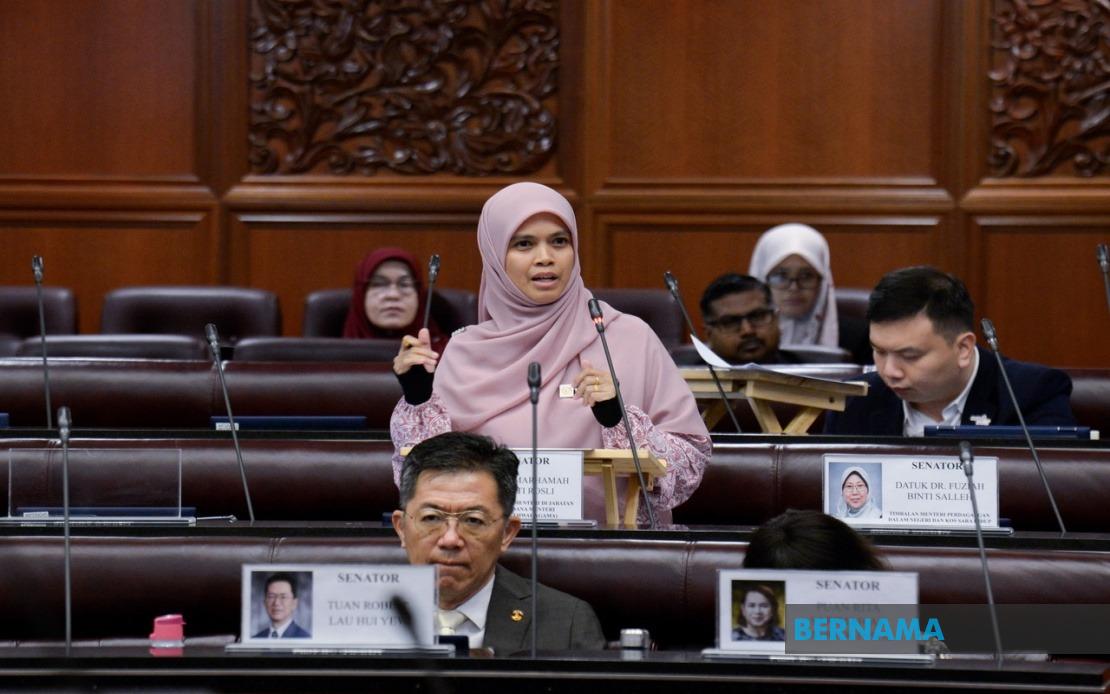
The MADANI administration has committed RM160.82 million towards constructing 92 mosques nationwide, marking a substantial investment in religious infrastructure across Malaysia. According to Deputy Minister in the Prime Minister's Department (Religious Affairs) Senator Marhamah Rosli, who disclosed the figures in the Dewan Negara on August 3, the funding allocation covers projects initiated from 2023 through June of the current year. Of these, 54 mosques have been completed and are now operational, while 16 additional facilities remain actively under construction. The remaining 22 projects have not yet advanced beyond preliminary planning or procurement stages, indicating a staggered implementation timeline across various states.
The approval process for new mosque construction follows a methodical framework designed to address genuine community requirements rather than arbitrary expansion. Marhamah explained that recommendations originate from state religious authorities, who evaluate multiple criteria before endorsing projects. These assessments examine population growth and Muslim demographic concentration within specific localities, compare the capacity and geographic distribution of existing facilities, evaluate site appropriateness, confirm land tenure clarity, and verify state government commitment to co-funding arrangements. This multi-layered approach ensures resources flow towards areas experiencing genuine gaps in religious infrastructure rather than redundant duplication.
A pivotal shift in funding responsibility occurred following the 139th Meeting of Menteri Besar and Chief Ministers convened on June 28, 2022, where federal and state governments agreed to share mosque development costs jointly. This departure from previous arrangements distributes financial burden more equitably and aligns infrastructure investment with regional priorities, enabling states to influence project selection based on local demographic realities. For Malaysian states with rapidly urbanising Muslim populations or dispersed communities in growth corridors, the shared-funding model creates stronger incentives for coordinated planning between federal agencies and state administrations.
Beyond their traditional religious function, mosques increasingly serve as community anchors providing welfare support to vulnerable populations. Marhamah responded to parliamentary inquiries about the role these facilities play in assisting homeless persons, urban poor residents, and low-income groups by highlighting collaborative welfare initiatives. The Department of Islamic Development Malaysia (JAKIM) partners with state Islamic religious departments, municipal councils, and non-governmental organisations to execute comprehensive support programmes delivered through mosque networks. This grassroots infrastructure offers tangible assistance that reaches populations who may otherwise struggle to access government services.
These welfare initiatives encompass multiple forms of targeted assistance. Distributions of aid specifically to asnaf groups—categories of individuals entitled to zakat under Islamic principles—represent structured poverty alleviation. Food basket provision and community kitchen programmes address nutritional insecurity, particularly significant given inflation pressures affecting lower-income households across Malaysia. Emergency financial assistance bridges temporary shortfalls when households face unexpected hardship, while educational support programmes remove financial barriers preventing children from disadvantaged backgrounds from continuing studies. Counselling services address psychological and social challenges accompanying poverty and displacement.
Funeral management assistance addresses a critical gap in support available to low-income families confronting bereavement costs, which can prove catastrophic financially. Temporary shelter facilities provide emergency housing for individuals and families experiencing homelessness, offering dignity and safety during crises. This comprehensive ecosystem of welfare services transforms mosques from exclusively religious spaces into multipurpose community centres delivering government-supported social protection. For urbanising regions experiencing housing shortages and precarious employment, such facilities provide critical safety nets supplementing formal social welfare infrastructure.
The geographic distribution of these 92 projects across Malaysia reflects demographic patterns and infrastructure gaps identified through state consultation processes. States with growing urban populations, substantial internal migration, or concentrated low-income communities likely received higher allocations, ensuring investment targets areas experiencing population pressures. The staggered completion timeline, with 54 finished projects generating immediate community benefit while 16 remain under construction, demonstrates ongoing implementation momentum through 2024. The 22 projects in pre-implementation stages will complete the investment cycle, eventually establishing comprehensive mosque networks supporting both religious observance and community welfare functions.
The allocation represents significant federal commitment to religious infrastructure modernisation during the MADANI governance period. At approximately RM1.75 million per project on average, funding levels appear calibrated to construct functional facilities capable of serving congregation sizes ranging from small neighbourhood communities to larger urban populations. This investment reflects recognition that mosque infrastructure in Malaysia has not kept pace with rapid urbanisation and population growth in certain localities, particularly satellite cities and outer suburban rings where recent migrants and young families concentrate. Addressing these gaps supports inclusive religious access and community cohesion across economically diverse populations.
Singapore and Brunei, Malaysia's nearest neighbours with substantial Muslim populations, offer instructive comparisons for mosque infrastructure planning and welfare integration. Both city-states have achieved high standards in mosque facility quality and ancillary services, providing benchmarks against which Malaysian initiatives can be measured. The MADANI government's emphasis on joint federal-state funding and welfare service integration suggests policy learning from regional experience, adapting models suited to Malaysia's federated structure and diverse demographic composition across states with varying development levels.
The integration of social welfare functions within mosque infrastructure represents pragmatic adaptation to evolving community needs. Rather than constructing facilities serving exclusively religious ceremonies, the approach creates multipurpose community anchors capable of delivering poverty alleviation, emergency assistance, and social cohesion within local communities. For low-income urban residents navigating precarious employment and housing insecurity, accessible mosque-based support networks provide tangible assistance when formal government services feel distant or inaccessible. This community-embedded approach to social protection delivery has proven effective in other Muslim-majority countries managing rapid urbanisation.
Looking forward, the completion of remaining projects and effective integration of welfare services will determine whether this substantial investment generates anticipated community benefits. Success requires sustained coordination between JAKIM and state religious authorities, adequate staffing and training for welfare personnel, and community awareness of available services. Monitoring mechanisms should track service utilisation, beneficiary satisfaction, and welfare programme outcomes beyond simple facility completion metrics. For Malaysian policymakers evaluating religious infrastructure investment returns, these considerations will shape whether the RM160.82 million commitment delivers proportionate improvements in community welfare and social cohesion across the nation's growing urban centres.

