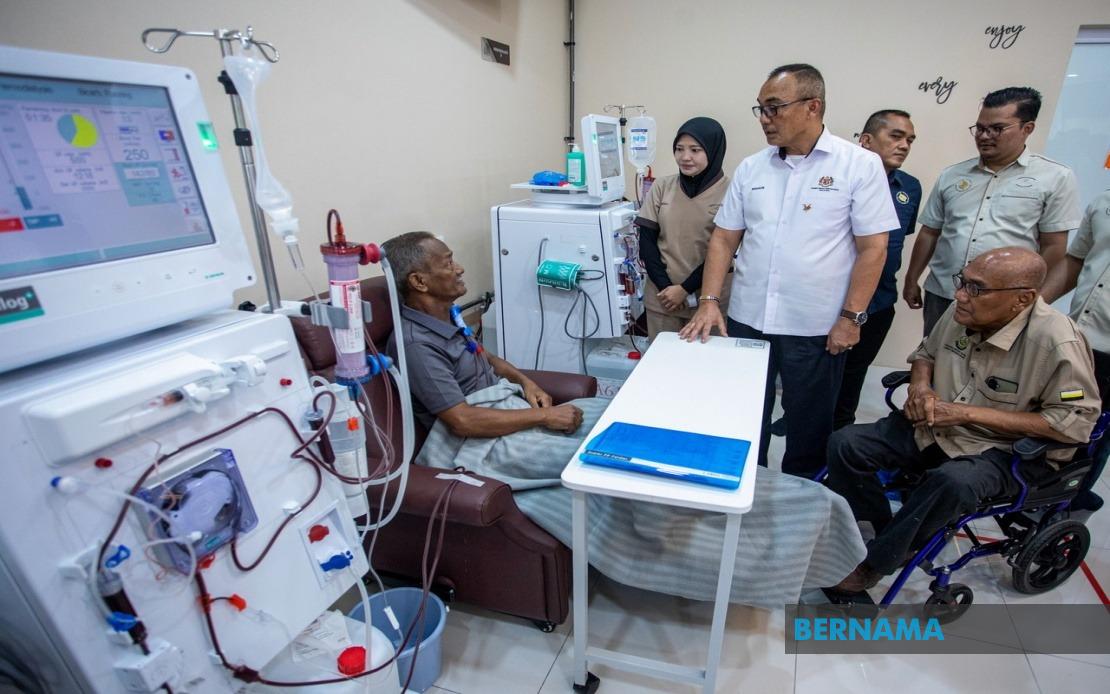
The Malaysian Armed Forces Veterans Affairs Department has unveiled an ambitious healthcare expansion programme allocating more than RM18 million to establish nine dialysis treatment centres throughout the country. The initiative represents a significant commitment to addressing the medical needs of retired military personnel while simultaneously improving public health infrastructure in underserved regions. The announcement came during the official opening of the MAF Veterans Foundation Dialysis Centre branch in Batu Kurau, Perak, underscoring the government's broader strategy to strengthen veteran welfare provisions across the nation.
The geographical distribution of these facilities reflects a considered approach to nationwide coverage. Four dialysis centres will be situated in Selangor, positioning them within Malaysia's most densely populated and economically developed state. Perak will receive two additional centres, while Negeri Sembilan, Johor, and Pahang each secure single facilities. This allocation addresses existing healthcare gaps in communities where dialysis services remain limited, particularly in rural and semi-urban areas where military retirees concentrate but medical infrastructure lags behind urban standards.
According to Major General Datuk Semaon Marjuki, the director-general of the Malaysian Armed Forces Veterans Affairs Department, the expansion represents strategic progress in delivering specialized renal care to military veterans, their dependents, and eligible members of the broader community. The facilities are specifically designed to meet the stringent quality standards mandated by Malaysia's Ministry of Health, incorporating advanced diagnostic and treatment equipment alongside comfortable patient environments. Each centre operates with experienced nursing and medical staff trained in nephrology and dialysis management, ensuring that treatment quality remains consistent with international best practices.
The operational framework involves DVET Holding Sdn Bhd, a wholly-owned subsidiary of the MAF Veterans Foundation, managing all nine dialysis centres. This dedicated operational structure enables specialized focus on the unique requirements of veteran patients while maintaining commercial efficiency. The arrangement allows the foundation to oversee service delivery directly rather than delegating to third-party healthcare providers, ensuring accountability and alignment with veteran-focused healthcare objectives. This management model also facilitates data collection on veteran health outcomes, supporting evidence-based policy refinement.
Current utilization figures demonstrate significant demand for veteran dialysis services. Approximately 2,055 retired armed forces personnel are presently undergoing regular dialysis treatment at facilities operated by the veterans affairs department, Social Security Organisation dialysis centres, or other government-approved healthcare providers. This substantial patient base reflects both the prevalence of chronic kidney disease among aging veteran populations and the critical nature of reliable dialysis access for managing end-stage renal disease. The expansion directly responds to capacity constraints that previously limited treatment options for qualifying beneficiaries.
The initiative carries substantial implications for Malaysian healthcare equity and veteran care policy. Kidney disease represents a growing burden across Southeast Asia, with Malaysia recording elevated incidence rates relative to regional comparators. Veterans, as populations with documented service-related health exposures and occupational stressors, warrant specialized clinical attention. By establishing dedicated dialysis infrastructure, the government acknowledges the unique health vulnerabilities of military retirees while simultaneously creating spillover benefits for civilian communities unable to access dialysis services through primary health channels.
Funding mechanisms and budgetary allocation underscore government prioritization of veteran welfare. The RM18 million investment demonstrates commitment extending beyond symbolic recognition to concrete healthcare delivery improvements. For regional observers, particularly in Southeast Asian nations managing large veteran populations, Malaysia's approach offers a replicable model for integrating specialized chronic disease management with veteran welfare infrastructure. The consolidation of specialized services within dedicated facilities rather than dispersing them across fragmented general healthcare systems promises efficiency gains and improved service standardization.
The timing of this expansion coincides with intensifying policy attention to non-communicable disease management across Malaysia. Chronic kidney disease, hypertension, and diabetes increasingly occupy central positions in national health priorities. Veterans often present with complex comorbidity profiles resulting from occupational exposures, sustained physical stress, and age-related degeneration. Targeted provision of dialysis services addresses a critical gap in the continuum of veteran healthcare, complementing existing programmes in psychiatric support, orthopedic rehabilitation, and general medicine.
Community health benefits extend beyond veteran populations directly. Publicly accessible dialysis centres reduce pressure on overwhelmed tertiary hospital facilities, which increasingly struggle managing chronic disease patient volumes. Rural and semi-urban communities gaining new dialysis infrastructure experience improved retention of patients otherwise requiring costly inter-district travel. Local economic activity increases through facility operation and staffing requirements, generating employment opportunities in medically-trained personnel and support roles. Healthcare tourism considerations also emerge, as regional patients increasingly seek treatment in countries offering quality care at competitive costs.
Implementation timelines and operational readiness represent critical success factors. The Batu Kurau opening demonstrates active commencement of the expansion programme, though completion schedules for remaining eight facilities remain unspecified. Coordination between federal veterans affairs authorities, state health departments, and municipal planning bodies ensures regulatory compliance and integration with existing healthcare networks. Staff recruitment and training assume paramount importance; inadequate nursing capacity or technician expertise could compromise treatment quality despite capital investments in equipment and infrastructure.
Longer-term sustainability requires structured funding assurance beyond initial capital allocation. Operating costs for dialysis services—including dialysate solution, anticoagulation agents, blood-line sets, and consumable medical supplies—entail substantial recurring expenditure. Revenue models incorporating government subsidies for veteran beneficiaries, Social Security Organisation reimbursements, and private patient fees require careful calibration to maintain financial viability while preserving equity of access. Transparent cost-sharing arrangements between beneficiary categories ensure fiscal sustainability across the network's operational lifetime.
The expansion signals institutional recognition of veteran healthcare as a distinct policy domain warranting specialized infrastructure rather than absorption into generic public health systems. As military personnel demographics shift toward increasing proportions of chronic disease sufferers, dedicated service networks prove increasingly essential. Malaysia's approach positions the country as a regional leader in veteran-centric healthcare provision, potentially attracting knowledge-sharing partnerships with regional militaries navigating similar population health transitions. The programme ultimately reflects society's acknowledgment of obligations owed to those who served in national defence, expressed through concrete improvements in healthcare access and treatment quality.

