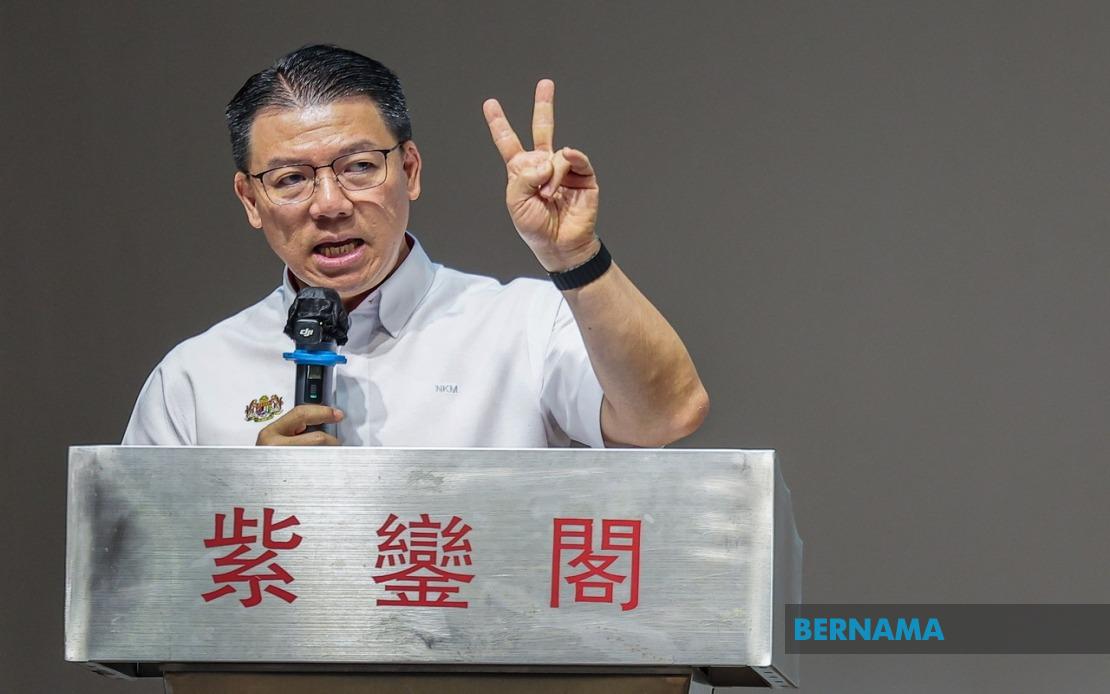
The Ministry of Housing and Local Government has committed RM200 million over four years starting in 2023 to sustain non-Muslim houses of worship throughout Malaysia, representing a substantial investment in religious infrastructure across the nation. Minister Nga Kor Ming made the announcement at a handover ceremony in Kluang, positioning the funding as evidence of the MADANI government's commitment to equitable development that transcends demographic divisions.
The Non-Muslim Houses of Worship (RIBI) Maintenance Initiative encompasses churches, gurdwaras, Hindu temples, Buddhist temples and associated religious organisations. The programme reflects a deliberate policy approach to ensure that development benefits extend to all communities, irrespective of ethnicity or faith. By directing resources toward the upkeep of these facilities, the government addresses a longstanding infrastructure need within minority religious communities across the country.
Demand for maintenance funding has proven substantial. The e-RIBI System has received 1,478 applications totalling more than RM279 million in requested repairs and improvements. This figure significantly exceeds the available allocation, highlighting the extent of deferred maintenance and upgrade work required at religious institutions nationwide. The gap between demand and supply underscores how these facilities have struggled to maintain their structures and services without dedicated government support.
In Johor specifically, the state has benefited from RM18.75 million since 2023 through May 2026, supporting maintenance work at 154 religious institutions. This year alone, the ministry announced RM3.14 million allocated to 27 Johor facilities. These funds will finance renovation projects, emergency repairs, new construction where necessary, and ongoing maintenance to ensure these premises remain safe and functional for worshippers and community activities.
Nga emphasised that the initiative embodies the MADANI government's philosophy of inclusive nation-building. His rhetoric stressed unity and bridge-building, contrasting this approach with what he characterised as divisive alternatives. By framing religious infrastructure maintenance as a national development priority, the government signals that minority communities' spiritual and institutional needs merit public investment equivalent to that provided for majority-community facilities.
The implementation framework prioritises transparency and accountability. The Housing Ministry has committed to professional monitoring of all approved projects, ensuring funds reach genuinely deserving organisations and that resources are deployed efficiently. This oversight mechanism addresses previous concerns about government programme delivery and aims to build confidence that allocations serve their intended purpose without leakage or misallocation.
The broader context reveals how infrastructure investment serves political objectives beyond physical maintenance. Government support for minority religious facilities demonstrates inclusivity in practice rather than rhetoric alone. In Malaysia's diverse, multi-religious society, visible and equitable resource distribution to non-Muslim institutions helps legitimise government claims to represent all communities fairly. This becomes particularly important in a competitive political environment where opposition parties frequently challenge ruling coalitions on questions of communal representation and resource allocation equity.
The initiative also carries economic implications. Religious institutions often function as community anchors, hosting social services, cultural activities and gatherings that strengthen neighbourhood cohesion. Well-maintained facilities therefore contribute to social stability and community resilience, generating benefits beyond the immediate worshipping communities. This justifies characterising such spending as investment rather than mere expenditure, as it supports broader social infrastructure needs.
For Malaysian policymakers, the programme offers lessons about targeted development spending. Rather than broad-based allocations, this approach identifies specific community needs—in this case, religious facility maintenance—and directs resources through dedicated channels with clear accountability mechanisms. The e-RIBI System digitises the application process, potentially reducing bureaucratic friction and enabling faster fund deployment compared to traditional government grant procedures.
Regional context matters as well. Southeast Asian governments increasingly grapple with balancing religious freedom, minority protection and majority-group sensitivities. Malaysia's explicit investment in non-Muslim religious infrastructure offers a model—whether successful remains debatable—for resource allocation in diverse societies. The approach acknowledges that religious communities merit infrastructure support regardless of demographic size, a principle that extends beyond Malaysia's borders.
Challenges remain visible beneath the policy announcement. The substantial gap between requested and allocated funds means many worthy projects remain unfunded. Community organisations must make difficult choices about which maintenance work to prioritise. Additionally, the programme's sustainability depends on continued political will and budget availability, making long-term planning difficult for religious institutions relying on government support.
Looking forward, the success of this initiative will be measured both by physical outcomes—the condition of religious facilities—and by intangible effects on community relations and national cohesion. If maintenance funds reach intended beneficiaries efficiently and fairly, the programme reinforces narratives of equitable governance. If implementation disappoints or funds concentrate in specific regions, it risks undermining government claims to inclusive development. The coming years will reveal whether the RIBI Maintenance Initiative delivers substantive benefits or functions primarily as symbolic commitment.

