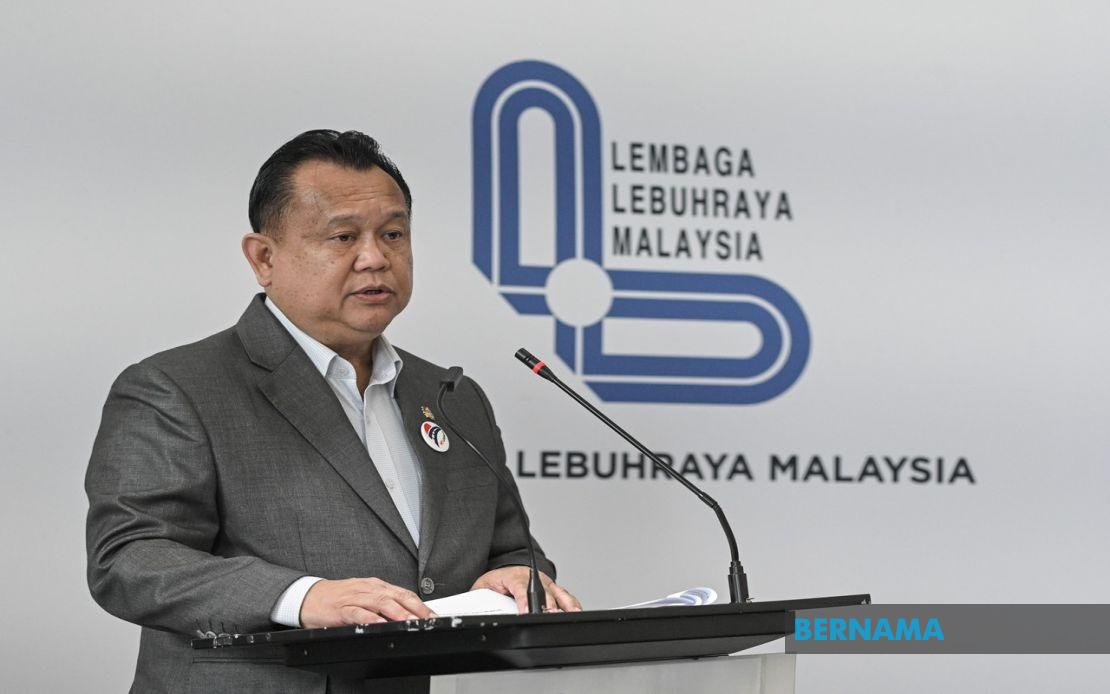
The Malaysian government is moving ahead with a substantial infrastructure initiative designed to reduce accidents on the nation's most dangerous highway stretches. Works Minister Datuk Seri Alexander Nanta Linggi announced that RM25.2 million has been allocated for the first phase of a nationwide project to install solar-powered LED street lights at 32 identified accident hotspots across highway networks. The initiative, executed under the MADANI Monitoring programme in collaboration with the Finance Ministry and the Malaysian Highway Authority (LLM), represents a coordinated response to road safety concerns that have long plagued Malaysia's transport corridors.
The scope of this undertaking encompasses the installation of 3,000 light poles strategically positioned at the most dangerous sections of highways where accident rates remain consistently elevated. By deploying solar-powered LED technology rather than conventional grid-dependent systems, the government is simultaneously addressing safety challenges whilst pursuing energy efficiency objectives. This dual-purpose approach aligns with Malaysia's broader sustainability commitments whilst tackling the immediate operational problem of inadequate lighting on high-risk road segments.
The funding structure reveals a measured roll-out strategy. Although the original budget announcement referenced RM30 million for this road safety initiative, the government has opted to deploy RM25.2 million in this initial phase, with remaining funds held in reserve for future assessment and additional requirements. This phased approach allows the authorities to evaluate project outcomes, gather performance data, and adjust subsequent phases based on real-world results before committing the full allocation. Such prudent financial management reflects lessons learned from previous infrastructure programmes and ensures accountable deployment of public resources.
Prime Minister Datuk Seri Anwar Ibrahim had called for this road safety investment during the 2026 Budget announcement last October, signalling that accident prevention has become a priority within the government's policy agenda. Road fatalities and serious injuries represent a significant public health burden across Malaysia, with economic costs extending far beyond immediate medical expenses to include lost productivity, insurance claims, and prolonged disability impacts. The LED lighting project addresses one documented risk factor—inadequate visibility during night-time driving—that contributes to accidents particularly on stretches where street infrastructure has been lacking.
The technical selection of solar-powered LED systems offers several advantages beyond simple illumination. LED technology consumes substantially less electricity than traditional street lighting whilst generating superior light output and colour rendering. Solar power generation eliminates ongoing electricity supply costs and grid dependency, making these systems particularly suitable for remote highway sections where conventional power infrastructure may be absent or unreliable. The combination ensures consistent, maintenance-efficient lighting that functions independently of grid fluctuations or outages.
With the Letter of Acceptance (SST) now handed to the selected contractor, physical construction work is expected to commence immediately. The project timeline targets full completion by the end of November 2026, establishing a realistic but demanding implementation schedule across 32 separate locations nationwide. This timeframe requires coordinated project management to ensure simultaneous progress across multiple sites whilst maintaining safety standards and minimising disruption to traffic flow during installation phases.
For Malaysian road users, particularly those who frequently travel on highways at night, this initiative should yield tangible safety improvements. Enhanced visibility at accident-prone locations gives drivers greater reaction time to hazards, reduces nighttime visibility-related collisions, and may contribute to lower incident rates at these specific stretches. Positive outcomes at these 32 locations could provide a template for future expansion, potentially incorporating additional dangerous sections requiring similar interventions.
The regional significance of this project extends beyond Malaysia's borders. Southeast Asian nations grapple with comparable road safety challenges, and Malaysia's systematic approach to identifying and addressing lighting deficiencies at high-risk locations offers a model that neighbouring countries might study and adapt. The integration of renewable energy technology with road safety infrastructure demonstrates how sustainability and public safety objectives can converge effectively.
Implementation success will depend on several factors including contractor performance, weather-related construction delays, and ongoing maintenance protocols after installation. The long-term effectiveness of the initiative will require monitoring systems to track accident rate changes at these 32 locations, enabling evidence-based evaluation of whether the LED lighting investment produces the anticipated safety outcomes. Such data will be crucial for justifying continued investment in similar programmes and refining approaches for maximum impact.
The Works Ministry's collaboration with the Finance Ministry and LLM signals a coordinated government approach to infrastructure challenges that transcend individual ministry responsibilities. Road safety represents a collective concern requiring integrated planning across multiple agencies responsible for finance, infrastructure, and highway operations. This institutional coordination may serve as a model for other cross-cutting policy challenges facing the government.
Beyond the immediate safety benefits, this project reflects broader government commitment to evidence-based policymaking in public safety infrastructure. The phased implementation approach, realistic timelines, and performance-based subsequent funding decisions suggest a maturing approach to major capital projects that prioritises accountability and measurable outcomes rather than monolithic, all-or-nothing deployments.