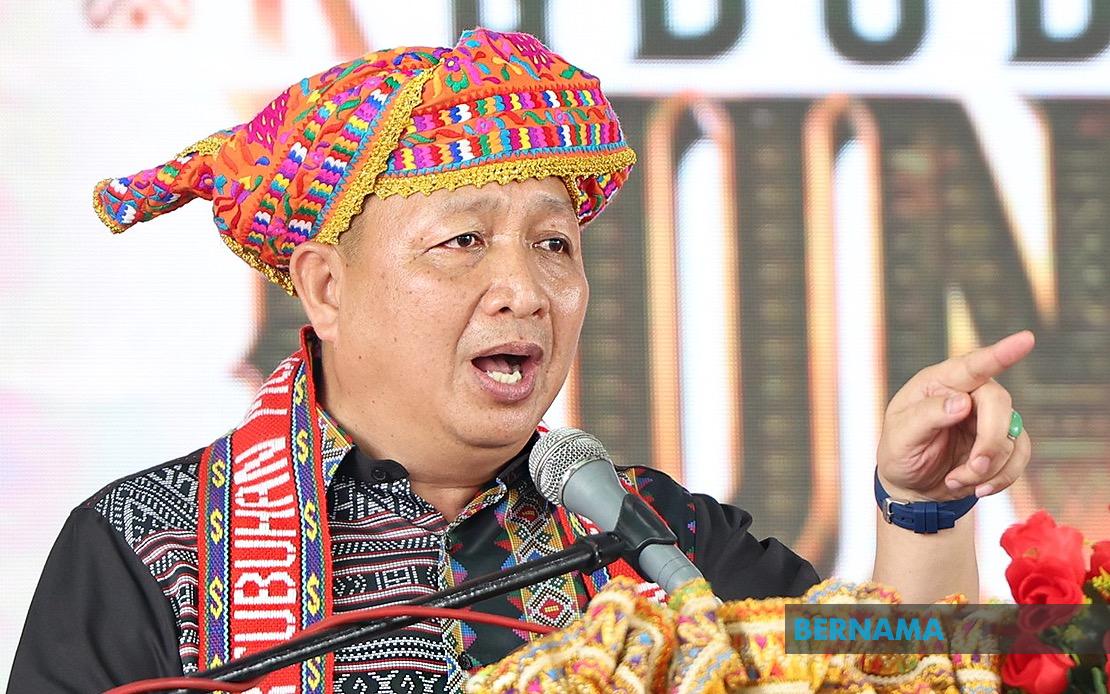
The Federal government's decision to channel RM4.06 billion into Sabah's Rural Water Supply programme represents a significant push to address one of Borneo's most pressing infrastructure challenges. Deputy Prime Minister Datuk Seri Dr Ahmad Zahid Hamidi announced the substantial investment during the Rungus Cultural Festival in Kudat on August 8, signalling renewed national attention to water security in Malaysia's easternmost state. The allocation comes at a time when rural communities across Sabah continue to struggle with inconsistent access to potable water, a fundamental service that remains beyond reach for many interior settlements despite decades of development initiatives.
What distinguishes this funding announcement is the deliberate restructuring of project governance. Rather than maintaining the conventional arrangement where the Rural and Regional Development Ministry (KKDW) in Putrajaya orchestrates implementation across federal territories, the government has opted to route the RM4.06 billion directly to Sabah's state administration. Kota Marudu Member of Parliament Datuk Wetrom Bahanda, who is also president of the Malaysian Momogun Rungus Association, characterised this institutional shift as pragmatic and locally responsive. By granting the state government primary responsibility for the Rural Water Supply (BALB) project, federal planners acknowledge that Sabah's authorities possess superior on-ground knowledge of water infrastructure deficits and can calibrate spending to match genuine community priorities rather than applying standardised solutions developed in the capital.
This devolution of implementation authority reflects broader discussions within Malaysia's governance circles about improving service delivery efficiency through decentralisation. Urban-based ministries, despite their resources and technical expertise, often struggle to capture the nuanced water security challenges facing dispersed rural populations across Sabah's vast geography. The state government's closer proximity to these communities and their elected representatives creates multiple feedback channels through which resource allocation can be refined. For water projects specifically, this arrangement permits rapid response to emerging challenges such as seasonal contamination, pipeline degradation, or demographic shifts in settlement patterns that centralised planning structures struggle to accommodate swiftly.
Beyond water infrastructure, the Federal government's commitment encompasses a parallel network of road development initiatives designed to unlock economic potential in Sabah's interior regions. Multiple projects including the Sonsogon-Megandai, Mangin, Rendemon, Teringai, Sembayan, and Raritiden to Pampang Poring corridors are receiving active ministry funding. These arteries form a crucial backbone for rural connectivity, enabling agricultural products to reach markets, facilitating access to healthcare and education services, and reducing the isolation that characterises remote communities. Wetrom emphasised that upgrading this road infrastructure serves as a prerequisite for broader development acceleration across Kota Marudu and Kudat districts, both of which remain among Malaysia's most economically disadvantaged localities. Without functional connectivity, investment in water supply systems alone cannot catalyse the comprehensive development transformation these regions require.
The cumulative effect of the RM4.06 billion water allocation alongside simultaneous road infrastructure projects indicates a coordinated strategy to address rural deprivation through interlocking infrastructure investments. Clean water and accessible roads represent foundational assets upon which all subsequent economic development rests. Communities without reliable water supplies cannot attract commercial investment, establish food processing facilities, or support the health standards necessary for population growth and diversification. Similarly, isolated settlements cannot capitalise on agricultural productivity or attract skilled labour. By synchronising these investments, federal and state authorities are attempting to overcome the circular poverty trap that has persisted in Sabah's interior for decades.
The emphasis on addressing water supply deficits carries particular significance for Sabah's indigenous populations, whose livelihoods and cultural practices often depend on proximity to clean water sources. The Rungus people, for whom the cultural festival served as backdrop for the announcement, represent communities whose development aspirations have historically received insufficient attention within national resource allocation frameworks. By anchoring the funding announcement to a Rungus cultural event and channelling investment through mechanisms that acknowledge state authority and local knowledge, the Federal government signals recognition that rural development in Sabah cannot proceed via one-size-fits-all approaches that ignore cultural contexts and community agency.
Wetrom also noted Federal government support for elevating Matunggong subdistrict to full district status, a administrative restructuring that typically precedes targeted development zone designation. District-level status brings enhanced budgetary allocations, streamlined administrative machinery, and greater political leverage in national planning discussions. For communities in Sabah's interior, this represents tangible evidence that Federal authorities recognise their developmental claims and are willing to institutionalise that recognition through administrative reorganisation. Such moves, however modest they may appear to urban observers, carry significant psychological and practical implications for rural populations accustomed to peripheralisation within national policy frameworks.
The RM4.06 billion investment must be understood within Malaysia's broader regional development geography. Sabah's rural water security challenges differ markedly from those in peninsular states, reflecting distinct geological conditions, settlement patterns, and indigenous land tenure systems. Federal resource allocation has historically favoured peninsular Malaysia, generating persistent regional inequities that the Pakatan Harapan and subsequent administrations have acknowledged rhetorically but addressed inconsistently through budgetary action. This substantial allocation represents one of the more significant attempts to rebalance national investment toward Borneo's interior populations, though whether the execution will match the rhetorical commitment remains an open question given implementation complexities.
Implementation success will depend substantially on state government capacity, inter-agency coordination, and genuine community participation in determining project priorities. The Rural Water Supply programme's design will prove critical—whether investments concentrate in accessibility (expanding piped systems to remote settlements) or quality assurance (testing and purification infrastructure) or maintenance capacity (training technicians and establishing replacement fund mechanisms) significantly influences long-term sustainability. Poorly maintained water systems, a persistent problem across Malaysia's rural infrastructure stock, create recurring public health hazards and undermine confidence in development initiatives. State authorities must therefore couple capital spending with institutional arrangements ensuring ongoing system viability.
The broader context of this announcement includes Malaysia's uneven progress toward achieving universal water supply access, a goal nominally endorsed by multiple administrations but persistently compromised by budgetary pressures and implementation challenges. Sabah's rural water crisis reflects both historical neglect and contemporary capacity constraints, with many communities relying on shallow wells, collected rainwater, or untreated surface sources. Each passing year without adequate investment exacerbates health outcomes and constrains educational and economic opportunity. The RM4.06 billion commitment, if executed effectively, could represent a watershed moment for Sabah's rural development trajectory, transforming water access from chronic scarcity into reliable utility and unlocking capacity for subsequent development initiatives across the state's interior regions.

