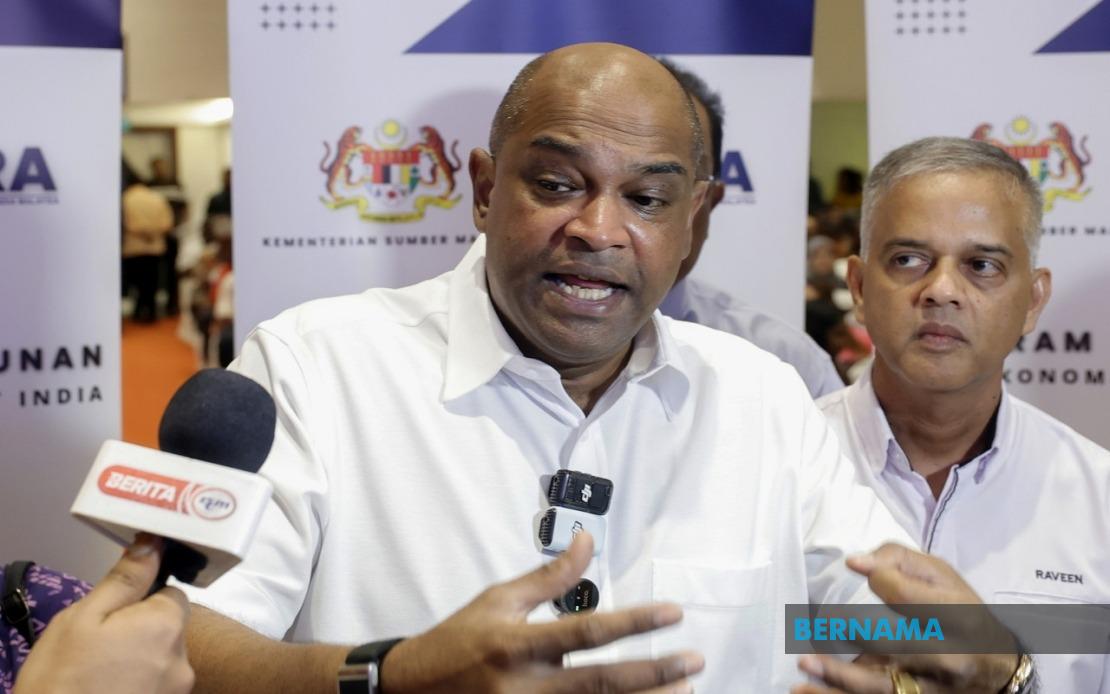
The Malaysian Indian Transformation Unit (MITRA) is channelling RM6.7 million across three distinct programmes aimed at accelerating the socio-economic progress of the Indian community, Human Resources Minister Datuk Seri R. Ramanan announced at a handover ceremony in Kuala Lumpur. The combined initiative reflects a structured government approach to addressing key development gaps within the Indian demographic through targeted interventions in education, entrepreneurship and community infrastructure.
The Tuisyen MADANI 2026 Programme forms the educational pillar of this funding allocation, receiving RM2.63 million to operate 28 tuition centres spread across seven states nationwide. The scheme will provide free academic support to 2,343 students sitting for their Sijil Pelajaran Malaysia (SPM) and Sijil Tinggi Persekolahan Malaysia (STPM) examinations during an intensive five-month period from August through December. By removing financial barriers to supplementary education, the programme seeks to improve overall academic outcomes while reducing the educational disparities that disproportionately affect disadvantaged households within the Indian community.
The tuition initiative addresses a persistent challenge in Malaysia's education system where students from lower-income backgrounds frequently lack access to paid coaching classes that increasingly determine examination success. For Indian families particularly, where formal qualifications remain a critical pathway to economic mobility, the removal of tuition costs represents meaningful intervention. The geographical spread across seven states ensures that rural and semi-urban Indian communities, not merely those concentrated in urban centres, benefit from these educational resources.
On the entrepreneurship front, Series I of the 2026 B40/M40 Indian Entrepreneurs Grant Programme, branded as Uyarvu MADANI, has selected 128 business owners and aspiring entrepreneurs to receive grants totalling over RM3.05 million. The programme stratifies support across three categories—micro, growth and high-impact enterprises—allowing capital allocation to match business maturity and development stage. This differentiated approach recognises that Indian entrepreneurs operate across vastly different scales, from street vendors and home-based operations to established small manufacturing units.
Ramanan emphasised that these grants would strengthen operational capacity, enhance competitive positioning and expand market access for recipients, contributing to the broader development of micro, small and medium enterprises (MSMEs) within the Indian business ecosystem. The timing is significant, as Indian-owned MSMEs have historically received disproportionately lower capital allocations compared to other communities. Beyond the MITRA channel itself, Ramanan highlighted that Indian entrepreneurs retain parallel access to financing through established institutional mechanisms including SME Bank, Bank Rakyat and Amanah Ikhtiar Malaysia, creating a multi-layered support architecture.
The third component, Series 4 of the Dharma MADANI Programme, directed RM1.04 million toward 52 Hindu religious institutions, with 324 additional places of worship earmarked to receive funding in forthcoming tranches. When fully implemented, the series will have supported 676 temples and religious centres. This allocation acknowledges that places of worship serve functions extending far beyond spiritual practice—they frequently function as community hubs, social service providers and cultural repositories. Investment in their physical infrastructure and operational capacity strengthens community cohesion and provides neutral spaces for social activities.
The religious infrastructure component reflects recognition that Indian community development cannot focus exclusively on economic metrics but must encompass the cultural and spiritual fabric that binds communities together. Hindu temples in particular serve multigenerational Indian families, particularly during festivals and lifecycle ceremonies, and receive consistent visitor traffic that requires maintained facilities and adequate resources.
These three coordinated programmes demonstrate a holistic approach to community development, operating simultaneously across education, livelihoods and cultural infrastructure. The sequencing suggests that students receiving free tuition may eventually become entrepreneurs accessing the Uyarvu MADANI grants, while both groups will maintain connections to community institutions supported through Dharma MADANI. This interconnected design potentially creates multiplier effects across generations and sectors.
The announcement also briefly touched on the resignation of Subang Member of Parliament Wong Chen, with Ramanan, serving as PKR vice-president, expressing disappointment at the departure. Ramanan noted that PKR had provided Wong Chen with electoral opportunities in three consecutive contests before his victory with a 100,000-vote majority on a PKR ticket. The timing of Wong Chen's departure—particularly coinciding with announcements benefiting the Indian community—raises questions about internal party dynamics and the potential for opportunistic political movements, though Ramanan stated respect for individual political choices.
For Malaysian policymakers and development practitioners, the MITRA allocation offers a case study in targeted resource deployment. The RM6.7 million commitment, while substantial, addresses only portions of community needs and represents incremental progress rather than comprehensive transformation. Indian community representatives and researchers have long documented systemic gaps in educational outcomes, wealth accumulation and asset ownership compared to other Malaysian communities. These programmes, while valuable, operate within broader structural constraints including historical land ownership disparities, differential access to government contracts and persistent stereotyping in professional environments.
The geopolitical context also matters for regional observers. Malaysia's commitment to supporting minority community development carries implications for Southeast Asian governance models, particularly as the region navigates questions about minority rights and community integration. Malaysia's MITRA framework represents an explicit recognition that targeted support for disadvantaged communities within plural societies constitutes sound policy rather than divisive favouritism.
Looking forward, the success metrics for these programmes will emerge over succeeding months. The SPM and STPM cohort will produce examination results by early 2027, offering measurable indicators of tuition programme effectiveness. Entrepreneurs receiving Uyarvu MADANI grants will demonstrate business sustainability and employment generation outcomes. Religious institutions will complete infrastructure improvements funded through Dharma MADANI. Collectively, these outcomes will inform whether MITRA represents a model worthy of expansion or requires substantive recalibration to address community aspirations more comprehensively.

