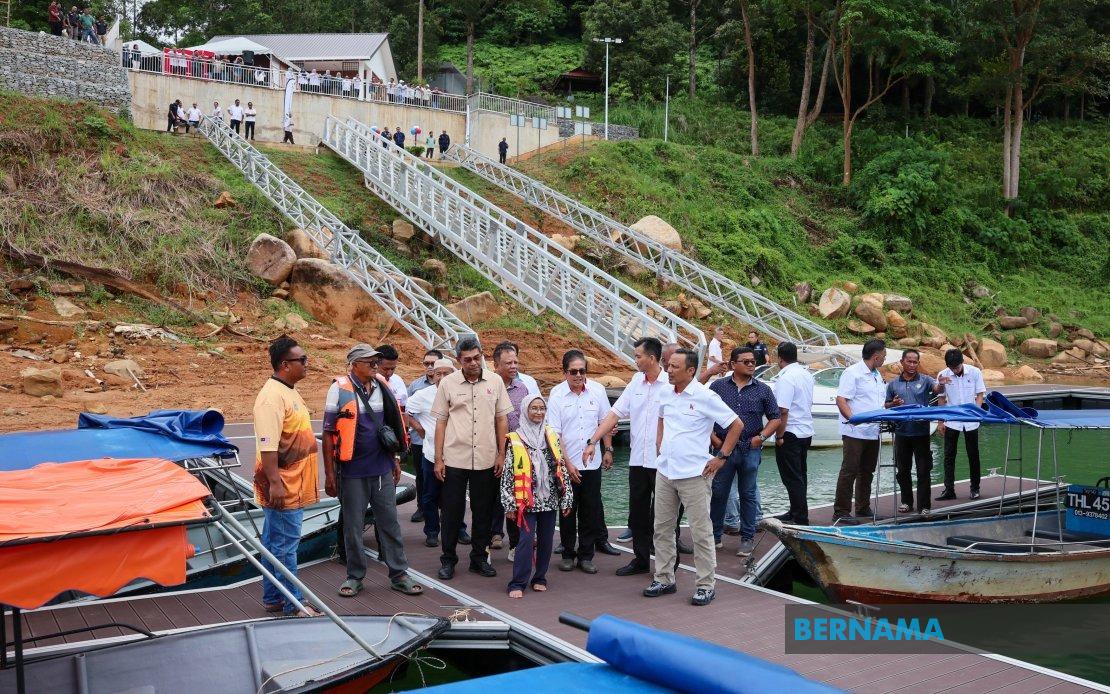
A RM8.7 million waterfront development project at Tasik Kenyir officially opened in July this year, marking a significant infrastructure investment aimed at transforming how the man-made lake manages its expanding tourism operations. The facility, which took approximately 18 months to complete from its 2023 launch, represents the latest milestone in Terengganu's strategy to modernise its premier ecotourism destination and position it competitively on the international visitor market.
Terengganu Tengah Development Authority (KETENGAH) chairman Datuk Rozi Mamat emphasised the facility's capacity to accommodate more than 80 houseboats and speedboats, addressing a persistent challenge that has plagued the Pengkalan Gawi area for years. The new jetty creates an organised docking system where operators previously relied on ad-hoc berthing arrangements scattered around the shoreline. This consolidation is expected to gradually resolve the visibility and safety concerns that emerged as the lake's popularity surged among domestic and international tourists seeking authentic Malaysian nature experiences.
Beyond simple boat parking, the infrastructure package incorporates comprehensive amenities designed to create a professional waterfront environment. The development includes a 600-metre pedestrian walkway spanning the entire berthing zone, 86 parking bays to serve land-based visitors, public toilet facilities meeting international standards, a dedicated security guard post, electrical substations, water management systems through a dedicated pump house, and segregated waste disposal infrastructure. These complementary facilities signal an intentional shift towards professionalising the entire visitor experience at this critical entry point to the lake's attractions.
The project was greenlit under the Third Rolling Plan of the 11th Malaysia Plan (RMK-11), indicating federal recognition of Tasik Kenyir's strategic importance within Malaysia's broader tourism development framework. Federal and state alignment on such tourism investments is crucial in Southeast Asia's competitive landscape, where destination image and operational standards directly influence visitor satisfaction and repeat tourism. The funding mechanism reflects a deliberate policy choice to upgrade regional tourism infrastructure rather than concentrate investment solely in major urban centres, potentially distributing economic benefits more widely across Terengganu's districts.
Rozi articulated a vision positioning Tasik Kenyir as a uniquely Malaysian ecotourism offering with untapped international potential. The lake's ecological significance, combined with its recreational opportunities, theoretically places it among Southeast Asia's distinctive natural tourism products, yet infrastructure deficits have historically constrained its ability to capture premium market segments. Visitors from affluent source markets—Singapore, China, Japan—increasingly expect predictable safety standards, reliable facilities, and professionally managed environments. The jetty development directly addresses these expectations by signalling institutional competence and operational maturity.
The broader development strategy extends well beyond the jetty itself. KETENGAH received RM48.36 million in total development allocations for the current year across its three jurisdictional districts of Dungun, Hulu Terengganu, and Kemaman, with Tasik Kenyir commanding disproportionate attention. Concurrent projects underway include restoration work at the Sungai Petang Kelah Sanctuary Complex, repairs to slope infrastructure at multiple tourist sites, complete redevelopment of facilities at Pulau Petang, construction of a public mini park at Gawi Point, and substantial rehabilitation of the Herbal Park's tourism infrastructure. This portfolio approach suggests strategic thinking about creating multiple attraction clusters rather than relying on single destination leverage.
The jetty's completion arrives at a critical moment for Terengganu's post-pandemic tourism recovery. As regional travel patterns stabilise and cross-border visitor flows resume, destinations must demonstrate capacity improvements achieved during slower periods. Tasik Kenyir's infrastructure upgrades position the state to capture market share from competing ecotourism destinations in neighbouring Pahang and Kelantan. The professional presentation of boat operations through centralised, modern facilities may also unlock corporate incentive travel opportunities—conferences, team-building retreats, corporate retreats—which typically demand reliable service standards.
Safety and environmental management emerged as central justifications in official communications surrounding the project. The consolidation of boat operations into a dedicated facility with proper electrical systems, waste management, and security oversight reduces ad-hoc environmental damage and safety hazards historically associated with dispersed informal mooring. This environmental stewardship dimension appeals to increasingly conscious international travellers, particularly those seeking authentic nature experiences without associated ecological guilt. Marketing Tasik Kenyir as a responsibly managed destination becomes credible only when infrastructure visibly supports such claims.
The infrastructure investment carries broader implications for how Malaysian states approach tourism development in the post-pandemic era. Rather than pursuing aggressive volume-based tourism expansion through major casino or resort investments, the Terengganu model emphasises quality-of-experience improvements through systematic facility upgrades at existing attractions. This approach aligns with emerging global tourism trends favouring sustainable, experience-focused travel over conventional resort-based leisure. For Malaysian tourism policymakers, the Tasik Kenyir model offers replicable lessons about maximising existing natural assets through incremental infrastructure improvements rather than pursuing transformative mega-projects with uncertain financial returns.

