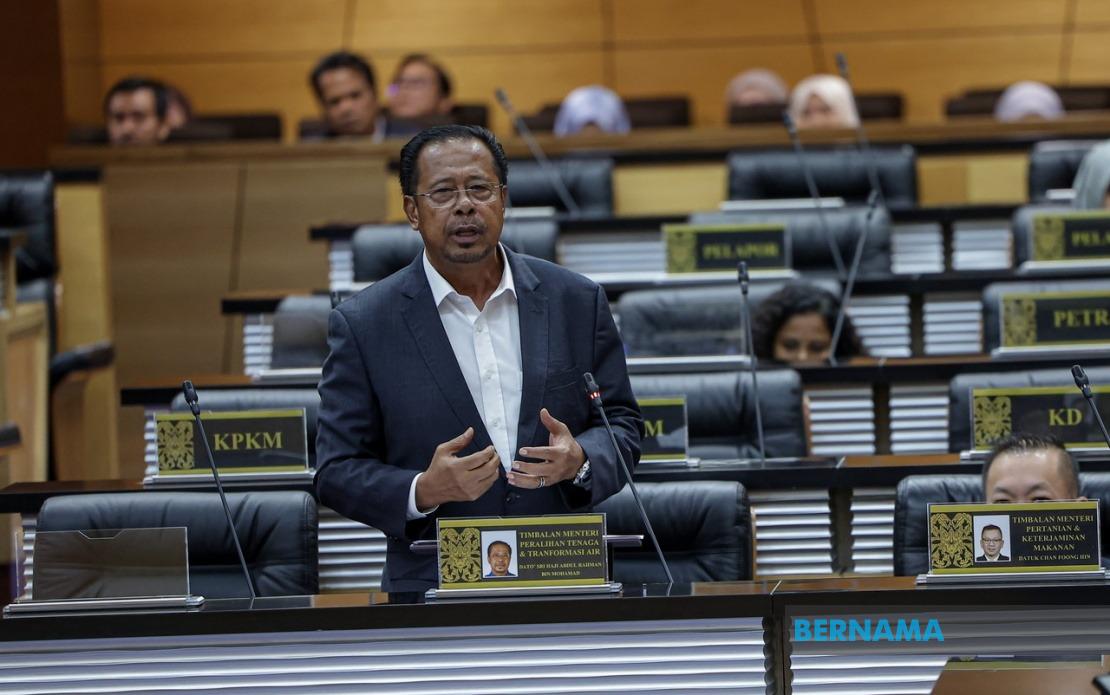
The Malaysian government has committed substantial resources to tackling chronic flooding in Johor through an ambitious RM99.8 million Integrated River Basin Development project focused on Sungai Skudai. Speaking in Parliament today, Deputy Minister of Energy Transition and Water Transformation Datuk Seri Abdul Rahman Mohamad outlined how the initiative, funded under the 12th Malaysia Plan, will safeguard approximately 15,000 residents across 50 hectares of flood-prone territory once completed. This represents a significant intervention in one of Johor's most vulnerable drainage corridors, where seasonal and increasingly unpredictable monsoon flooding has repeatedly disrupted communities and economic activity.
The Sungai Skudai project remains in its preliminary phase, with critical groundwork still underway before construction machinery moves in. A consultant contracted in May 2025 is currently developing the project's comprehensive concept report, which will form the technical and design foundation for all subsequent work. Meanwhile, survey activities that commenced in November 2025 are tracking towards completion by May 2027, providing detailed hydrological and geological data essential for informed engineering decisions. The land acquisition process, which started in June 2026, should be finalised by August 2027, clearing a major administrative hurdle that often delays infrastructure schemes in Malaysia.
The detailed timeline reveals government ambitions to transition from planning to active construction during the second half of 2027. Once the procurement process is concluded and a contractor is formally appointed—contingent upon satisfying all technical specifications—physical works are expected to commence in mid-2027. This schedule assumes no significant delays from unforeseen site conditions, environmental assessments, or administrative bottlenecks. For residents accustomed to repeated flooding, the prospect of tangible remedial action carries particular weight, though Malaysia's infrastructure projects have historically experienced implementation delays that extend timelines well beyond initial projections.
The engineering approach centres on substantial modifications to the 46-kilometre Sungai Skudai corridor. Bank reinforcement works will stabilise riverbanks prone to erosion, whilst selected sections will be widened to approximately 15 metres to increase water conveyance capacity during high-flow events. These interventions target the core hydraulic constraint affecting the river system: insufficient channel width and bank stability to handle monsoon discharge volumes without overtopping adjacent communities. By expanding the river's ability to move water efficiently downstream, the project aims to reduce the frequency and severity of inundation across downstream settlements.
Responding to parliamentary concerns raised by Suhaizan Kaiat, the PH member for Pulai, the deputy minister articulated the broader ecological and social dimensions of the scheme. Beyond flood mitigation, the project is designed to restore degraded river ecosystem functions, improving aquatic habitat and water quality within the Sungai Skudai basin. This environmental restoration benefits fishermen operating along the river, whose livelihoods depend on healthy fish populations and navigable waterways. The improved navigability will also strengthen operational capabilities for maritime security agencies and emergency management bodies conducting rescue and surveillance operations in the area.
The Ministry of Energy Transition and Water Transformation has not waited passively for the primary infrastructure project to materialise. Six interim initiatives, collectively worth approximately RM700,000, are being implemented as temporary mitigation measures. Additionally, government engineers have identified roughly 50 distinct flood hotspots distributed along the Sungai Skudai course, with five concentrated in the Kulai district. Strategic intervention at these high-risk locations offers the potential to substantially reduce flooding impacts even before the major reconstruction project reaches full operational capacity. This two-track approach—combining targeted repairs with comprehensive long-term redevelopment—represents a pragmatic response to the urgent flood challenges facing Johor communities.
The parallel initiative concerning the Pasir Gudang Highway indicates broader infrastructure coordination within the region. The Ministry of Works disclosed that the RM174.53 million Phase Three highway upgrade project, designated as FT17, will avoid acquiring land held by Keretapi Tanah Melayu Berhad (KTMB), the national railway operator. Instead, construction activities adjacent to railway corridors will proceed under work permits and right-of-way access agreements negotiated directly with KTMB. This arrangement eliminates a potential procedural complication that could have delayed the highway works substantially, as land acquisition involving government-linked entities typically necessitates lengthy inter-agency coordination and ministerial approvals.
Minister Datuk Seri Alexander Nanta Linggi clarified that work authorisation from KTMB will replace formal property transfer procedures, allowing highway construction to advance while maintaining railway operational integrity. The railway-adjacent works are scheduled for execution between February 2027 and December 2028, broadly aligning with the Sungai Skudai project timeline and suggesting coordinated regional infrastructure development. This temporal synchronisation may yield efficiency benefits if project management teams coordinate resource allocation and traffic management strategies across both initiatives.
The Sungai Skudai development carries particular significance for Johor, a state that has experienced recurring severe flooding exacerbated by rapid urbanisation, land use changes, and climate variability. Unlike temporary flood mitigation responses such as emergency drainage clearing or temporary embankments, the integrated river basin approach addresses root causes through comprehensive hydrological management. For Malaysian readers across other states with similar riverine challenges—including Selangor, Perak, and Pahang—the Sungai Skudai model potentially offers a replicable template for scaled environmental and infrastructure intervention. The success or difficulties encountered during implementation will likely influence future government investment strategies for flood-prone regions nationally.
The project's emphasis on ecosystem restoration alongside flood defence reflects international best practice in river management, moving beyond purely engineered containment toward multifunctional landscape recovery. Sungai Skudai's restoration may enhance biodiversity, improve water quality, and create recreational amenities alongside primary flood protection objectives. These co-benefits extend value beyond the immediate flood-affected population, generating advantages for broader ecological networks and enhancing quality of life across the Johor region. However, the success of such integrated approaches depends critically on sustained maintenance funding and adaptive management after initial construction completion—a challenge that has plagued previous major infrastructure investments in Southeast Asia.

