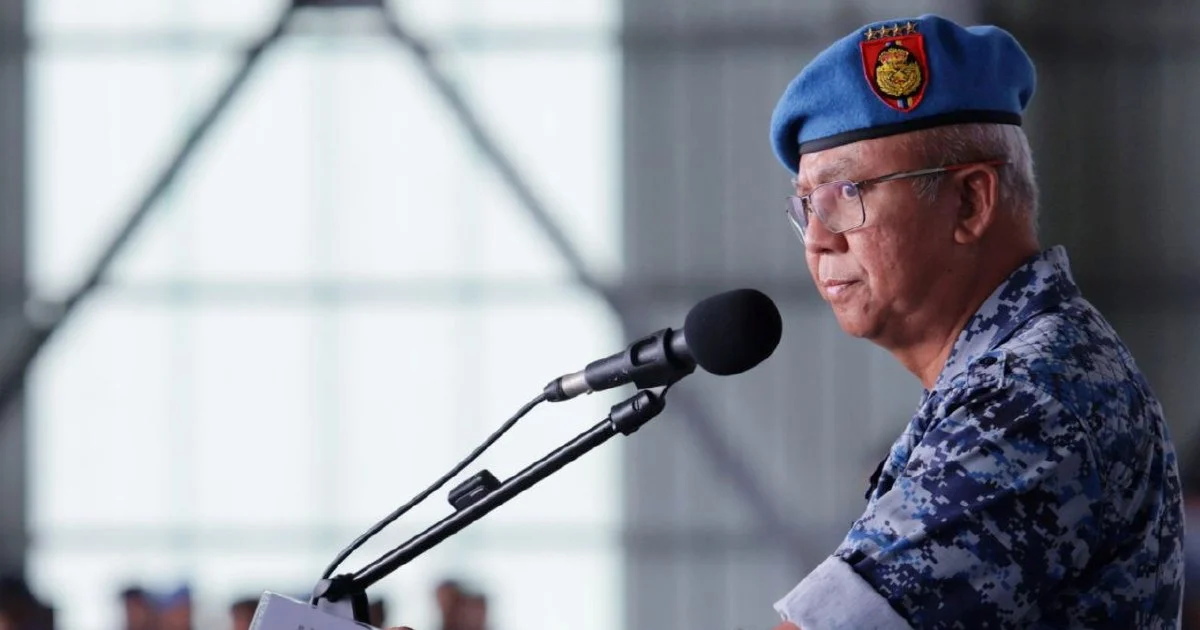
The Royal Malaysian Air Force (RMAF) is facing a mounting resource crunch that undermines its ability to maintain effective surveillance over Malaysia's Exclusive Economic Zone (EEZ), according to statements from the service's top leadership. Speaking in Subang, the air force chief emphasized that existing assets fall short of what is operationally necessary to guarantee comprehensive monitoring and protection of the nation's vast maritime territory, particularly as regional geopolitical dynamics grow increasingly volatile.
Malaysia's EEZ extends across roughly 300,000 square kilometres, making it one of Southeast Asia's largest maritime domains. Yet the RMAF must manage this sprawling area with a fleet that has not kept pace with either technological advancement or expanding operational demands. The disparity between required coverage and available platforms represents a strategic vulnerability that has drawn growing attention from policymakers and defence analysts throughout the region.
The South China Sea has emerged as a critical flashpoint in this equation. The contested waters overlap with multiple nations' territorial claims and have witnessed intensified naval activity from regional powers and extra-regional actors alike. This geopolitical turbulence directly impacts Malaysia's security calculus, as the nation must balance the need to project presence across its maritime claims while simultaneously managing limited defence budgets.
The RMAF's maritime surveillance role extends far beyond conventional territorial defence. Effective EEZ monitoring serves multiple national interests: safeguarding fishing stocks, preventing smuggling and human trafficking, protecting critical sea lanes essential to Malaysian commerce, and maintaining strategic awareness of military movements. Each of these functions demands sustained airborne presence—a capacity that contemporary air forces increasingly struggle to sustain without substantial asset numbers.
Regional precedents illustrate the challenge. Neighbouring nations with comparable maritime territories have invested heavily in long-range maritime patrol aircraft, unmanned systems, and integrated surveillance networks. These acquisitions reflect a broader recognition that conventional frigate-based maritime defence alone cannot adequately cover the vast ocean expanses surrounding Southeast Asian states. Malaysia's reliance on aging platforms and limited aircraft numbers therefore positions the country at a comparative disadvantage.
The air force chief's statement implicitly addresses a longstanding tension within Malaysian defence policy: the competition for limited budgetary resources across multiple service branches. The Royal Malaysian Navy operates significant offshore capabilities, yet maritime surveillance traditionally requires air assets capable of rapid response and extended coverage. This interservice dynamic complicates strategic planning and investment prioritization.
Unmanned aerial vehicles represent one potential pathway toward expanding effective coverage without proportional increases in pilot training costs or personnel. Several Southeast Asian nations have begun integrating persistent surveillance drones into their maritime monitoring operations, offering round-the-clock presence over key zones. Malaysia's relatively slow adoption of such technology reflects both budgetary constraints and procurement complexity.
The geopolitical context sharpens the urgency of the RMAF's position. Chinese vessels, Vietnamese fishing fleets, and military activities from multiple nations frequently intersect with Malaysian maritime interests. Effective surveillance capability strengthens Malaysia's ability to enforce its claimed rights, document incursions for diplomatic purposes, and maintain situational awareness that informs security policy decisions at the highest levels.
Investment decisions regarding RMAF maritime assets carry implications that extend well beyond military considerations. Enhanced surveillance capability would benefit civilian maritime agencies, fisheries management authorities, and environmental monitoring efforts. A modernized fleet of maritime patrol aircraft could serve multiple government purposes simultaneously, improving operational efficiency and justifying expenditures across a broader policy framework.
The air force chief's candid assessment reflects growing recognition within Malaysia's defence establishment that capability gaps have widened dangerously. Yet translating this acknowledgement into concrete procurement decisions requires navigating bureaucratic, financial, and diplomatic complexities. Budget pressures affect all Southeast Asian militaries, but the particular vulnerability of Malaysia's maritime domain—surrounded by contested waters and crossed by crucial international shipping routes—renders the resource shortage especially consequential.
Looking forward, Malaysia faces a strategic choice between incremental improvements and more ambitious modernization. Regional developments suggest that the window for addressing capability gaps may be narrowing, as both military and non-military pressures on the EEZ continue intensifying. The RMAF's leadership appears determined to ensure that these constraints receive sustained policy attention, even as defence planners grapple with the perpetual challenge of meeting operational requirements within fiscal reality.
%22%2F%3E%3C%2Fpattern%3E%3C%2Fdefs%3E%3Crect%20width%3D%22100%25%22%20height%3D%22100%25%22%20fill%3D%22url(%23ph3o9rig)%22%2F%3E%3Crect%20width%3D%22100%25%22%20height%3D%22100%25%22%20fill%3D%22url(%23ph3o9rip)%22%2F%3E%3Ctext%20x%3D%2250%25%22%20y%3D%2250%25%22%20text-anchor%3D%22middle%22%20dominant-baseline%3D%22central%22%20fill%3D%22rgba(255%2C255%2C255%2C0.95)%22%20font-family%3D%22Georgia%2C%20'Times%20New%20Roman'%2C%20serif%22%20font-weight%3D%22700%22%20font-size%3D%22320%22%20letter-spacing%3D%22-0.02em%22%3EPAS%3C%2Ftext%3E%3C%2Fsvg%3E)

%22%2F%3E%3C%2Fpattern%3E%3C%2Fdefs%3E%3Crect%20width%3D%22100%25%22%20height%3D%22100%25%22%20fill%3D%22url(%23ph1nzvog)%22%2F%3E%3Crect%20width%3D%22100%25%22%20height%3D%22100%25%22%20fill%3D%22url(%23ph1nzvop)%22%2F%3E%3Ctext%20x%3D%2250%25%22%20y%3D%2250%25%22%20text-anchor%3D%22middle%22%20dominant-baseline%3D%22central%22%20fill%3D%22rgba(255%2C255%2C255%2C0.95)%22%20font-family%3D%22Georgia%2C%20'Times%20New%20Roman'%2C%20serif%22%20font-weight%3D%22700%22%20font-size%3D%22320%22%20letter-spacing%3D%22-0.02em%22%3EOnn%3C%2Ftext%3E%3C%2Fsvg%3E)