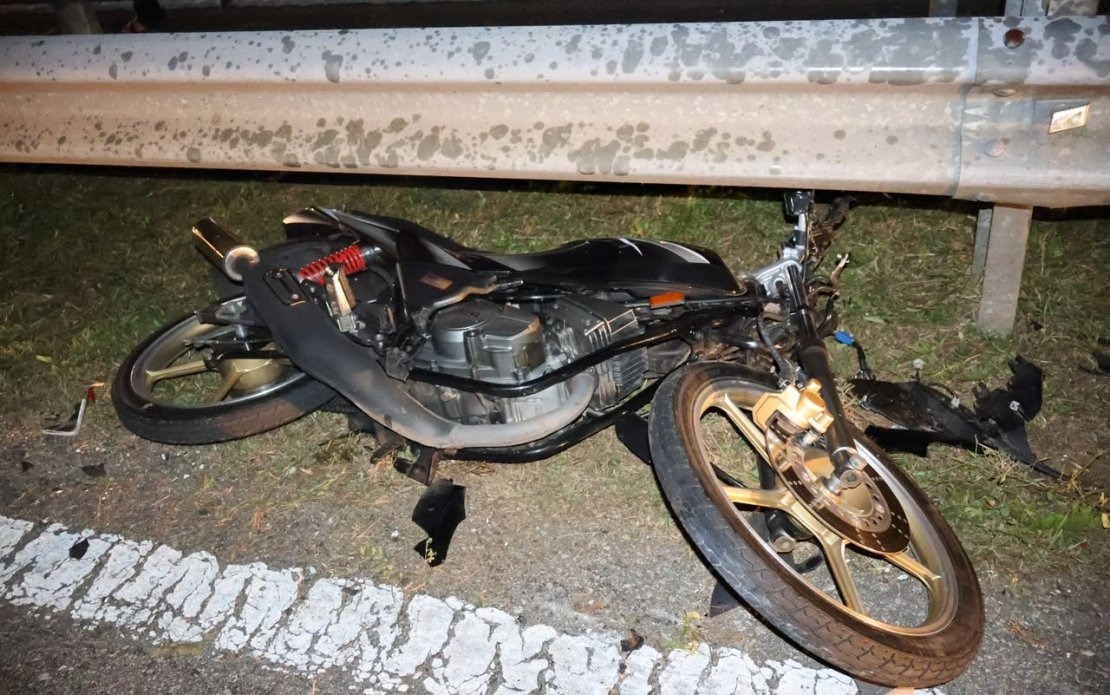
The head of the Royal Malaysian Police's Traffic Investigation and Enforcement Department has sounded a warning that simply cracking down on traffic violations will not be enough to stem the rising tide of reckless driving on Malaysian roads. Datuk Seri Muhammed Hasbullah Ali, the director of Bukit Aman's JSPT unit, made these remarks following a tragedy on the East Coast Expressway early on July 11, which left four motorcyclists dead and 20 others injured. His comments underscore a growing recognition among enforcement officials that the road safety challenge facing Malaysia requires a multifaceted approach extending well beyond police operations.
Muhammed Hasbullah highlighted that curbing dangerous riding behaviour demands active participation from society at large, with families, schools, and community organisations all bearing responsibility for cultivating a culture of accountability among road users. The JSPT director stressed that parents and educational institutions occupy a particularly crucial position in shaping the attitudes and values of younger drivers and motorcyclists, who appear to comprise a disproportionate share of those involved in serious road incidents. This perspective reflects growing international evidence that sustainable improvements in road safety emerge when enforcement is paired with comprehensive public education initiatives that reach people during their formative years.
A particular concern highlighted by Muhammed Hasbullah centres on motorcyclists, whose involvement in fatal accidents has become an ongoing crisis for Malaysian road authorities. The JSPT director noted that many motorcycle-related crashes stem not from mechanical failure or genuine mistakes, but from deliberate choices by riders to disregard traffic laws in pursuit of personal thrills or to gain acceptance within peer groups. This distinction carries significant implications for how authorities approach prevention—while stiffer penalties might deter some offenders, they are unlikely to change the underlying attitudes and risk perceptions that drive riders to engage in dangerous behaviour in the first place.
The tragedy on the East Coast Expressway exemplifies the deadly stakes involved when riders engage in reckless conduct. According to Muhammed Hasbullah, the incident demonstrated how irresponsible behaviour on motorcycles not only claims the lives of the riders themselves but also places innocent road users at serious risk of injury, death, and psychological trauma. The motorcyclists who died in the crash, along with the 20 others hospitalised with injuries, represent a stark reminder that highways are shared public spaces where the consequences of one person's poor decisions cascade outward to affect many others. This framing is designed to appeal to the civic responsibility of road users and to encourage them to consider how their actions affect the broader community.
Muhammed Hasbullah acknowledged that the JSPT and other government agencies responsible for road safety have maintained continuous enforcement operations targeting speeding, illegal street racing, and dangerous stunts performed on public roads. Yet despite these sustained efforts, he noted that certain individuals persist in taking unnecessary risks, suggesting that enforcement alone—no matter how rigorous or consistent—cannot serve as the sole deterrent against behaviour rooted in attitudes and psychological factors. This candid assessment from a senior police official represents an unusual and welcome acknowledgment of the limitations of purely punitive approaches to road safety.
The emphasis on motorcyclists engaging in illegal racing and stunt riding points to a particular subculture within Malaysia's motorcycle community that has resisted enforcement efforts. These activities, which often occur on highways at night, represent a crystallisation of the attitudinal problem Muhammed Hasbullah identified. Young riders who participate in such activities often operate within closed social groups where risk-taking is valorized and regarded as a marker of status or courage. Breaking into these group dynamics requires more than police patrols and increased fines; it demands counter-messaging, mentoring, and the creation of alternative pathways for identity formation that do not revolve around dangerous behaviour.
The call for strengthened road safety education and advocacy has particular resonance for Malaysian policymakers in light of persistent accident statistics. Road fatalities in Malaysia have remained stubbornly high despite improvements in vehicle safety technology and road infrastructure investments. The gap between these investments and actual safety outcomes suggests that the human element—decision-making, risk perception, and behavioural choices—deserves greater attention. Schools, universities, and driving schools could potentially be mobilised more systematically to instil safer attitudes before young people acquire motorcycles or cars.
Muhammed Hasbullah's statements also reflect the reality that law enforcement agencies cannot be everything to everyone on Malaysia's road network. With limited resources and an enormous task ahead, police cannot realistically monitor every highway and every rider at all hours. A genuine reduction in accidents therefore requires far greater participation from drivers and riders themselves, operating under an internalised understanding that responsible road behaviour is a civic duty rather than merely a legal obligation.
Simultaneously, Muhammed Hasbullah reaffirmed the commitment of traffic enforcement authorities to prosecute those caught engaging in reckless riding, illegal racing, or performing dangerous stunts. This balance—combining education and enforcement—represents the emerging consensus approach among road safety experts globally. The goal is to create a comprehensive environment in which legal consequences exist for dangerous behaviour, but also one in which societal norms, family expectations, and personal values all align to discourage such behaviour in the first place.
Looking forward, the challenge for Malaysian authorities lies in translating Muhammed Hasbullah's insights into concrete programmes and policies. This might include more intensive driver and rider education curricula, public awareness campaigns targeting the peer pressures that drive dangerous behaviour, and initiatives that empower parents to play a more active role in monitoring and guiding their children's road habits. Community organisations, religious groups, and youth clubs could also be engaged as partners in this broader effort.

