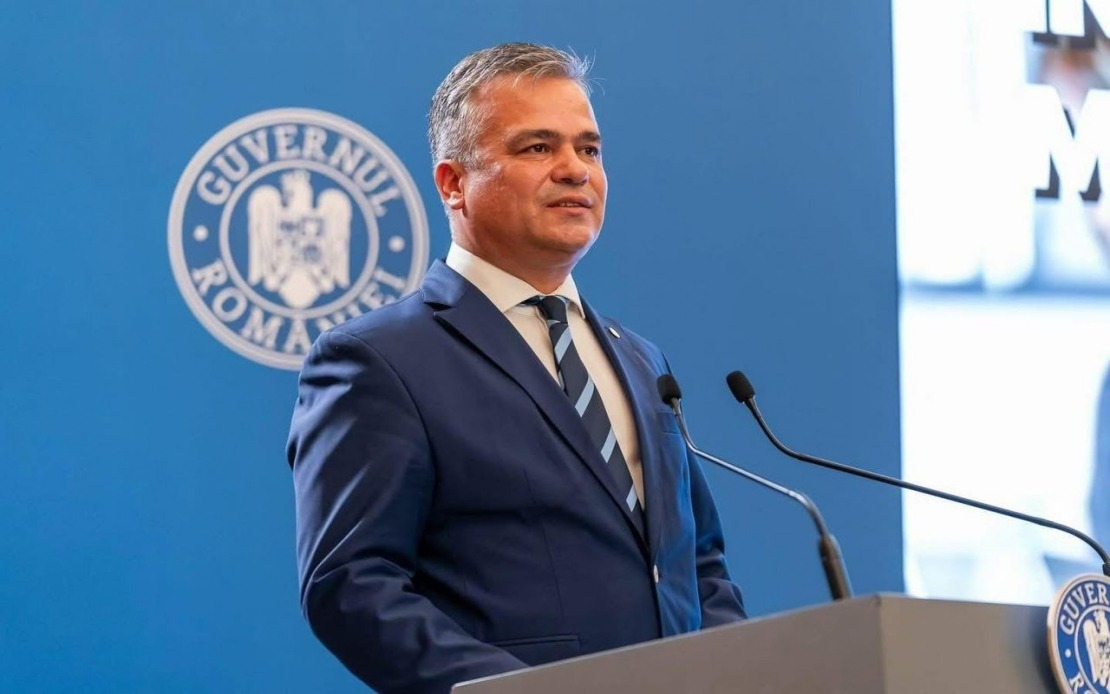
Romania's incoming Prime Minister Adrian Vestea moved forward with his transition to power on Monday, formally submitting his proposed cabinet composition and government programme to parliament. The submission marks a critical juncture in Romania's political calendar as the country seeks to move beyond a period of institutional instability and governmental stalling that has constrained policy-making and public administration.
Vestea, who holds the position of first vice-chair within the National Liberal Party (NLP), announced on social media that he had delivered the necessary documentation to lawmakers, positioning the submission as essential groundwork for restoring institutional confidence. His statement emphasised the urgency of concluding the transition phase that had created political uncertainty and threatened the normal operation of government machinery across multiple sectors.
The proposed administration intends to concentrate its efforts on five primary policy pillars that address both immediate governance concerns and longer-term strategic interests. Political stability forms the bedrock of this agenda, reflecting the urgency of consolidating institutional authority after the preceding period of uncertainty. Accelerating European Union fund absorption ranks as a second priority, recognising that Romania's access to substantial transnational financing depends on effective governmental capacity to deploy these resources. Economic stability emerges as a third focus area, suggesting concern about macroeconomic pressures that may have accumulated during the transitional period.
Infrastructure investment constitutes the fourth pillar, reflecting recognition that Romania's development trajectory depends on modernising transportation, energy, and digital networks that support broader competitiveness. National security initiatives complete the agenda, signalling that Vestea's government intends to address strategic vulnerabilities, potentially including energy security considerations and regional geopolitical positioning that have become increasingly salient within Eastern European contexts.
Vestea secured critical backing from the Social Democratic Party (SDP), which formally endorsed his candidacy during a Sunday gathering. This endorsement proved significant given that the NLP's official leadership had publicly rejected the possibility of forming a governing coalition with left-wing political forces. The apparent contradiction between the NLP's stated position and the composition of Vestea's proposed cabinet suggests internal party divisions, with the incoming Prime Minister evidently commanding loyalty from NLP members who prioritised pragmatic coalition-building over ideological consistency.
The cabinet composition itself reflects this complex political arithmetic, incorporating both Social Democratic representatives and National Liberal members aligned with Vestea's vision. This hybrid arrangement challenges the NLP's public messaging regarding ideological boundaries, potentially indicating that factional tensions within Romania's centre-right establishment run deeper than formal statements suggest. Such internal divisions within major parties frequently signal broader debates about governance philosophy, policy direction, and the balance between pro-European integration and national sovereignty concerns.
The road to formal cabinet approval remained uncertain at the point of Vestea's submission, with Romanian media reporting that parliament had not yet definitively endorsed the proposed ministerial lineup. This uncertainty creates a brief window during which legislative negotiations may reshape the composition or policy commitments of the incoming government. Parliamentary scrutiny of individual ministers, their qualifications, and their compatibility with proposed policies could yet produce modifications to Vestea's original blueprint.
For Southeast Asian observers, Romania's political circumstances offer instructive parallels regarding coalition politics in parliamentary systems. Malaysian readers, in particular, may recognise familiar patterns: the tension between official party positions and on-the-ground political flexibility, the importance of factional loyalty networks within larger parties, and the critical role of securing parliamentary majorities through cross-ideological arrangements when single-party dominance proves unattainable. Romania's experience suggests that stated ideological boundaries often yield to pragmatic calculations when governance becomes the immediate priority.
The transition also reflects broader European concerns about institutional stability and effective public administration. Romania's recent history includes periods of governmental paralysis that undermined investor confidence and complicated the implementation of EU directives. Vestea's emphasis on restoring institutional predictability indicates recognition that economic development and strategic positioning within European structures depend fundamentally on governmental effectiveness rather than ideological purity.
The appointment carries implications extending beyond Romania's borders. As a European Union member and NATO ally located in a strategically sensitive region, Romania's governmental stability influences broader European security architecture. Effective Romanian governance contributes to regional stability, facilitates intelligence-sharing arrangements, and ensures coherent positioning on issues ranging from energy security to relations with neighbouring states. The transition thus matters not merely for Romanian citizens but for the broader constellation of European interests.
Vestea's agenda also reflects evolving European priorities in the post-pandemic era. The emphasis on absorbing EU funds speaks to the substantial financing available through recovery programmes, though only to governments demonstrating institutional capacity and reform commitment. The infrastructure focus aligns with EU priorities regarding green transition and digital modernisation, suggesting that Vestea's government intends to position Romania advantageously within emerging European resource allocation frameworks.