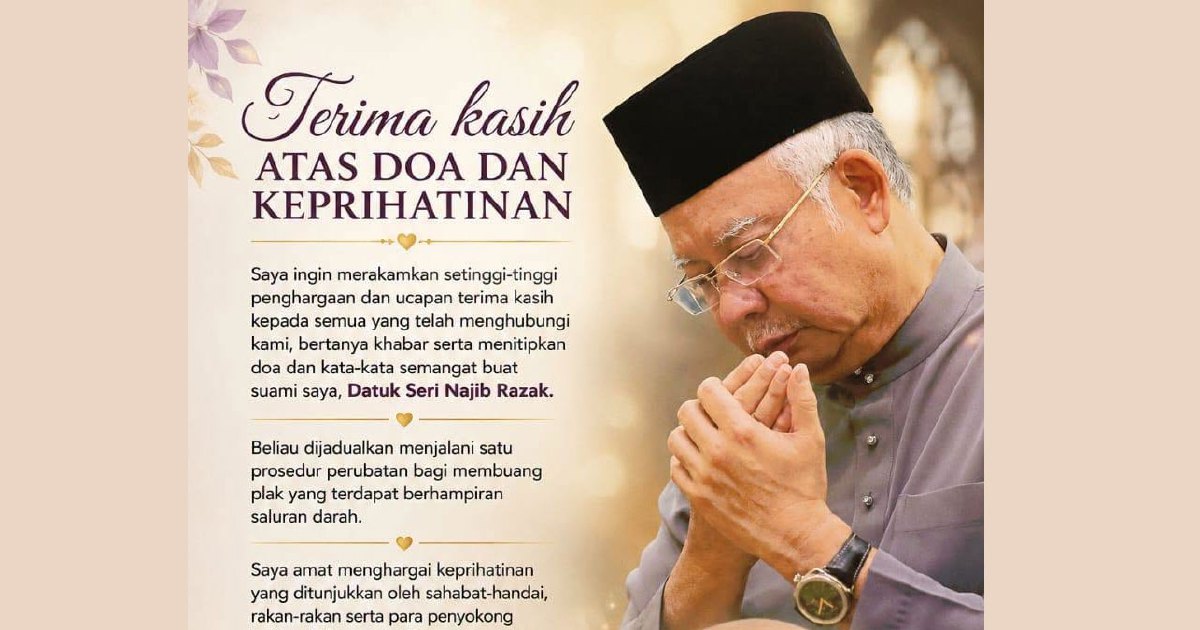
The wife of Malaysia's former prime minister has made a public appeal for prayers and support as her husband prepares to undergo a significant medical procedure. Datin Seri Rosmah Mansor expressed gratitude to those who have stood by the family during this challenging time, whilst requesting that members of the public direct their prayers toward a successful outcome for Datuk Seri Najib Razak's upcoming treatment. The procedure is designed to address plaque buildup near a blood vessel, a condition that requires surgical intervention to restore proper circulation and prevent serious complications.
The medical situation facing the former premier highlights the health challenges that can affect individuals at any stage of life, regardless of their previous position or status. Vascular procedures of this nature are increasingly common among patients across all demographics, though the underlying condition requires careful medical management and professional oversight to ensure optimal results. The decision to proceed with treatment reflects a proactive approach to addressing cardiovascular concerns before they escalate into more serious health emergencies.
Rosmah's public statement serves as a reminder of the human side of political figures, particularly during moments of personal difficulty. The appeal for public prayer reflects deeply rooted cultural and religious traditions within Malaysian society, where collective spiritual support is often viewed as complementary to medical intervention. This blending of medical expertise with faith-based practices remains a significant aspect of how many Malaysians approach health challenges affecting themselves and their loved ones.
The former first lady's expression of gratitude toward supporters underscores the importance of maintaining goodwill and connection with one's community during health crises. Throughout her statement, Rosmah acknowledged those who have provided backing and encouragement, recognising that navigating medical procedures is often an emotionally demanding experience for both patients and their families. The public nature of Najib's position means that his health matters have historically attracted wider attention than typical medical situations, bringing both scrutiny and offers of support from various quarters of society.
This medical development comes against the backdrop of Najib's broader life circumstances in recent years. The former premier has faced considerable personal and legal challenges, and his health now becomes an additional factor influencing his daily life and future prospects. The timing of significant medical procedures can often intersect with other life events, creating compound pressures on individuals and their families that require emotional resilience and strong support networks.
From a public health perspective, the situation draws attention to the importance of cardiovascular awareness and preventative screening among middle-aged and older adults. Plaque accumulation in blood vessels is a progressive condition that develops over time, often without obvious symptoms until the narrowing becomes substantial. Early detection through routine medical screening has become increasingly important in modern healthcare, allowing interventions to occur before acute health crises develop. Many Malaysians may not be fully aware of their own cardiovascular risk factors, making Najib's situation a reminder of the importance of regular health assessments.
The procedural approach being taken represents contemporary advances in vascular medicine, where minimally invasive techniques have significantly reduced recovery times and complication rates compared to traditional open surgical methods. Medical professionals have developed refined procedures to address arterial blockages with greater precision and safety, allowing patients to return to normal activities more quickly than in previous decades. The availability of such advanced medical capabilities within Malaysian healthcare infrastructure reflects the country's progress in developing world-class medical facilities and expertise.
For Rosmah, the period leading up to the procedure and its aftermath represents a significant personal challenge that extends beyond the purely medical dimensions. Supporting a spouse through serious health treatment requires emotional fortitude, patience, and often substantial lifestyle adjustments for both partners. The former first lady's willingness to speak publicly about this situation may also serve to encourage other Malaysians facing similar circumstances to seek appropriate medical care without delay or embarrassment.
The response from the public to Rosmah's appeal will likely reflect the complex attitudes many Malaysians hold toward the former prime minister. Some will respond with genuine compassion grounded in their religious beliefs and humanitarian values, whilst others may maintain more distant perspectives given Najib's controversial political legacy. Regardless of one's political views, serious health matters typically transcend partisan considerations, allowing space for expressions of human concern and goodwill.
Looking forward, the success of Najib's procedure will depend on multiple factors including the expertise of his medical team, the specific characteristics of his vascular condition, and his own physical constitution and commitment to post-treatment recovery protocols. Modern vascular surgery has achieved high success rates when performed by experienced specialists, providing reasonable grounds for optimism about achieving the procedure's objectives. The family's decision to undergo treatment promptly, rather than delaying, represents a prudent approach to managing a condition that typically worsens without intervention.
As Najib prepares for his medical procedure, the situation serves as a broader reminder for all Malaysians about the importance of cardiovascular health monitoring and timely intervention when medical concerns arise. The universality of health challenges transcends social status and former political position, bringing everyone face-to-face with the fundamental human need for effective medical care and compassionate support from those around them. Rosmah's public appeal ultimately reflects the deeply human aspects of family life that persist regardless of one's place in the public sphere.

